
Sitemap | Contact | Search | Employment
 
  About the Center  
  What You Can Do  
  Center History  
Hate Map
Hate Map

 Email news:

Richard Cohen
President and chief executive officer

Richard Cohen
Richard Cohen
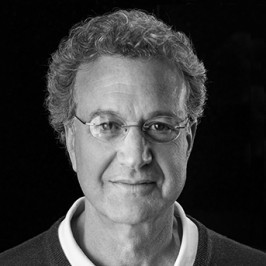
(photo: Tom Cogill)
Richard Cohen was 31 when he came to the Southern Poverty Law Center in 1986. Less than two months after his arrival, founder Morris Dees announced big news: The U.S. Supreme Court had decided to hear a major desegregation case brought by the Center against the Alabama Highway Patrol.

Dees asked Cohen if he could handle the Supreme Court argument, because the lawyer who had been litigating the case was leaving the Center.

Cohen, who had previously worked for a law firm in Washington, D.C., had tried cases in court but had never handled appellate work. He didn't hesitate, telling Dees, "Of course I'm up for it."

The stakes were high. Alabama state troopers had a notorious history of racism. Two decades earlier, members of the highway patrol had received national notoriety for beating John Lewis and fellow civil rights activists who were trying to march from Selma to Montgomery to secure the right to vote. Though many institutional barriers to equality for blacks had been toppled across the South, the state troopers were still dragging their feet.

Cohen's task was to defend a federal court order requiring Alabama to promote a black trooper for each white trooper promoted until fair tests were developed. The Reagan administration's Justice Department was asking the Supreme Court to reverse the order, which would undo the progress that had been made in opening the upper ranks of the troopers to black officers.

Cohen was about as nervous as he had ever been. But when it was time to stand and make his case, a certain calmness came over him. Justice, he felt, was on his side.

And when the verdict was announced later, justice had prevailed. The Court upheld the one-for-one promotion procedure.

* * * * * * *

A graduate of Columbia University and the University of Virginia School of Law, Cohen came to the Center as its legal director and now serves as its president and chief executive officer. He and Dees have formed a dynamic trial team, winning a series of landmark lawsuits against some of the nation's major hate groups. Cohen also successfully litigated a wide variety of important civil right actions - defending the rights of prisoners to be treated humanely, working for equal educational opportunities for all children and bringing down the Confederate battle flag from the top of the Alabama State Capitol.

In 1997, the national legal magazine The American Lawyer selected Cohen as one of 45 young public sector lawyers "whose vision and commitment are changing lives." In 1999, he was a finalist for the National Trial Lawyer of the Year Award for his work with Dees on Macedonia Baptist Church v. Christian Knights of the Ku Klux Klan, a lawsuit that ended with a record $37.8 million judgment against a Klan group for its role in the burning of a South Carolina church.

Cohen also has been a creative force behind some of the Center's most successful education projects. He has served as executive producer for six documentary films created for the Center's Teaching Tolerance program. Four of those films were nominated for Academy Awards, and two - "Mighty Times: The Children's March" in 2005 and "A Time for Justice" in 1994 - won Oscars.

Since being named Center president in 2003, Cohen has dedicated himself to continuing the organization's tradition of working tirelessly for those who have no other champions. Under his leadership, the Center established the Immigrant Justice Project in 2004, opened a Mississippi office in 2005 and expanded the organization's work to reform the juvenile justice systems in Southern states. "Our highest calling is representing those who have no voice and who fall through the cracks in our society," he said.

Cohen says one of his most meaningful cases was a lawsuit the Center brought on behalf of the wife and six children of a black man who died in police custody in Hemphill, Texas. After the lawmen were acquitted of murder charges by a hometown jury, they sued Cohen and Dees for suing them. Cohen managed to turn the tables on the lawmen, winning a substantial monetary settlement for the family and collecting evidence later used by prosecutors to convict the police officers on criminal civil rights charges.

"The case taught me an important lesson," Cohen said. "Justice is not something that's inevitable. It's often denied to those who are poor or unpopular. Justice prevails only when dedicated people are willing to fight for it. That's what we do every day at the Southern Poverty Law Center."

 
Biographies
  Morris Dees
 
  Joseph J. Levin, Jr.
 
  Richard Cohen
 
  James McElroy
 
  Julian Bond