
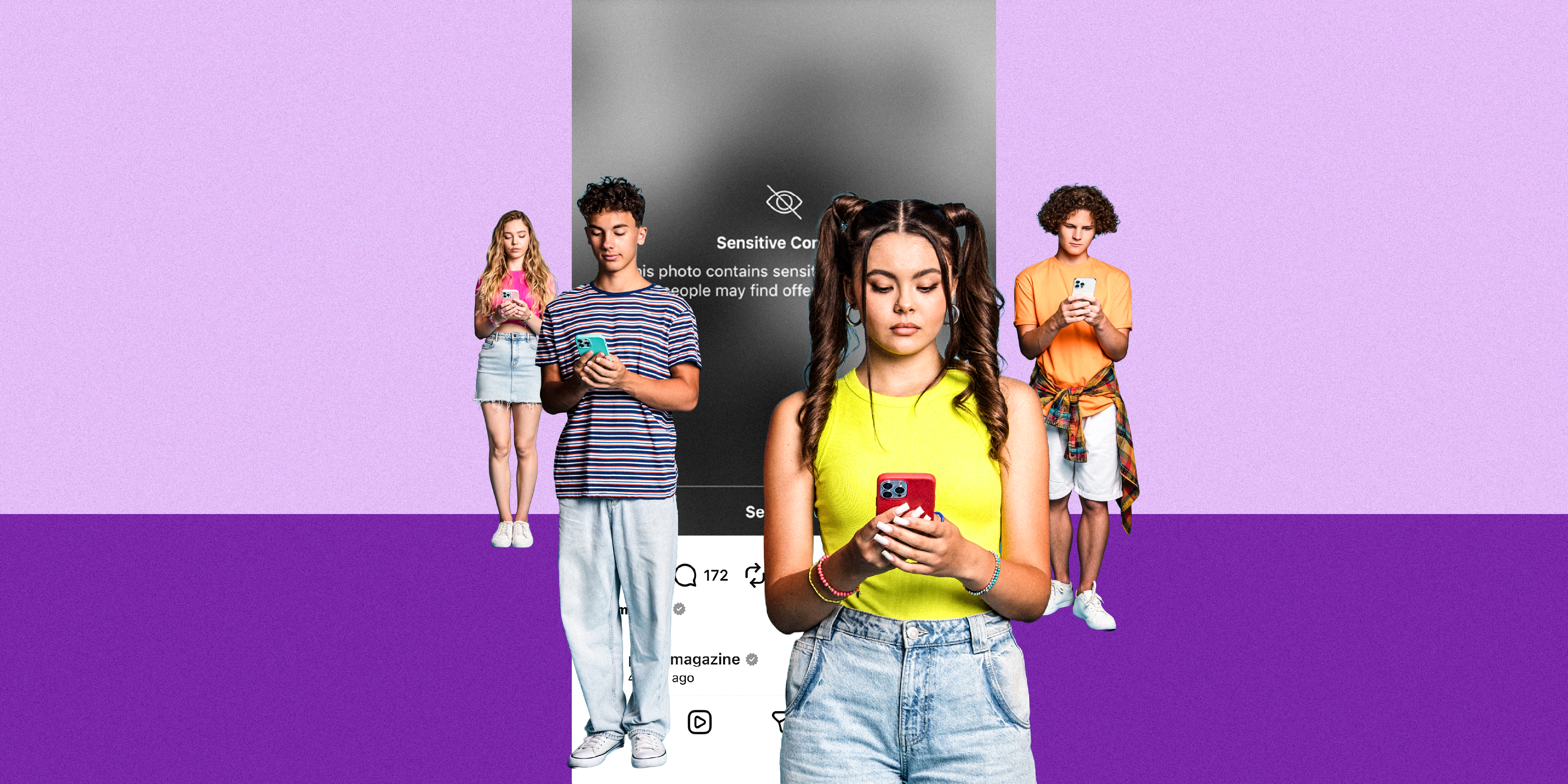
For many, 2025 was a difficult year defined by political violence, instability and injustice. The new year, already marked by state-sanctioned violence, has offered little respite. Social media, a tool for connection and communication, has also amplified this harm by broadcasting tragic events and graphic content directly into our homes. With “up to 95% of young people ages 13-17 reporting use of a social media platform,” and 36% of teens reporting near constant usage of YouTube, TikTok, Instagram, Snapchat and/or Facebook, exposure to violent content is almost guaranteed. But we are not powerless to effect positive interventions to protect and support young people.
Excessive exposure to violent content can be psychologically and physically harmful. Research conducted by the SPLC, the Polarization & Extremism Research & Innovation Lab and Everytown for Gun Safety Support Fund found that the more hours of gun-related media exposure — such as news coverage and videos of shootings — the greater a young person’s post-traumatic stress scores. Similarly, studies conducted in the wake of the 9/11 terrorist attacks found increased exposure to news coverage of the event was directly related to the onset of post-traumatic stress and depression symptoms, as well as physical health problems years later.
This secondhand trauma, also referred to as “vicarious trauma” or “compassion fatigue,” is the traumatic stress response humans experience when we are exposed to others’ suffering. Secondhand trauma manifests differently in everyone. Common responses can include feelings of helplessness, hopelessness, fear, guilt and anger, and symptoms like difficulty sleeping, hypervigilance and substance abuse. Such trauma can negatively impact relationships, lead to concentration issues at school and work, and make daily tasks and basic self-care feel daunting. Community Advisory, Resource and Education (CARE) is a program of the Southern Poverty Law Center and the Polarization & Extremism Research & Innovation Lab (PERIL) at American University in Washington, D.C. The CARE Program has compiled trauma-informed steps and resources below to help you and the young people in your life prepare for these experiences, respond when exposure to harmful content has occurred and prevent future negative experiences:
Disclaimer: This document is provided solely as a curated list of third-party resources. It is offered for informational purposes only and is not intended to constitute legal advice, medical advice, mental health advice, or guidance from law enforcement professionals or others. Nothing in this document should be interpreted as a substitute for consulting qualified attorneys, health care providers, mental health professionals, law enforcement authorities, and any others you and/or your organization decide to engage. Users of this document are encouraged to independently verify information and seek any further professional advice appropriate to their circumstances. The SPLC assumes no responsibility or liability for any actions taken or not taken based on the information contained in this document, and the inclusion of any resource does not imply endorsement or guarantee its accuracy, completeness or applicability.
Preparing for healthy, safe online experiences
- Create safe spaces for honest, open conversations about experiences online.
- Bolster young people’s digital and media literacy skills.
- Discuss and use parental controls transparently with young people.
Responding to exposure to harmful content online
- Approach conversations about manipulative and/or harmful content with curiosity and compassion rather than judgment, ridicule or punishment.
- Listen to your own needs while helping young people seek mental health and well-being support for secondary trauma.
- Engage other trusted adults to address harmful content and discuss healthy internet habits.
Preventing harmful, manipulative experiences online
- Adjust online platform settings to help mitigate exposure to harmful online content.
- How to avoid seeing disturbing content on social media and protect your peace of mind, The Conversation
- “Make it Stop”: How to Turn Off Autoplay Videos on Social Media, Streaming Apps, PC MAG (Please note that instructions for settings change often.)
- Online Safety for LGBTQ Young People, The Trevor Project
- Take time away from screens to check in on your health and well-being.
- Social media’s impact on our mental health and tips to use it safely, UC Davis Health
- A break from your smartphone can reboot your mood. Here’s how long you need, NPR Living Better
- The Steve Fund for the mental health and emotional well-being of young people, particularly those from underserved and under-resourced communities.
- Time to Check In, Self Care Prompts
The above recommendations and support provide a starting point to bolster your own online safety and offline health and the health and well-being of young people in your life. For further resources, please visit www.splcenter.org/peril and www.perilresearch.com. For continuing support, reach out to [email protected].
Illustration by the SPLC.