
Schism over Anti-Semitism Divides Key White Nationalist Group, American Renaissance
A schism over anti-Semitism threatens a key 'white nationalist' group. The outcome could be critical to the radical right.
HERNDON, Va. -- For a gathering of people devoted to denouncing the inferiority of blacks and sounding the alarm about civilization-threatening Muslims, the biannual conferences thrown by the New Century Foundation, publisher of the racist newsletter American Renaissance, are decidedly genteel affairs. Men dress in suits and ties, women in formal business attire, and there are no uniformed skinheads or Klansmen to be seen. Large plasma television screens, Starbucks coffee spreads and fancy linens adorn the hotel meeting hall. Epithets have no place here.
Or at least they didn't. At the latest edition of the conferences that began in 1994, held this February at the Hyatt Dulles hotel, a nasty spat broke out that upset the gathering's decorum -- and may even shape the future of the radical right.
It began when David Duke, the former Klan leader and author of Jewish Supremacism, strode to a microphone after French author Guillaume Faye wrapped up a talk vilifying Muslims entitled "The Threat to the West." Duke thanked Faye for remarks that "touched my genes." But then he went one further.
"There is a power in the world that dominates our media, influences our government and that has led to the internal destruction of our will and spirit," Duke said, according to an undisputed account in The Forward newspaper.
"Tell us, tell us," someone in the back yelled.
"I'm not going to say it," Duke replied. Laughter began to fill the room, until a short, angry man leaped from his seat, walked up to Duke and began to curse.
"You f------ Nazi, you've disgraced this meeting!" he said.
And with that, Michael Hart, a Jewish astrophysicist and long-time attendee at American Renaissance conferences, headed for the door. As many as 50 people at the conference began to jeer and point at the rapidly disappearing Hart.
This extraordinary incident marked the beginning of an open rift between those on the radical right who see blacks, Hispanics and Muslims as the primary enemy, and those who say "the Jews" are ultimately behind every evil -- a split that has usually stayed just below the surface but now threatens a leading institution of American extremism. While in the past he has managed to bridge this divide mainly by ignoring it, American Renaissance founder Jared Taylor now must finally come to terms with the split. His dilemma boils down to this: Throw out the anti-Semites and try to build a larger movement with electoral possibilities like those increasingly seen in Britain and Germany; or openly join hands with the very energetic neo-Nazis even though that means the loss of any remaining shred of respectability.
"These are the makings of a major schism," wrote Shawn Mercer, co-founder and moderator of American Renaissance's AR List, an E-mail group. "If American Renaissance ultimately fails as a result of this donnybrook at the convention, it will be a sad, possibly fatal turn of events for the future of whites."
Jews and the Radical Right
The traditional enemy of the American radical right, going back to the Civil War and even before, has been the black man. Given the numbers of voters who would be created by enfranchising former slaves -- and the historical fact that blacks outnumbered whites in many southern counties -- that is no surprise. But radical anger also has been directed throughout U.S. history at each new wave of foreign immigrants, and, in both the 19th century and the 20th, that included Jews.
European anti-Semitism made its way across the ocean as well, infecting Americans with ideas about secret Jewish plans for world domination and alleged ritual practices like the murder of Christian children. Increasingly, hatred of Jews filtered into groups like the Klan -- most famously, in 1915, when the group was reborn on the strength of the lynching of Jewish businessman Leo Frank of Atlanta. (Frank was falsely accused of the rape and murder of a 12-year-old girl.)
In the 1920s, auto tycoon Henry Ford published anti-Semitic treatises culminating in the book, The International Jew. In the following decade, Father Charles Coughlin, a radical Catholic, railed against Jews in radio broadcasts heard by millions. There followed a brief lull in anti-Semitism due to revelations about the Nazi genocide, but it wasn't long before Jew-hatred came roaring back.
This was partly due to the spread of Christian Identity, a radical theology that claims that Jews are biologically descended from Satan and are the chief enemy of the white man. This ideology, which increasingly crept into traditionally Christian groups like the Klan, helped to start the broad-based change that has occurred over the last half century or so -- the Nazification of the American radical right. Growing anti-Semitism also reflected the view of many segregationists that Jews were behind the black civil rights movement of the 1950s and 1960s. The bombings of several Southern synagogues by white supremacists underlined this conviction.
In recent decades, however, mainstream American society has rejected anti-Semitism, to the point where it is generally seen as more acceptable to voice ugly views of blacks than Jews. And this has not been lost on certain sectors of the radical right that have become increasingly interested in gaining real political power. Given recent developments in the United States -- especially large-scale Latin American immigration and the threat of radical Islamist terror -- these sectors have wondered if it wasn't better to direct their hate at people of color, rather than Jews who are seen by most Americans as white. Seeing the electoral success of neofascists in Germany and Britain who aim their wrath at dark-skinned immigrants and Muslims generally, many American radical leaders have sought to dispense with anti-Semitism.
Black Attack
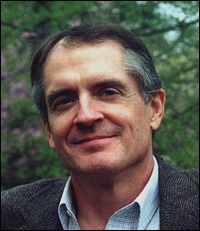
In 1990, Jared Taylor, a Yale graduate who had spent 17 years working in Japan, joined the active white supremacist scene with his launching of American Renaissance, a magazine focusing on the alleged links between race and intelligence and on eugenics, the discredited "science" of breeding better human beings. The magazine scrupulously avoided racist epithets, employed the language of academic journals, and sought to put a palatable face on hate (though that didn't stop Taylor from describing blacks as "deviant," dissipated" and "pathological," or later writing a booklet that claimed that blacks are far more "crime-prone" than whites).
At the same time, Taylor made it clear that he had no problem with Jews. At the group's very first conference, held in Atlanta in 1994, the dinner speaker was a rabbi named Mayer Schiller, and the meal was kosher. Taylor banned discussion of the so-called "Jewish question" from American Renaissance venues, and, by 1997, had kicked Holocaust deniers and neo-Nazis off his E-mail list. In recent years, a growing number of Jews have attended Taylor's conferences.
But Taylor, who operates in a world that is peopled with anti-Semites as well as black-bashing "white nationalists," also tried to have it both ways.
Atlanta lawyer Sam Dickson, for instance, has been invited to speak at every one of Taylor's biannual conferences -- despite a long history of Holocaust denial that includes membership on the editorial board of The Barnes Review, a journal that specializes in that topic. Joe Sobran, a columnist fired from the National Review for his anti-Semitism and repeat author for the Holocaust-denying Journal of Historical Review, gave a speech on Jewish power at Taylor's 2004 conference. Don Black, the former Klan leader who runs the neo-Nazi Stormfront web forum, has attended many conferences and visited Taylor's home. Another attendee and old Taylor pal, Mark Weber, heads up the Holocaust-denying Institute for Historical Review.
Taylor, whose journal and conferences were fast becoming key institutions of the American radical right, tried to keep internal peace. But that was not to be.
In 2003, a remarkable E-mail debate between the late racist writer Sam Francis and neo-Nazi lawyer Victor Gerhard was made public by Gerhard. In it, Francis, widely regarded as the leading white nationalist intellectual in America, lambasted Gerhard, who had been an official of the neo-Nazi National Alliance, for his views of the Jews. He denounced what he saw as "a monomaniacal obsession with the omnipotent Jew" and instead discussed the threat of blacks and Hispanics. The E-mail exchange was widely circulated on the American radical right.
The same period saw several groups -- the Social Contract Press, the Charles Martel Society (publisher of The Occidental Quarterly), the Pioneer Fund, the Council of Conservative Citizens and the recently formed National Policy Institute -- focus in on the perceived ills of blacks, Hispanics and Muslims. Joining them was a new crop of racist intellectuals with no interest in the Jews.
Taylor, it seemed, could not stop the inevitable. The split between those who saw Jews as the primary enemy and the others was bubbling to the surface.
Battle of Words
The biggest threat to Jared Taylor's balancing act has always been David Duke, the former leader of the Knights of the Ku Klux Klan who has also been a convinced neo-Nazi since his teens. Duke, who came close to winning a campaign for Louisiana governor in 1992, was for years a celebrity on the radical right. Still, Taylor has sought to discourage Duke from attending his American Renaissance conferences ever since Duke crashed the first one in 1994. But even in years when he didn't enter the hall, Duke was often found outside, talking to participants.
It wasn't just Duke, either. Over the years, more and more participants at Taylor's conferences were Duke allies -- most notably, Don Black and supporters of Black's Stormfront website, including Stormfront moderator Jamie Kelso.
This year, the Duke/Black/Kelso crew was larger than ever. In an interview with the Intelligence Report, Kelso said that he had organized a contingent of some 75 Stormfront supporters to come to the conference. And these supporters were the most enthusiastic members of the 300-strong audience, standing and applauding each speaker after receiving the signal to do so from Kelso. They were also not the only anti-Semites present. Others, not affiliated with Stormfront, included Kevin Alfred Strom of Virginia, leader of the neo-Nazi National Vanguard group; Hal Turner, a neo-Nazi radio host from New Jersey; and David Pringle of Alaska, the former membership coordinator of the neo-Nazi National Alliance.
As a result, the Duke-Hart clash, which occurred on the last day of the conference, rapidly assumed epic proportions, spinning out across the entire radical right. Just days later, Duke published an essay on the conference, expressing deep admiration for Taylor as a man with the courage to tell the truth on race. But he went on to say that non-white immigration and a host of other ills "all have been driven by Jewish extremists in their relentless search for supremacy." Hart, Duke added tartly, had risen "in an almost perfect Jewish caricature and started to scream at me."
That set off an often testy back-and-forth between the two sides.
From London, Nick Griffin, a conference speaker who also heads the whites-only British National Party, denounced those who see behind every evil some kind of "world-Jewish conspiracy." Griffin's BNP, which harshly attacks Muslims and other British minorities, made major electoral gains this May -- a success that Griffin thinks would be undermined by neo-Nazi attacks on Jews. In his essay, Griffin suggested that Jews are a natural ally in the battle against Islam.
Black, on the other hand, threatened to pull his anti-Semitic supporters out of Taylor's conferences. "I guess that would solve the overcrowding problem," Black wrote. "Not only would he cut loose the ... Stormfronters, but, should he apply such an ideological filter [barring anti-Semites], about 90% of his other attendees."
Lawrence Auster, a former American Renaissance speaker who also is a Christian convert with Jewish ancestry, chimed in on his own blog, describing Duke as "a major Jew-hater and an attention hog" and asking Taylor how he could be so "naïve as to allow Duke to attend at all." Another poster to Auster's site added, "It is imperative that neo-Nazis be asked to leave AR. ... European-Americans need to be assured they can affirm themselves and still be decent human beings."
In the end, nearly every "intellectual" on the white nationalist scene was pulled into the debate. So hot was the months-long exchange, in fact, that more than half a dozen major racist thinkers agreed to speak to the Intelligence Report.
Rejecting the Nazis
Virtually all those who denounced anti-Semitism and "Nazis" had no such compunctions when it came to people of color, particularly blacks. Herschel Elias, for instance, told the Intelligence Report that as a Jewish substitute teacher in public schools near Philadelphia, "I'm very disappointed with black people. Black kids are the worst kids." But he added that he now saw the conference as a "Nazi front."
Another Jew, retired University of Illinois political science professor Robert Weissberg, was a long-time supporter of American Renaissance who spoke at two conferences. In 2000, he argued that Jews and blacks despise one another, but that Jews are even more afraid of white nationalists and so had tended to support policies that empower minorities. Weissberg told the Report that he considered Taylor a friend and had been to his house "on several occasions." But he went on to say that Duke was a "tax evader" (Duke recently served time in federal prison for mail fraud and tax violations) and "provocateur," and that his Stormfront allies were "losers." He said that both Duke and the Stormfronters should be "disinvited" by Taylor.
The list goes on. In separate interviews with the Intelligence Report, numerous "academic racists" complained of the neo-Nazi element at the conference.
• Michael Levin, a Jewish philosophy professor at the City University of New York who has spoken four times at American Renaissance conferences, said that there was "anti-Semitism among members of AR" and that this was part of the reason he did not attend the 2006 edition. (However, Levin still plugs his black-bashing book, Why Race Matters, in ads in American Renaissance.)
• Paul Gottfried, a humanities professor with Jewish ancestry at Elizabethtown (Penn.) College, spoke to the conference in 1998 and has published in American Renaissance. But he said he is dismayed at the current situation. "I cannot imagine any advantage to anyone to have these people there," he said.
• William Regnery, the extreme-right publisher who also founded and financially backs the Charles Martel Society and the National Policy Institute, dismissed Duke's anti-Semitism, saying simply, "We don't sanction it."
• Gordon Baum, the St. Louis-based CEO of the racist Council of Conservative Citizens, has Taylor on his editorial board and fights to preserve the "racial integrity" of white people. But, he said, the CCC welcomes Jews. And, adding that the CCC has no interest in "skinheads," Baum rapped Duke for believing that "race isn't even important, all that is important is the Jewish issue."
• Baum's new editor for the CCC's publication, Citizens Informer, seconded his boss' opinions. "Attacking people with Jewish lines of descent is complete nonsense," Joel LeFevre told the Report, adding that he was "very put off by Mr. Duke's behavior" at the conference. Separately, LeFevre wrote on the AR List that Duke and his "puerile loser" followers should be banned. "Duke has his own conference where he can rant about the Jews all he wants," he said.
• Jared Taylor, too, spoke to the Report, saying, "European Jews are certainly welcome" at American Renaissance conferences. "I don't think that Jews are the enemy in the way that some people do." As a matter of fact, Taylor came out against Nazism as early as 1983, in his book, Shadows of the Rising Sun: A Critical View of the 'Japanese Miracle', where Germany was praised for outlawing national socialism. In addition, Jews write regularly in American Renaissance and have spoken at every one of its conferences.
At the Crossroads
Two months after the conference, on April 14, Jared Taylor went public. Responding to a letter from a group of supporters including several Jews, he posted a statement to his website that seemed to take clear sides. Under the title, "Jews and American Renaissance," Taylor said that Jews "have a valuable role" to play, and told those who didn't agree that they had the choice of "staying home" or of keeping their anti-Semitism private. He wrote that American Renaissance's role is to rescue white civilization, not dig up a "Jewish conspiracy." And Taylor explicitly rebuked Duke, saying his "disgraceful behavior" would not be tolerated in the future.
Within 48 hours, Taylor's statement had generated 168 responses. Two days later, there were more than 300. The reaction from anti-Semites was harsh, with many claiming that their erstwhile ally was actually in the pay of "the Jews."
Cal Rogers, an American Renaissance staffer who headed up an E-mail list of Taylor critics, quit the group, saying he was "diametrically opposed" to Taylor's views. Jess David Peterson wrote in to say that Taylor's writings had been removed from Peterson's Nationalist Party USA website. On Stormfront, Elena Haskins, a hate website proprietress, scoffed at those "who require their friend the rabbi to pat them on their heads and tushies." Ron Doggett, a Duke factotum, suggested Taylor was unfortunately sending America's anti-Semites packing. Don Black called Taylor's statement "disastrous." Another neo-Nazi said it was "a devastating miscalculation."
At the same time, Taylor was being lobbied by Jews and others who argued that the only way forward for American Renaissance was to drop those with neo-Nazi leanings entirely. Members of this group included many of the brighter minds -- or better educated ones, anyway -- that have come into the white nationalist world in recent years, and their relative prestige would be hard for Taylor to give up.
It's not clear how the situation will wind up. Taylor has now publicly rejected anti-Semitic views, but he hasn't banned anti-Semites from his conferences.
What is certain is that it will be painful for Taylor to definitively eject the anti-Semites -- Duke, Black and their neo-Nazi allies are among the most committed and serious workers in the American radical right, people who have arguably done far more for "the movement" than all the racist professors who travel to American Renaissance conferences put together. But he seems to be personally uninterested in conspiracy theories about the Jews, and in any case sees clearly that anti-Semitism will likely destroy any faint hope that American Renaissance has to gain mainstream respectability. Taylor could try to pursue a middle road – espousing, for instance, the anti-Semitic teachings of Kevin MacDonald, which avoid neo-Nazi language in favor of the academic veneer of "evolutionary biology." Or he could break with the neo-Nazis and their allies, even though Taylor is connected to many of them through dense ties of friendship and organizational alliances.
The outcome may be critical to the future of the American radical right. American Renaissance has become increasingly important over the years, bringing a measure of intellectualism and seriousness to the typically thug-dominated world of white supremacy. Today, it may be the closest thing the extreme right has to a real think tank. Whether or not it survives, and in what form, genuinely matters.
