
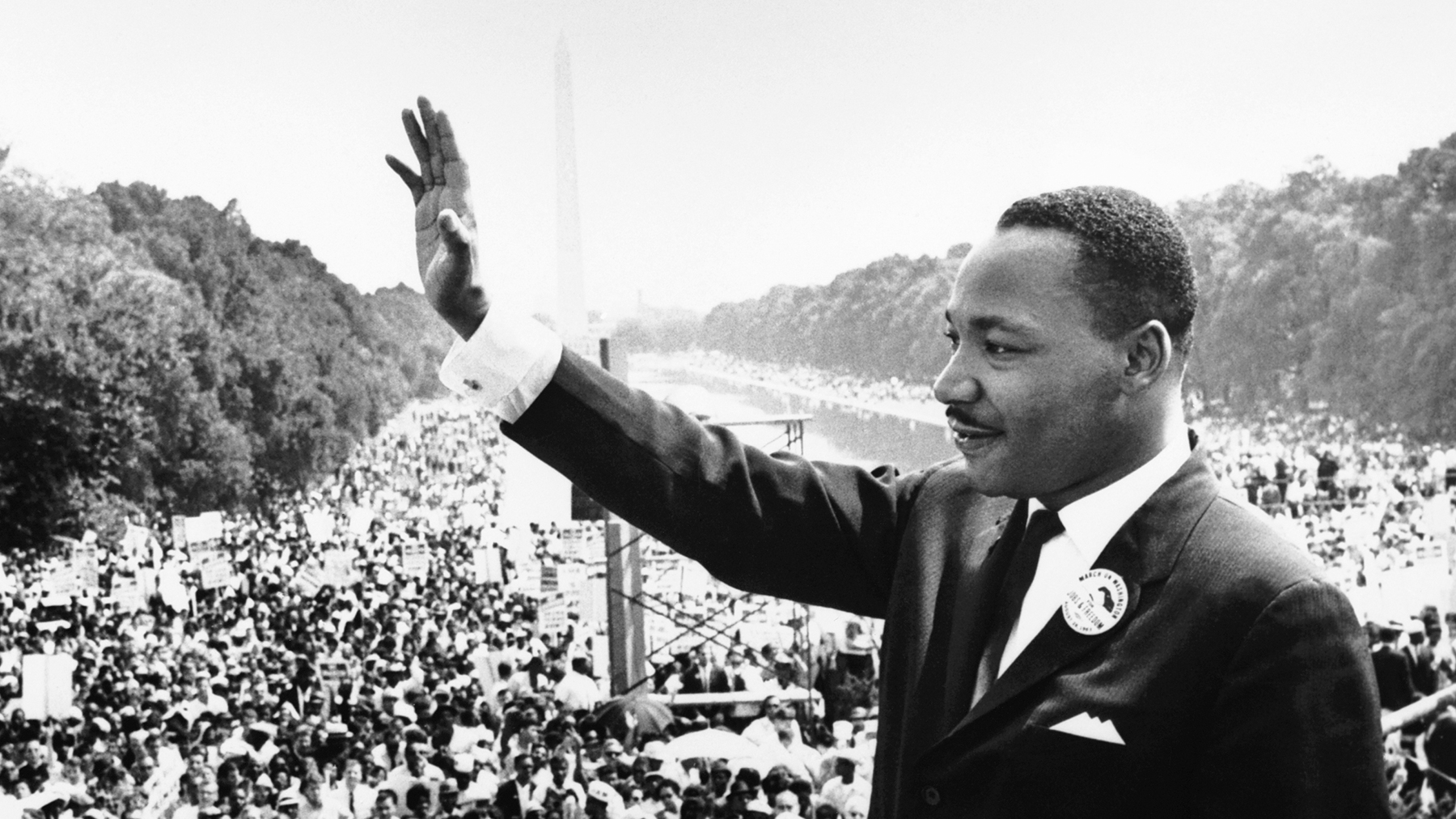
This overview of the 1963 March on Washington for Jobs and Freedom includes activities to help young children and families make connections to history, Martin Luther King Jr.’s “I Have a Dream” speech, and the children’s story “The Night Before the Dream.”
On Aug. 28, 1963, the March on Washington for Jobs and Freedom drew a crowd of more than 250,000 people from across the United States.
- Martin Luther King Jr. was one of the speakers and gave his “I Have a Dream” speech.
- The march has become one of the most iconic events from the Civil Rights Movement.
Organizing the March
- The 1963 March on Washington was initiated by veteran civil rights activist A. Philip Randolph. He brought together a coalition of major civil rights organizations.
- Bayard Rustin, a close associate of Randolph’s and an adviser to Dr. King, handled the details of organizing the march. Rustin was an experienced civil rights activist and organizer who believed deeply in the power of nonviolent protest. As an openly gay Black man, Rustin faced discrimination over his sexual orientation, both in society and in the movement.
- The stated 10 goals of the march included demands for laws to ensure civil rights, access to housing, integrated education and voting; protections against discrimination; and programs for job training, national minimum wage and expanded protections in employment.
The March on Washington for Jobs and Freedom
- The march brought together people of different races in support of civil rights.
- Martin Luther King Jr.’s “I Have a Dream” speech was inspiring in giving an affirmative vision of American democracy.
- While Martin Luther King Jr.’s speech is the most famous from the march, it is important to remember that the march was not King’s work alone.
Who Was Missing?
- The Civil Rights Movement was much more than the March on Washington and the vision of the men who spoke that day.
- The march is insightful in what was missing that day — the voices and perspectives of women leaders in the movement.
- Talented women movement leaders and organizers — like Fannie Lou Hamer, Ella Baker, Dorothy Height and Anna Arnold Hedgeman, for example — were not included as speakers.
In exploring the March on Washington and its context in the Civil Rights Movement, we can learn both from the organizing strategies and strengths and from the challenges and missing voices at the march.