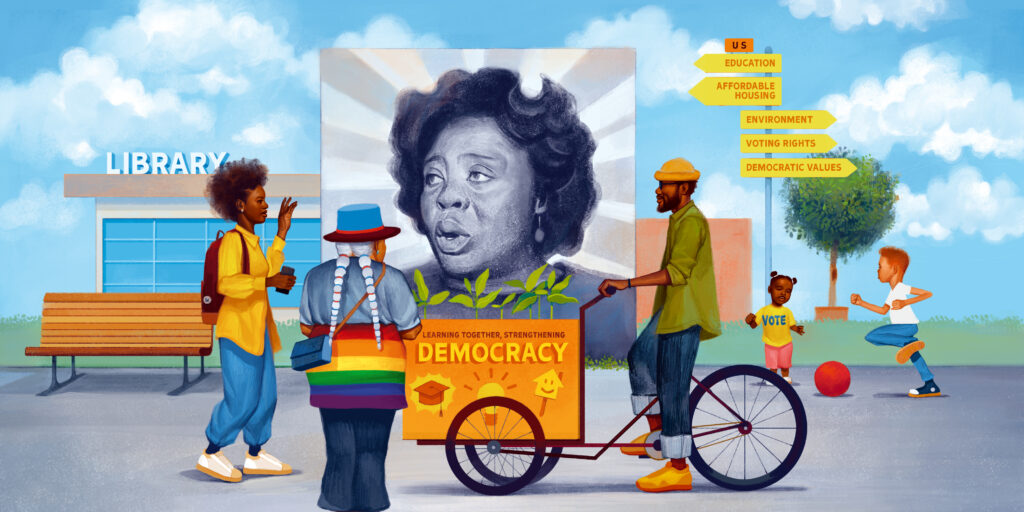
Democracy is a living commitment to the values of freedom, human rights and justice. The late civil rights activist Rep. John Lewis offered this deeply meaningful description:
“Democracy is not a state. It is not some high plateau that we struggle to reach so we can finally settle down to rest. Democracy is an act. It is an act that requires participation, organization and dedication to the highest principles. It is an act, and a series of actions that require us to continuously verify our commitment to civil rights and social justice at every challenge.”
Building a democracy for the 21st century requires transformation built on three essential principles: inclusive participation, institutional accountability and equitable representation. Hasan Kwame Jeffries, Ph.D., further explains these principles:
“These are not just guiding ideas; they are the foundation upon which the new democracy must be built. Every voice must count, and barriers to civic engagement — whether structural, legal or economic — must be dismantled. Power must be transparent and answerable, grounded in public trust rather than private gain. And systems of governance must reflect the full diversity of the nation so every community is represented, and none marginalized.
“These principles are not abstract aspirations, but concrete commitments that demand courage and collective will. Achieving them requires more than policy — it requires a radical reimagining of how we understand the purpose and power of government itself.
“Building a new democracy begins with a cultural transformation as profound as any constitutional reform: a complete rejection of white supremacy and the exclusionary values that have long defined American life.”
So, how do we build an inclusive, multiracial democracy for the 21st century and beyond?
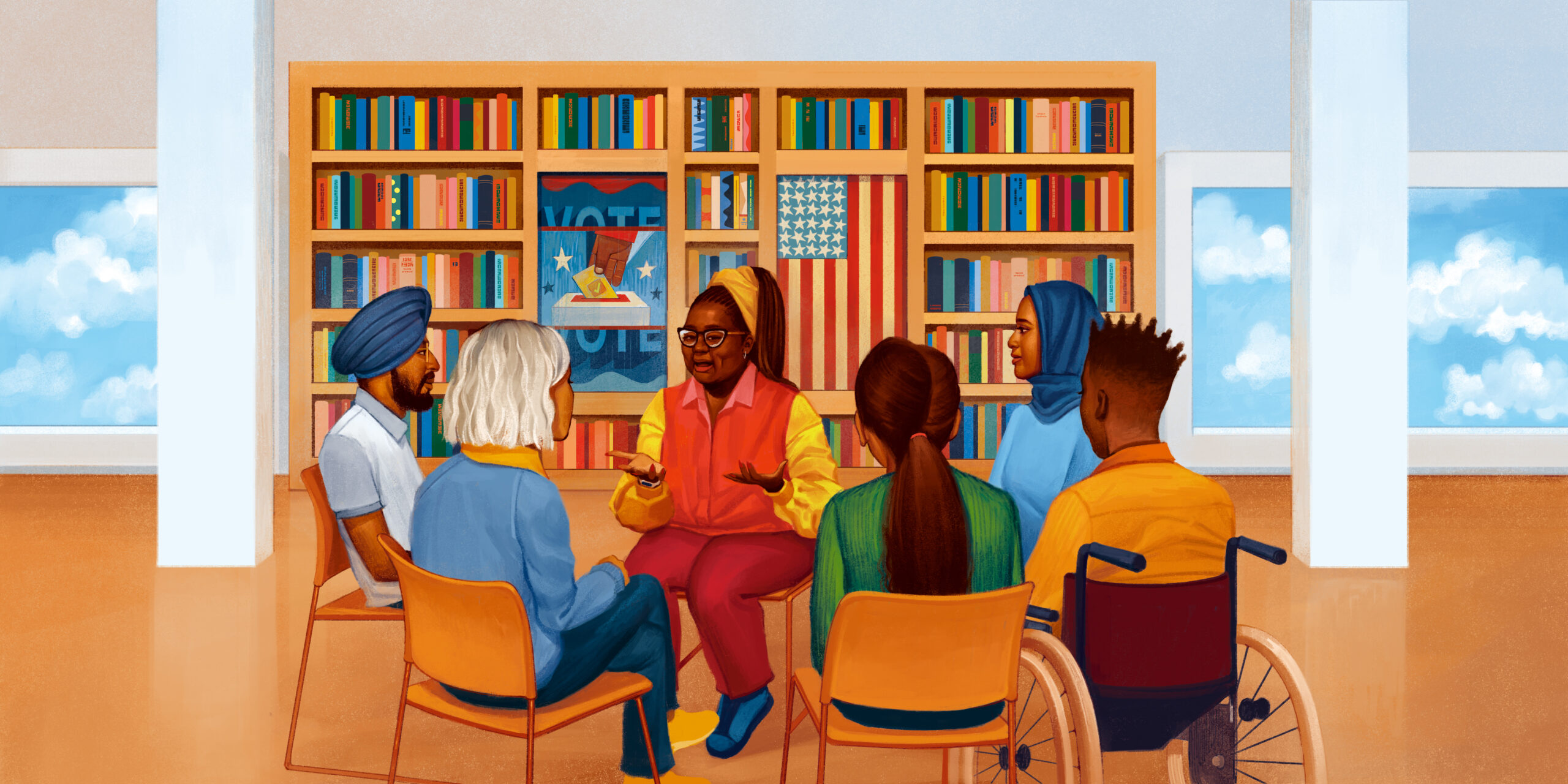
This course offers an introduction to democracy and government in the United States and our civic responsibilities. The goal is to help build in adults and youth the civic knowledge, skills and dispositions necessary for responsible democratic action.
We must understand our history, government and politics so we can engage in civic action with others in our communities and across our nation. We must do the work of movement-building to ensure our nation can fully realize the principles of democracy.
To become active civic participants in a democracy, we need to understand the foundations of democracy, our rights and responsibilities and the levers for change.
Course Objectives
Participants will engage in critical thinking and reflection, dialogue and concrete practice that will allow them to:
- Understand the values of democracy and cultivate personal values, commitments and community responsibilities.
- Evaluate to what extent the United States has lived up to democratic principles, discuss inclusion and exclusion in U.S. history, and strengthen commitment to the expansion of democracy.
- Understand basic structure, function and systems of accountability of U.S. government, and examine the people’s relationship to their government.
- Learn about the ways citizens influence government and politics and participate in planning civic action.
- Realize the strengths of solidarity and unity and develop the civic disposition to participate in nonviolent action against injustices in their own communities.
Understanding Civic Knowledge, Skills and Dispositions
Civic knowledge, skills and disposition are crucial if our nation is to achieve a more just and inclusive multiracial democracy. In “Why Civics Needs Social Justice Education,” Lee Anne Bell, professor emerita at Columbia University, offers the following definitions:
Civic knowledge entails understanding how our political system works and knowing our political and civic rights and responsibilities — such as the right to vote and run for public office and our responsibility to respect the rights and interests of others.
Civic skills include the ability to analyze and evaluate issues so we can thoughtfully articulate and defend positions on topics that matter to us. Civic skills enable us to participate in public processes such as monitoring government performance and mobilizing with others around issues of collective concern.
Civic dispositions — such as public-spiritedness; critical-mindedness; and the willingness to listen, learn from, negotiate and compromise with others — are the basis for participating respectfully with others as equals.
Self-governance — government by and for the people — is essential to democracy; therefore, our choices, both as individuals and part of a collective, shape our democracy.
Each of us has an important role in our communities and nation. By learning more about the systems and structures that govern society, we can plan and execute action that will bring the U.S. closer to the nation that lives up to its democratic values.
Join the democracy movement — your civic participation is essential.
Course Modules
1. The Values of Democracy
In the United States, the ideals of democracy are at the core of our shared values and identity. But what are democratic values? How are human rights foundational to democracy? And how do these values help us understand our politics, government and country today?
2. Belonging, Citizenship, and Democracy
The tension between exclusion and inclusion is built into the nation’s foundation. How do we build a democracy that includes rather than excludes? How can historical models and freedom struggles guide us in understanding citizenship and belonging? And why must we understand our past to contextualize current events today?
Coming Soon!
- Dialogue and Critical Conversations
- Understanding U.S. Government: The President, Congress and the Supreme Court
- Education and Democracy
- Expanding Democracy: Voting Rights
- Civic Engagement: How People Influence Politics
Democracy for the 21st century
Our nation’s 250th anniversary challenges us to imagine and build a more inclusive and resilient democracy for the next generation and beyond.
This first volume of the new Learning for Justice Anthology examines the foundations and future of democracy in the United States and education’s crucial role in building a more inclusive multiracial society that expands opportunities for civic and political participation. This volume offers articles to frame the conversation, an introductory civics and democracy course and additional resources for learning and teaching.