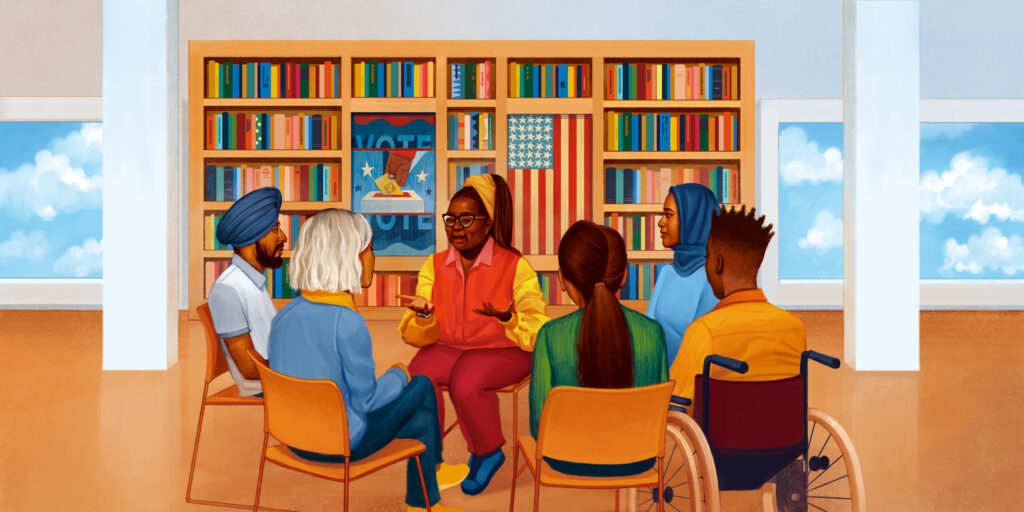
Learning for Justice (LFJ) is a community education program of the Southern Poverty Law Center (SPLC) that cultivates and nurtures dialogue, learning, reflection and civic action from those closest to and harmed most by injustices in the South.
Since the 1990s, LFJ (previously Teaching Tolerance) has provided curriculum resources and trainings to thousands of educators across the country to teach the next generation of young people critical thinking, activism and civic engagement.
By focusing on education for liberation — community civic and political action education — LFJ complements the SPLC’s work to increase power and capacity for multiracial, inclusive democracy.
Building on this work and the traditions of Freedom Schools, Citizenship Schools and the Highlander Center, LFJ is now working in partnership with communities to establish Community Justice Sites that foster and nurture dialogue, learning, reflection and civic action from those closest to and harmed most by injustices.
Theory of Change
When we engage communities in the South through dialogue and learning for leadership rooted in movement building, communities will take collective civic action for justice that advances the well-being of children from all backgrounds and their communities.
Addressing Today’s Issues
The political backlash to the movement for racial justice and equity has led to anti-inclusive laws, efforts to distort our nation’s history and policies that harm historically marginalized communities, especially those experiencing poverty.
- Incubated in the South, these efforts are now prominent at the national level and widespread in multiple state legislations and institutions.
- This current anti-inclusive and anti-democratic agenda limits the opportunity for discourse around the realities of historically marginalized children, their families and communities.
- The policies and pushback against a more inclusive and democratic society is not new — the hostile opposition to racial justice has been steadily intensifying for decades and is grounded in our country’s 250-year history.
- In understanding the long history of Black Americans’ struggle for freedom and civil rights, we must also confront the many ways in which white supremacy was institutionalized — across multiple levels of society — to deny political, social and economic equality to Black people.
The problem
Systems of inequality (rooted in white supremacy and racism in U.S. history) perpetuate harm to children, their families and their communities today.
- And those systems of injustice are being reinforced and weaponized as part of the pushback against the gains of civil rights and social justice movements.
- Efforts to perpetuate injustice and maintain white supremacy undermine democracy and threaten the human rights of people in the U.S. (with far-reaching consequences across the globe).
Who We Center in Today’s Issues
LFJ centers the learning, well-being and future of children from all backgrounds — especially those from historically marginalized communities.
- Our constituents are parents and caregivers (for autonomy and to advocate for their children), community leaders (to build capacity to shift power for local autonomy), and young people and educators (for leadership development and justice advocacy).
Education for Liberation: The Learning Center
Our nation’s 250th anniversary challenges us to imagine and build a more inclusive and resilient democracy for the next generation and beyond.
- LFJ offers learning opportunities to communities and our national audience through community dialogue, advocacy learning opportunities, video conversations, articles, courses, podcasts and films focused on issues of democracy, education justice, race in history and resisting hate.
To strengthen democracy, counter rhetoric that aims to distort U.S. history, and resist practices that seek to disenfranchise our communities, LFJ centers education for liberation — community civic and political action education.
Essential components of LFJ’s education for liberation strategy include:
- The Learning for Justice Anthology publication (volumes 1 and 2 in 2026) to offer a variety of resources and learning experiences to address current priority issues. Volume 1 centers democracy and volume 2 education justice.
- The Ella Baker Conversation series of videos and community discussion guides (and podcast episodes) to offer inspiring movement-building models and critical history conversations to contextualize current events.
- A revised edition of the Teaching Hard History curriculum, along with additional resources, to push back against the 250th anniversary narrative of “American exceptionalism” and attempts to distort U.S. history. This includes a relaunch of the Teaching Hard History podcast.
- Courses, community toolkits, guides and workshops to center civic participation, voting, media literacy, realizing collective power, education advocacy and community well-being.
- Resources for educators that center the learning and well-being of children — including resources on resisting and responding to hate in education.
Community Justice Sites
A Community Justice Site (CJS) is a community‑led space where people come together for dialogue, learning, leadership development, and collective civic action—centered on the well‑being of children, youth and families.
- The education of ordinary people for local autonomy is the cornerstone of LFJ’s community program.
- Our community-based pedagogy will ultimately support change movements led by local leadership.
Components of the Model
Grounded in principles of organizing, nonviolent direct action and systems change, the Learning for Justice community education model is steeped in three significant historical community education models.
- Freedom Schools from the 1964 Freedom Summer Project: Equipping a new generation of leaders (young people)
- Septima Clark’s Citizenship Schools: Equipping local people to activate for local autonomy (general population)
- Highlander Folk School: Equipping identified leaders (including educators) to be revolutionary (organizational leaders)
What We’re Building
- The goal is to increase equitable access to sustained community-based learning and civic infrastructure in poor and historically marginalized communities to strengthen the collective capacity of community members and educators to resist white supremacy and advance justice.
- Integrated Community Justice Sites and state partnerships will then strengthen regional democratic infrastructure by expanding political education and mobilizing community members into coordinated education advocacy and nonpartisan voter engagement across the Deep South.
Youth Leadership
- In 2026, LFJ is launching the Learners for Justice Leadership Program to develop a new generation of social justice advocates and leaders rooted in Southern communities.
- Programming seeks to develop and refine participants’ understanding of racial justice as a central tenet of a democratic society through two tracks: the Social Justice Project or the Community Justice Project (participants from HBCUs).
- LFJ will also support additional youth leadership workshops and opportunities in collaboration with SPLC state offices and teams.
The Intersection of Education, Justice and Democracy
Social justice and equity efforts increase opportunities and address immediate harms. To achieve justice, however, we must go further and seek to change the systems that perpetuate harm.
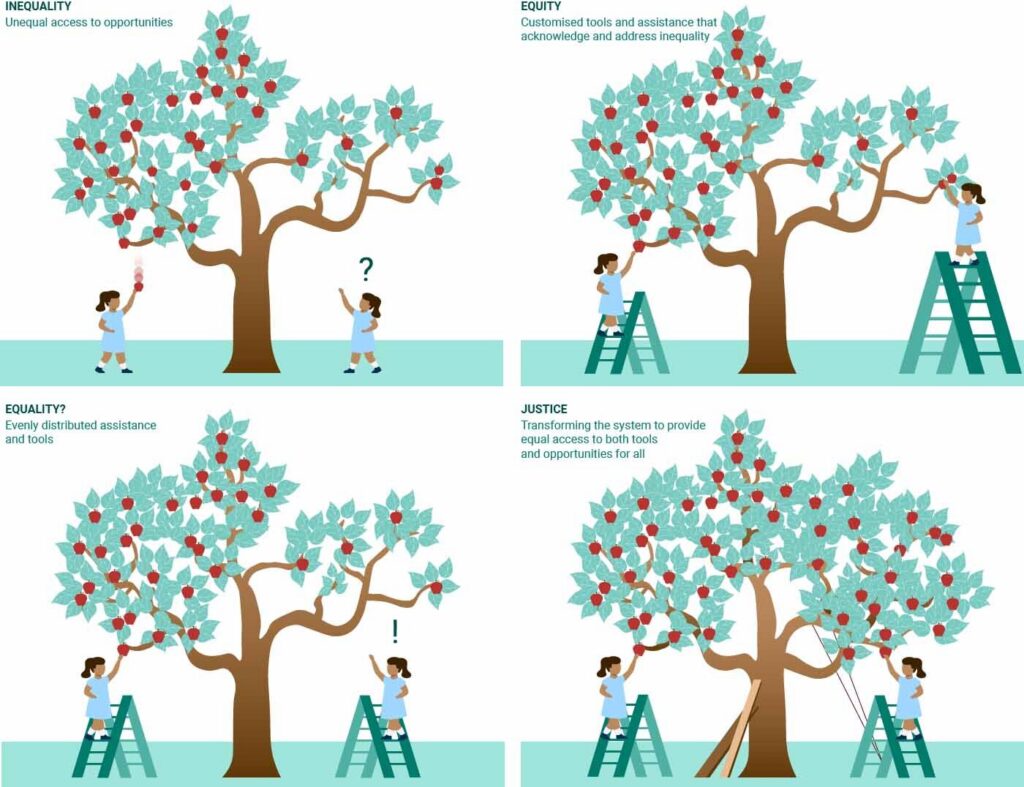
In the parable of the babies in the river in which people rush to save babies floating down the river until one person wonders where the babies are coming from and why they are in danger), saving the babies is essential and must be done. This immediacy is what many equity movements and projects involve.
- But we must also question the systems that produce the injustice. And going upriver to change the system — this is justice. When our equity movements — our recovery and our community efforts — become sustainable, we can build on them in layers of learning from the past and taking civic actions for change in an ongoing movement toward justice.
- Those in power who are intent on maintaining systems of inequality work for the status quo of injustice while dismantling equity efforts for change that would lead to justice. Going upstream is, therefore, essential to confront these efforts on a systems level rather than only countering their dismantling initiatives. We must be the builders of more just and democratic systems.But we must also question the systems that produce the injustice. And going upriver to change the system — this is justice.
Systems change requires the crucial intersection of education, justice and democracy.
Learn with us!
The first Anthology volume, “Democracy for the 21st Century,” examines the foundations and future of democracy and education’s crucial role in building a more inclusive society that expands opportunities for civic and political participation.
This volume includes Introduction to Civics for Democracy, an introduction to understanding democracy and government in the United States and our civic responsibilities so we can engage in collective civic action in our communities and across our nation. Check out the course and stay tuned for new modules!