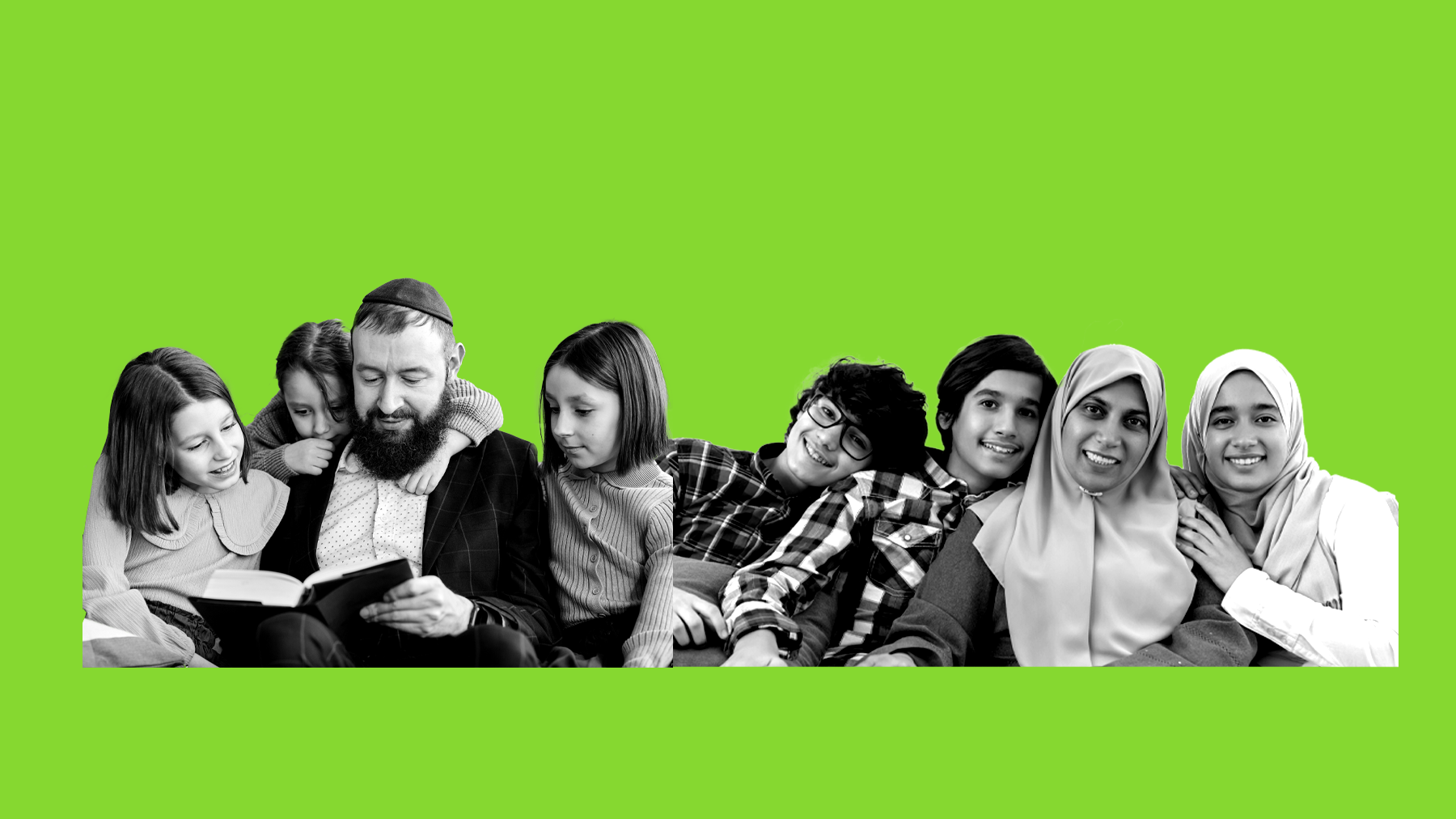
Understanding Antisemitism and Islamophobia in Education
To address antisemitism and Islamophobia in schools, we need to understand these forms of hate and how these forms of hate show up in education spaces. (Part 1 of a 2-part series)
How can understanding antisemitism and Islamophobia help us to recognize and address these forms of hate in education spaces and in our communities?
In our globally connected society, nurturing young people’s interest in understanding and engaging with what is happening in and beyond their communities and our nation is essential. And we must do so in ways that reject hate and bias.
The conflict in the Middle East, which escalated following Hamas’ October 7, 2023, attack in Israel and Israel’s subsequent war in Gaza, has led to an increase in hate incidents targeting people who are – or are perceived to be – Jewish, Muslim or Arab. While wars in this region have often led to spikes in Islamophobia and antisemitism, these two forms of hate are not inextricably linked, and both, like other forms of hate and racism, have a long history in the United States and other parts of the world.
The rise in antisemitism and Islamophobia in our society is also taking place in our schools. To address these forms of hate in schools and classrooms, we need to understand and address bigotry and proactively take measures to emphasize inclusion. This begins with an understanding of what Islamophobia and antisemitism are.
This learning journey is the first of two resources developed from the LFJ article “Understanding and Countering Antisemitism and Islamophobia in Schools” by Rachael Fugardi, Jaci Jones, Caleb Kieffer and Alon Milwicki.
How Do Antisemitism and Islamophobia Show Up in Schools?
Understanding antisemitism and Islamophobia and recognizing how hate and bias manifest in schools and harm young people are important steps toward finding ways to cultivate communities of support and affirmation for all.
Antisemitism and Islamophobia in schools can take many forms, including curriculum and instructional bias, discrimination, vandalism, harassment, and even assault. For example, in Los Angeles, a Muslim mother reported that both of her daughters have been called “terrorists” by other students since October 2023. Her elementary-age daughter was targeted on the playground and asked about her support of Israel. When she was unsure how to respond, the other student told her, “Oh, you’re one of them, a terrorist.” In Connecticut, a Jewish student transferred schools after administrators failed to take action when another student regularly taunted him, saying, “We must exterminate all the Jews,” and inviting him to “Camp Auschwitz.”
Incidents like these are often perpetrated against students by their peers, but teachers and school administrators can also be the perpetrators. In California, a complaint alleges a teacher directed second graders to write “Stop Bombing Babies” on sticky notes, which were then placed on the door of the school’s only Jewish teacher. In this instance, the Jewish teacher is being blamed for the actions of the state of Israel, which is antisemitic. (It is important to note, however, that criticizing a country’s government is not inherently antisemitic or Islamophobic.) These examples show how identity-based hate and bias can manifest in classrooms and education settings.
Even educators with the best of intentions may be motivated by bias and create uncomfortable or discriminatory situations for their students. This could include putting students on the spot to share their feelings about world events, condemn violence or defend their faith. It may include using popular catch phrases and rhetoric to discuss complex world events, which can distort the truth and cause harm toward one community or another. It may also include scheduling important exams on religious holidays, especially those that involve fasting.
When educators perpetuate or allow bias – in their lessons, classroom environments, or behavior toward students or communities – students and families may feel unsafe and unsupported in schools, which affects learning and well-being. For example, following a series of pervasive antisemitic incidents in one school district after October 7, at least 30 Jewish families transferred their students to other schools. This poses a tremendous burden to those families and to the Jewish students who must adjust to a new school because school administrators could not maintain a safe environment for them. It also deprives the remaining students of the opportunity to form interfaith friendships and learn about other cultures.
Media coverage of world events and conflicts, especially on social media, is often filled with polarizing perspectives that can promote prejudice and hate. Schools, therefore, should be an essential anti-bias learning space. While we may hope that our schools function as safe havens that shelter students from the violence of the outside world, the effects of global events reverberate in our schools just as they do throughout society. Young people experience the same pain, anger and fear surrounding violence and wars as adults do, but they are still developing the cognitive and social emotional skills needed to understand these events. That’s why we must all support young people in times of conflict. Educators, parents and caregivers have a responsibility to ensure all young people have the right to an education free from hate and bigotry in an inclusive and supportive environment.