
The Southern Poverty Law Center (SPLC) works to safeguard civil rights gains and build a more equitable and just society. Rooted in the South, where the legacy of the Civil Rights Movement continues to shape the struggle for racial equality, we partner with communities to dismantle white supremacy and strengthen intersectional movements to advance transformative policies and human rights for all.
Our work includes providing subject-matter expertise and technical assistance to partners, stakeholders, and state and local officials to drive impactful initiatives that ensure a future where Black and Brown communities are not only represented but deeply respected as part of a thriving democracy. We focus on:
- Strengthening Democracy: Expanding Access and Ensuring Fair Representation
- Eradicating Poverty: Protecting Social Safety Net Programs and Creating Pathways for Upward Economic Mobility
- Ending Over-Criminalization and Mass Incarceration: Favoring Community-Based Alternatives to Carceral Solutions and Transparency and Accountability for Law Enforcement Actors
- Countering Hate and Extremism: Ensuring Inclusive Education
Eliminating Poverty and Economic Inequality
3Mestimated number of Floridians, living at or below the federal poverty level, who depend on monthly SNAP benefits
Over the past several years, the federal summer Pandemic-EBT Program has proven to be a lifeline for countless Florida families, ensuring that children in households experiencing food insecurity receive the nourishment they need even when schools are closed. Congress has long recognized the importance of food security programs like these. Beginning in 2011, it invested in the Summer EBT pilot program, and in 2022, with overwhelming bipartisan support, passed the Consolidated Appropriations Act, which created a permanent Summer EBT program within the U.S. Department of Agriculture (USDA). Despite specific authorization in the 2024 and 2025 state budgets, the Florida Department of Children and Families declined to request the necessary matching funds to participate in this vital food program for 2025 and has not responded yet for 2026. This decision means thousands of Florida children continue to suffer during the summer months without regular access to safe, nutritious food.
Like many national programs, the operation of food security programs like the School Lunch Program, Women, Infants and Children (WIC), and Supplemental Nutrition Assistance Program (SNAP) has been primarily funded by the federal government. The federal budget (called “The One Big Beautiful Bill Act”) passed in July 2025 shifts financial burden to the states, increasing their administrative costs from 50% to 75% in FY27 and, starting in FY28, states will be assessed additional costs based on the program’s error rate.
In FY27, Florida’s total SNAP obligation is estimated to increase by $115.6 million — simply to maintain the current service levels. Due to the program’s high error rate, the state’s additional cost-sharing will be delayed until at least FY29. However, based on current projections, costs could be as high as $1.2 billion.
An estimated 3 million Floridians, living at or below the federal poverty level, depend on an average monthly benefit of $186 to purchase groceries. Nearly 60% of participants are families with children, and more than 41% are families with members who are older adults or individuals with a disability. It’s a moral imperative that we do not leave children or families in need to go hungry.
Recommendations:
- Fully fund Florida’s increased share of SNAP administrative costs mandated under the federal One Big Beautiful Bill Act, without reducing eligibility, benefit levels, or access to the program.
- Provide adequate funding to participate in summer nutrition programs and academic-year breakfasts for school-aged children, including seeking appropriate matching funds from the USDA annually, or as available, to continue vital programs.
- Direct all relevant local and state agencies to partner with schools, community organizations, and health providers to identify and enroll eligible but unenrolled children and families in SNAP, WIC, Summer EBT and other anti-poverty programs.
- Require annual public reporting on participation, hunger indicators, and use of federal nutrition dollars to ensure Florida is maximizing available federal funds for food security.
- Set aside contingency funds for future strain on Florida’s food security programs.
- Work with state agencies to improve systems and increase staff capacity to reduce the error rate.
- Fund necessary information technology upgrades for the Department of Children and Families MyAccess Portal and related staff training.
Eliminating Poverty and Economic Inequality
A key indicator of a thriving society is the health of its people. Access to affordable and quality health care is key to a family’s economic security. Sadly, medical bills remain one of the leading factors in a person or family’s decision to file for bankruptcy.
600,000number of children who have been removed from state Medicaid programs
However, Florida leaders have consistently refused to expand Medicaid despite the estimated cost savings to taxpayers of around $200 million annually. In addition, improper procedural reasons and poor agency service have led the state Department of Children and Families to remove nearly 600,000 children from state Medicaid programs. Eradicating poverty starts with improving access to health care.
Florida is one of only 10 states that have not expanded Medicaid coverage to those falling into the health care access gap — despite it being cost-effective to do so. Benefits of Medicaid expansion include increased access to health care for people of color and people with disabilities, the preservation of rural community hospitals, and improved access to the basic health resources for communities that have been shut out of health care systems.
Medicaid expansion could also save rural hospitals struggling financially and at risk of closure. Driving factors for the crisis are a combination of rising costs of providing care and expenses related to uninsured community members. Easing their financial burden would prevent a health care desert by keeping the hospital and its well-paid jobs in the community, as well as boosting the local economy and schools.
To make matters worse, the One Big Beautiful Bill Act passed in July 2025, declined to extend the tax credits for health care premiums paid toward plans accessed through the Affordable Care Act (ACA) marketplace. As a result, health care costs are set to skyrocket in 2026 for the over 4.7 million Floridians enrolled in an ACA plan. As an example, a 60-year-old couple living in Tallahassee, earning $85,000, will see their monthly premium for a Bronze Plan increase from $0 to $1,947. Further, because insurance providers anticipate that the unaffordable price jump will force many to drop out of coverage, they have increased costs in the private market as well.
Recommendations:
- Provide tax credits for hardworking Florida families to ensure coverage and meaningful access to basic medical care.
- Authorize the expansion of Medicaid in a way that enables it to accept the federal funding available to do so, with coverage for adults with low incomes at least up to 138% of the federal poverty level and without added work requirements.
- Bundle Medicaid assistance with housing assistance to help people with low incomes who have disabilities get back on their feet.
- Improve state administration of Medicaid services, including enrollment and redetermination processes, call centers, and associated IT services.
- Fund rural health care access, including hospitals and mobile tele-health programs.
- Reduce costs and barriers to access, especially for low-income Black and Brown Floridians that live in rural, high-poverty counties.
Eliminating Poverty and Economic Inequality
Florida’s remarkable population growth, coupled with lax growth management laws, has reached a boiling point, with housing now costing more as a percentage of household income than ever before. Failed state policies related to property insurance, climate change, global inflation, and the state preemption of local government regarding rent control and the tenant/landlord relationship have led to costly living conditions across the state.

Report
Why Florida Can’t Wait for Economic Justice
An SPLC report highlights how nearly 31,000 Floridians are experiencing homelessness, and the ample opportunity for policymakers to prioritize people and families.
The Florida Legislature has focused on adopting punitive laws that prohibit public camping and sleeping without providing adequate resources to build supportive housing. As a result, there has been a rise in the number of arrests of unhoused individuals and increased legal costs to local governments and their taxpayers. The criminalization of homelessness is an unacceptable policy outcome.
As populations of unhoused and inadequately housed people in Florida continue to climb, we must fulfill the state’s Housing First statutory commitment and provide dignity through clearly defined rights of unhoused people and stability through affordable and safe housing, rejecting calls to criminalize people experiencing homelessness.
Recommendations:
- Reinforce the dignity of its residents by allocating U.S. Department of Housing and Urban Development (HUD) funds to ensure quality, affordable housing for Floridians — regardless of economic, physical, or mental health status.
- Clearly define the rights of unhoused individuals and families to minimize interactions with law enforcement and unnecessary and harmful jail time.
- Address the needs of local unhoused populations and the drivers of homelessness, rather than passing criminal penalties or requiring encampments.
- Repeal and oppose preemptions or policies that limit local governments’ ability to respond to their community’s housing needs, like the current ban on localities from passing ordinances protecting renters from discrimination and negligence.
Strengthening Democracy and Voting Rights
The Florida Legislature has recently significantly changed state voting and election laws. Voting should be a simple, convenient process that allows every eligible voter to participate easily. But too often in Florida, this is not the case. Changes to vote-by-mail and the voter registration process, extreme regulations on third-party voter registration organizations, and threats posed by the investigative Office of Election Crimes and Security make participation in our electoral process challenging.
Story
Vote Your Voice: Florida Justice Center critical to returning citizens
The FLJC, which since 2019 has conducted more than 1,000 voter eligibility checks for returning citizens was awarded a grant by the SPLC.
Instead of providing ways to increase participation for eligible voters, lawmakers and the secretary of state (appointed by the governor) criminalized Floridians who are confused or ill-informed about their eligibility status, removed Florida from widely trusted and secure interstate data-sharing agreements (a vital source of information for election officials and routine voter list maintenance), and continue to attempt to erode the state’s citizen initiative process through undemocratic threshold increases and cost-increasing regulations.
These deterrents and impediments are worsened by the lack of election administration protocols following hurricanes or other natural disasters. Supervisors of elections, elected officials who are closest to the ground when natural disasters strike, cannot act until the governor issues an executive order allowing for accommodations and flexibility. Florida’s Supervisors of elections know their community best and are the most efficient office to respond to the complicated needs of voters after a natural disaster. However, simple access to a voting booth or vote-by-mail ballot is not enough. In a hurricane- and flood-prone state like Florida, backup equipment like printers, paper, and scanners are all needed to ensure a seamless-as-possible election should disaster strike a community.
Recommendations:
- Guarantee voters impacted by natural disasters have easy access to participate in our elections.
- Give county elections supervisors flexibility and all necessary equipment, including supply reserves, to respond to the needs of their community in the wake of a natural disaster.
- Authorize automatic and same-day voter registration.
- Allow for permanent vote-by-mail requests with prepaid postage for ballot returns.
- Establish a centralized database for those with past criminal convictions to determine their voter eligibility.
- Ensure non-English language access for Florida’s diverse population.
- Codify key provisions from the landmark 1965 Voting Rights Act that have been eroded since Shelby and Brnovich, including preventing vote dilution, strengthening voter intimidation protections, and creating a state “preclearance” program that requires local governments with records of discrimination to prove certain voting changes will not harm voters of color before they can go into effect.
- Allow for the ability to — and advocate for — supervisors of elections to add additional early voting sites to serve their community better.
Ending Unjust Imprisonment
In Florida, police can arrest children as young as 7 years old. Children of color account for 62% of children arrested in Florida, but 78% of those prosecuted as adults. Florida prosecutes more children as adults for felonies than any other state — often at the sole discretion of prosecutors. Direct file transfers, which force children to be prosecuted in adult court and detained in adult facilities, happen 63.2% of the time for Black youth, compared to 22.7% for white youth. The annual cost to incarcerate a child in Florida ($130,520) is more expensive than the cost to educate that child in Florida public schools ($11,773), fund alternatives to incarceration ($3,427), and enroll at the University of Florida ($23,150) and Florida State University ($25,762) combined.

Report
Florida’s self-proclaimed ‘tough love’ policies hurt Black youth
Only Young Once: The Systemic Harm of Florida’s School-to-Prison Pipeline and Youth Legal System explores the scope and impact of youth incarceration in Florida.
When children are pushed into the adult system, they are branded with a felony conviction that will create lifelong obstacles to finding housing, education, and employment. They return to their communities and are more likely to be arrested again. And our children and communities are worse off for it. Children have a propensity for change, but only if we allow them to do so and provide alternatives to confinement and community services to build resiliency.
The use of Florida’s Baker Act — a policy allowing law enforcement to detain someone for mental health evaluation involuntarily — on children has increased 128% over the last two decades. Children as young as 5 years old are handcuffed and forcibly taken by police away from their families to psychiatric hospitals, where they legally can be held for up to 72 business hours in conditions that would harm and traumatize even adults.
We appreciate the Legislature’s significant efforts to modernize Florida’s Baker Act policy in 2024, and as part of our efforts to end the school-to-prison pipeline, we hope to encourage additional reforms in the coming year.
Recommendations:
- Supply increased discretion to judges in deciding whether a child is housed in an adult incarceration facility by amending the state’s “direct file” statute.
- Increase the minimum age of arrest to 14 years old.
- Make nonviolent offenses, especially technical violations, status offenses, and nonviolent drug offenses, non-jailable for youth — deferring instead to community interventions.
- Approve funding and pass policies that train and educate all school districts, school staff, police, and sheriff department first responders, school resource officers, parents and guardians, foster care providers, and caregivers about the profound consequences and traumatic effects of inappropriately using the Baker Act against children.
- Reform policy related to the mental health of minors to better protect young people from unnecessary detainment, incarceration, and added trauma (such as being handcuffed and transported to a receiving facility in a police car), especially as it relates to the educational setting.
Ending Unjust Imprisonment
The prison system’s brutal legacy stems from a long and detailed history of overly harsh sentencing practices rooted in “tough on crime” attitudes, which have resulted in significant overcrowding and persistent understaffing. Mandatory-minimum sentences, once lauded as the only way to combat the burgeoning drug epidemic of the 1970s/1980s, are now widely panned by academics and advocates across the political spectrum as ineffective and harmful. Yet, despite this ample research to the contrary, the Florida Legislature continues to support new mandatory-minimum sentences that unfairly burden individuals, their families, and their communities.
The tragic, growing, and ongoing opioid epidemic plaguing towns and cities across the Deep South has helped fuel lawmakers’ renewed interest in mandatory-minimum sentencing policies. Coupled with existing discrimination in the prosecution and sentencing of people of color for addiction-related crimes, mandatory-minimums seem even that much more extreme.
Policymakers should treat all addictions the same: as a public health crisis. Mass incarceration and seemingly never-ending legal trouble are not pathways to recovery.
Recommendations:
- Repeal and replace all mandatory-minimum sentencing laws to allow for judicial discretion and alternative rehabilitation methods.
Eliminating Poverty and Economic Inequality
In the 2025 legislative session, we saw a direct attack on basic worker protections through legislation that sought to repeal the entirety of Florida’s Labor Pool Act. Labor pools are offices that connect workers who cannot find full-time employment with companies in need of temporary or day labor. For many reasons, newly returning citizens often struggle to secure steady employment after incarceration. As a result, labor pools often become their only viable option for earning a consistent income. In response to widespread abuses within the industry, the Florida Legislature enacted a series of protections in the 1990s to safeguard these workers. This foundation is essential for economic mobility, as a lack of protection traps workers in a cycle of precarious, low-wage work. We were grateful to see last year’s repeal effort fail and proud of our role supporting frontline organizations in their advocacy. This year, we will work to strengthen and improve the Labor Pool Act to ensure all Florida workers are safe and, through their own efforts, able to transition to full-time employment. Strengthening the Labor Pool Act is a direct investment in anti-poverty measures, creating tangible pathways out of temporary work and into stable careers.
Recommendations:
- Reduce financial barriers for employers that want to hire day laborers to full-time positions.
- Create a state registration procedure to ensure Floridians can find basic information about labor pools and relevant contact and location information.
Dismantling White Supremacy
More than 2,000 memorials in the United States valorize the Confederacy, a secessionist government that waged war to preserve white supremacy and the enslavement of millions of Black people. Erected primarily during the Jim Crow era and Civil Rights Movement as part of an organized propaganda campaign to terrorize African American communities, these artifacts distort the past by promoting a false narrative of the Civil War and continue to divide communities where they stand in public spaces.

Report
More than 2,000 Confederate memorials can still be found throughout U.S.
This fourth edition of the Whose Heritage? report offers an evolving assessment of the threats and harms of symbols perpetuating the “Lost Cause” myth. | Whose Heritage? Map
In recent years, communities across Florida have successfully removed these hateful reminders in large cities such as Jacksonville and smaller localities such as Fort Myers. However, in recent years, lawmakers in Florida have tried to pass laws that increase financial penalties on those who remove or vandalize such statues. Recently, lawmakers have filed bills to force cities and counties to replace all Confederate statues removed since 2017 and provide a mechanism for the governor to remove any local elected official who removes one of these memorials.
Relatedly, as hate crimes continue to rise across the state, we seek to reform Florida’s hate crime reporting statutes to require law enforcement agencies to uplift all incidents to the FBI’s National Incident-Based Reporting System (NIBRS). The FBI’s database is one of the country’s leading tools for academics, advocates, and government officials to track, monitor, and anticipate hate crime incidents in certain localities. As one example, the database currently shows that the city of Orlando reported zero (0) hate crimes in 2023 and did not report at all in 2024, despite numerous news media reports of Nazi/antisemitic activity across the Central Florida region. Mandatory hate crime reporting will help future lawmakers craft policies to help address this growing problem.
Recommendations:
- Reject any attempts to subvert the democratic process and undermine local control by forcing communities to keep unwanted memorials and monuments.
- Require law enforcement agencies in Florida to report incidents of hate crimes to the FBI annually.
- Unite with local governments to create a grant program to help local communities fund the relocation of Confederate memorials.
Eliminating Poverty and Economic Inequality
In recent years, we have witnessed certain activists and politicians advance racist strategies and attack anti-discrimination policies in K-12 and higher education settings. It is by no accident that we are witnessing this attack after several years of racial reckoning. Our children deserve an honest education about race and racism in this country. Attempts to quash these conversations are attacks on democracy, justice, and community, and they don’t allow us to deal frankly with our past or future. Students must learn the full picture of U.S. history, especially when it does not align with our shared values. The U.S. is founded on ideals of liberty, freedom, and equality, but built on slavery, exploitation, and exclusion.
Story
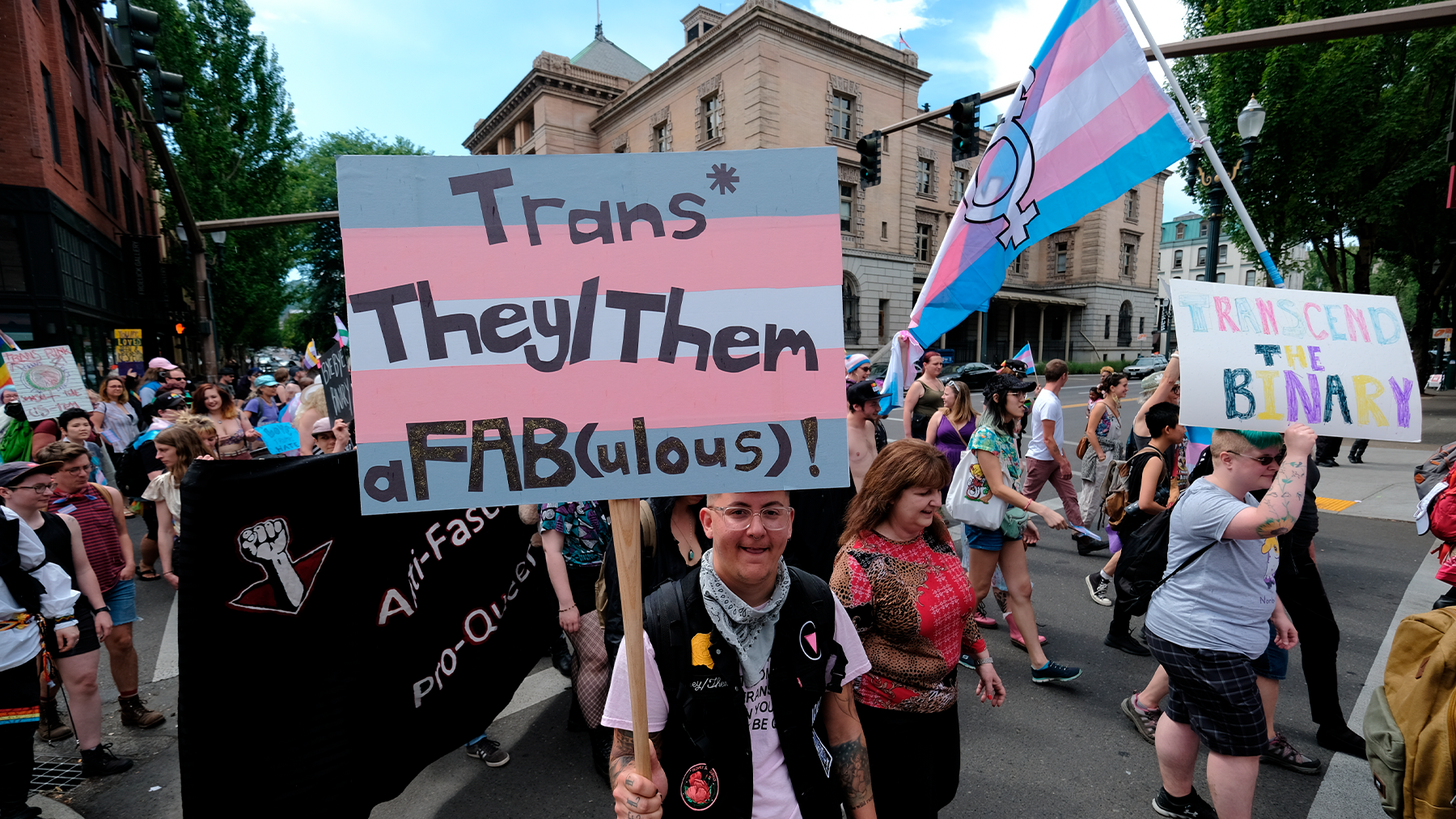
Teacher fights Florida anti-LGBTQ+ law, says ‘state can’t deny my existence’
Lawsuit challenges Subsection 3 of the law known as “Don’t Say Gay,” which blocks transgender and nonbinary teachers from using their pronouns and titles.
In addition to efforts to erase Black history from schools and to eliminate diversity and inclusion programs, we have also seen harmful policies that target the health and well-being of LGBTQ+ youth in Florida. Over the past few years, the Florida Legislature has passed multiple laws that prevent children from openly expressing themselves at school, playing on sports teams with their peers, or using the restroom in which they feel safe, creating an environment where LGBTQ+ kids and their families are faced with tough decisions about their educational futures and well-being.
Recommendations:
- Reject the politicization of education. Instead, embrace the importance of encouraging students and youth to learn about Black history and the diversity of the United States, including an honest account of its histories, races, and cultures.
- Reinstate and reinvigorate all African American studies courses, units, and programs in Florida’s publicly funded schools.
- Support the dignity of LGBTQ+ individuals, particularly youth. Reject any policies that further harm children by censoring their personal expression, denying them access to educational materials, or otherwise put them at greater risk of bullying or self-harm.
- Retain the independence of local libraries as safe havens within their communities.
- Increase funding and support for public schools and provide policy changes to reduce racial and socioeconomic inequities.