
The Supplemental Nutrition Assistance Program (SNAP) is the nation’s largest anti-hunger program. It provides essential food assistance to people with low incomes across the United States.
As the Southern Poverty Law Center’s Florida policy intern, I researched the implications of recent SNAP cuts for everyday Floridians to inform our advocacy in the upcoming legislative session. Nearly 3 million Floridians receive SNAP.
It was clear to me that these cuts would be detrimental to families across the U.S.
When HR 1, Trump’s One Big Beautiful Bill Act, was signed into law in July, it gutted $187 billion in federal funding for SNAP through 2034. This decision puts millions of people at risk of food insecurity and passes massive costs on to state budgets that cannot afford them. The effects of this bill on food assistance in Florida are especially grim.
Aside from harmful changes that will limit SNAP eligibility, expand participant work requirements and increase state administrative costs, HR 1 will force states to pay some SNAP benefit costs the federal government previously paid in their entirety. The percentage of SNAP benefits that each state will pay depends on that state’s combined payment error rate, which measures the accidental over- and underpayments their SNAP programs make in a year.
Last year, Florida had the fourth-highest SNAP payment error rate in the country at 15.13%, a number the Florida Department of Children and Families attributes to three particularly destructive hurricane seasons. If this HR 1 provision goes into effect based on that error rate, Florida legislators would have to find nearly $1 billion to cover benefits alone.
The new error rate rule goes into effect in October 2027 based on fiscal year 2025 or 2026 error rates. There is also a delayed implementation option for states with an error rate above 13.3% in either year, allowing them to delay cost sharing until 2029 or 2030, respectively.
In response to this, the Florida Legislature should increase funding for SNAP. Failure to do so could result in either drastic changes to SNAP, budget cuts to other programs or opting out of SNAP altogether. This could leave millions of people, including about 1.75 million Florida families with children, without a stable food supply.
SNAP cuts will also create a ripple effect on other food programs, such as the National School Lunch Program and the Special Supplemental Nutrition Program for Women, Infants and Children, also known as WIC. Both of these programs use SNAP eligibility to certify hundreds of thousands of Floridians for participation.
Florida must act before putting these programs at risk.
Ella Windlan is a senior at Florida State University and a former intern with the SPLC’s Florida policy team.
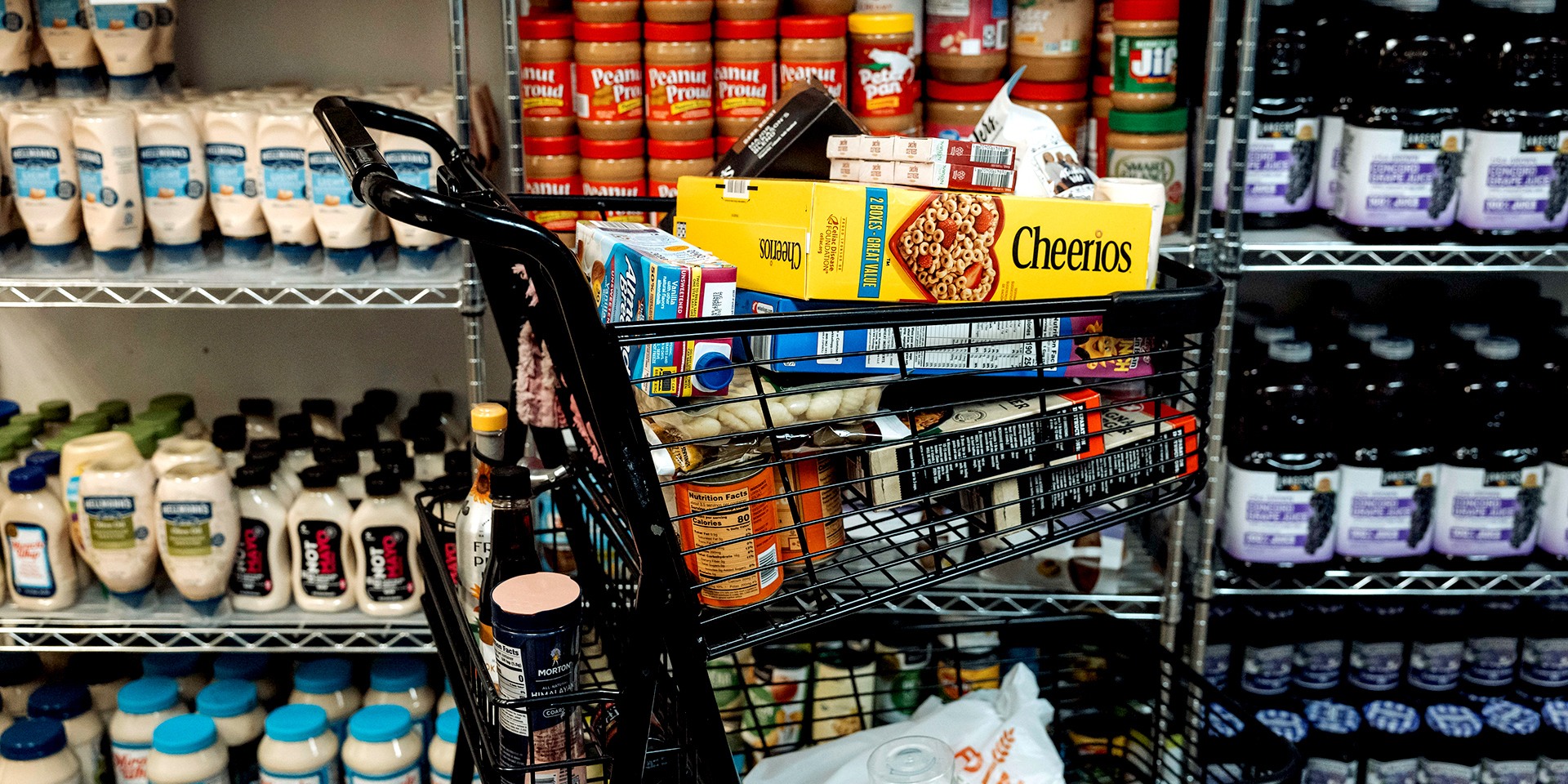
Image at top: A shopping cart is filled with donated food items at Feeding South Florida’s pantry in Pembroke Park, Florida, on Oct. 31, 2025. (Credit: Bloomberg/Getty)