
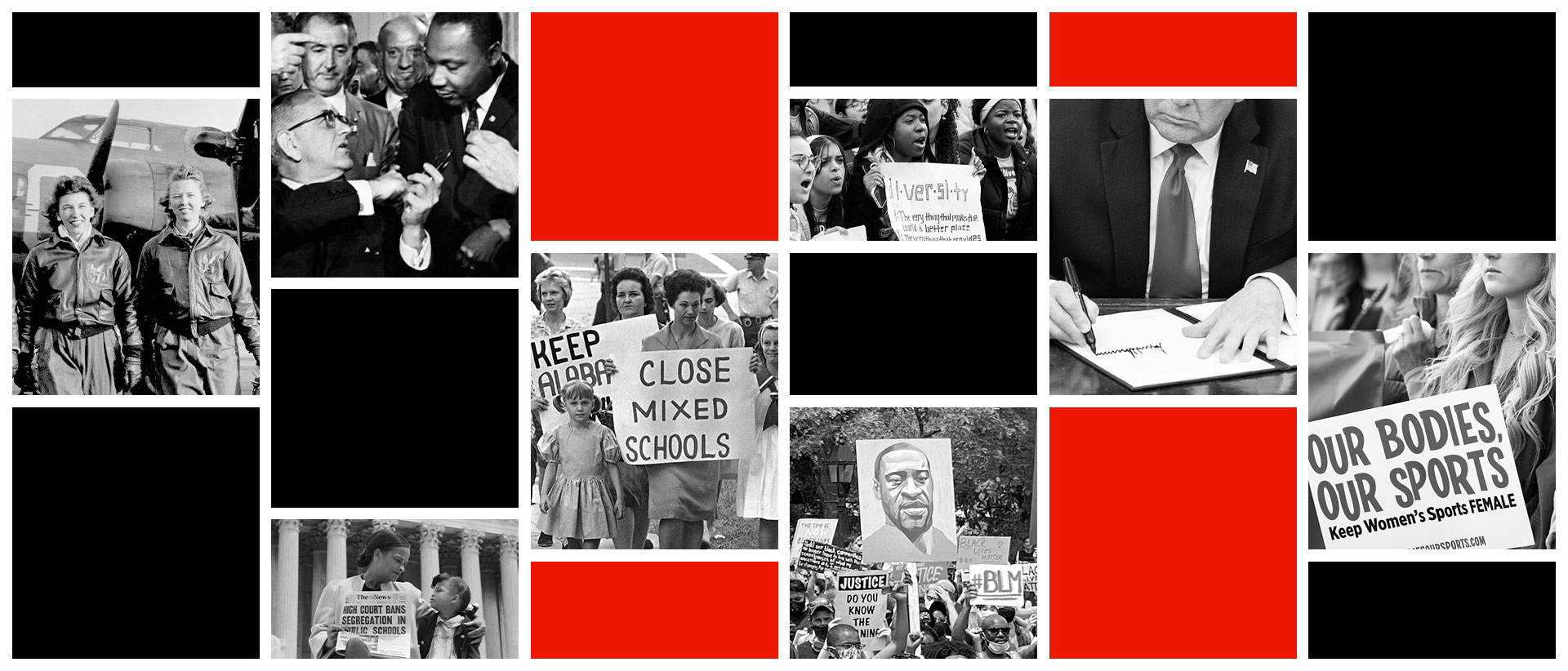
Executive Summary
In 1931, amid the Great Depression, Victoria Price and Ruby Bates boarded a freight train in search of work. Both women were poor, white mill workers from Alabama with reputations as prostitutes. Train hopping was illegal then, and still is now, but people still did it, riding the rails to seek work in other towns.
As the train passed through northern Alabama, a fight broke out between a group of white boys and nine Black boys, ages 13 to 19. The Black boys, many of them strangers to one another, managed to push their white attackers off the train. By the time the train reached Paint Rock, Alabama, the next stop on the route, a posse of white men had assembled, awaiting the Black boys’ arrival.
Upon seeing law enforcement gathered with the posse, Ruby and Victoria feared drawing attention for illegally riding the train, and more importantly, for violating the Mann Act, also known as the White Slave Traffic Act of 1910, which criminalized transporting girls and women for immoral purposes, like prostitution. To avoid arrest, the two quickly created a story to divert attention away from themselves, telling the posse that they had been gang-raped on the train by all of the Black boys. Their plan worked. All nine boys were promptly arrested and jailed in nearby Scottsboro, Alabama.
The arrests and swift convictions of the teens, who came to be known as the Scottsboro Boys, became one of the most infamous miscarriages of justice in U.S. history. All-white juries sentenced the boys for rape. Later on, eight of the boys were sentenced to death within days, despite flimsy evidence, inadequate defense and conflicting testimony.
This case sparked national outrage and inspired American folk and blues singer Lead Belly to write “The Scottsboro Boys.” Most of the song’s verses begin with “Go to Alabama and ya better watch out,” warning listeners about the ongoing troubles for not only the Scottsboro Boys, but all Black citizens in the South.
In one recording of the song, after the music finishes, Lead Belly can be heard saying:
“I made this little song about down there. So, I advise everybody, be a little careful when they go along through there — best stay woke. Keep their eyes open.”
This is often considered the first time that the term “woke” was used in the context of racial justice.
The idea of staying “awake” to injustice has a longer history. In 1860, the Wide Awakes — a youth-led Republican group — marched through cities demanding the abolition of slavery. Figures like Marcus Garvey and Martin Luther King Jr. echoed similar messages throughout the 20th century, urging Black communities to remain conscious and vigilant in the face of systemic oppression.
After the murder of George Floyd in 2020, this legacy of awareness reemerged under the banner of “wokeness,” often tied to movements for increased diversity, equity and inclusion (DEI). “Diversity,” “equity” and “inclusion” are not buzzwords or political trends — they are frameworks grounded in the principles of justice, representation and belonging. In workplaces, schools and public institutions, DEI seeks to address systemic inequities and build environments where people of all backgrounds can thrive. Diversity, equity and inclusion efforts aim to confront the legacy of exclusion in the U.S. and create policies that support those who have historically been marginalized, including people of color, LGBTQ+ individuals, people with disabilities, and women. But despite their intent to foster equity, these efforts have become lightning rods in an intensifying cultural and political battle.
While these efforts aim to correct long-standing injustices, they have been weaponized by political critics, transforming “wokeness” into a cultural battleground and “woke” into a battle cry for those in the majority desperately seeking to maintain the status quo. Today, through legislation, policies and common talking points, those determined to crush “wokeness” have been on a crusade to pervert its meaning as a call for justice.
Not a Trend, a Tradition: Understanding the Present Through the Past
In recent years, diversity, equity and inclusion initiatives have met growing opposition, particularly from conservative policymakers, media outlets and advocacy organizations, who have even attempted to co-opt the abbreviation “DEI” to paint these concepts as negative and harmful. While the principles behind diversity, equity and inclusion trace back to the Civil Rights Movement and landmark legislation including the Civil Rights Act of 1964 and Executive Order 11246, the abbreviation “DEI” itself emerged much later. It gained prominence in corporate and academic settings during the late 20th century and 2010s as organizations began consolidating diversity, equity and inclusion efforts under a single framework. Recent polling suggests that, while more than seven in 10 Americans view the concepts of “diversity, equity and inclusion” favorably, far fewer are familiar with or express support for initiatives explicitly labeled as “DEI,” reflecting a growing gap between public values and politicized terminology.
DEI programs are being dismantled at universities, banned from government training materials, and attacked in K-12 classrooms. Critics argue that DEI promotes “reverse racism,” “Marxist ideology” and even racial division. These claims not only misrepresent the goals of DEI, but they obscure a deeper ideological project: the preservation of long-standing hierarchies of power.
The current backlash against DEI is not new; it is the latest chapter in a long tradition of resistance to civil rights, equality and social progress in the United States. From the Reconstruction era’s violent dismantling of Black political participation to the “massive resistance” against school desegregation after Brown v. Board of Education, American history is filled with examples of efforts to undermine or reverse advances in racial justice.
The rhetoric used today to discredit DEI — allegations that it is unfair to white people, that it sows division, that it unfairly gives opportunities to unqualified individuals, or that it indoctrinates youth — is not only false but closely mirrors arguments used in the mid-20th century to resist desegregation and integration. In the wake of Brown, for instance, some white parents claimed integration would harm their children or disrupt community values. These sentiments echo in current legislation like Florida’s Stop W.O.K.E. Act, which was passed in 2022 and restricts discussions of race and history under the guise of protecting students from discomfort.
“In Florida, we are taking a stand against state-sanctioned racism,” said Gov. Ron DeSantis about the Stop W.O.K.E. Act. “We won’t allow Florida tax dollars to be spent teaching kids to hate our country or to hate each other.” A consultant for the bill, Chris Rufo, a hard-right activist and filmmaker who made his name opposing the supposed dangers of “critical race theory,” said the bill prohibits the promotion of “race essentialism, collective guilt, and racial scapegoating in the classroom or the workplace.”
What has changed in recent years is not the subject of the resistance to integration, but its branding. Modern anti-DEI activists cloak themselves in the language of neutrality and meritocracy, presenting themselves as defenders of fairness. Yet the consequences of these rollbacks are anything but neutral. They disproportionately impact communities who have long fought for visibility, access and equity in public life. When DEI programs are eliminated, students of color face widened opportunity gaps, LGBTQ+ youth lose affirming spaces, and workers from marginalized backgrounds have fewer protections against discrimination.
This report will examine the present-day assault on DEI, not as an isolated phenomenon, but as part of a much larger and older effort to stifle movements for equity and inclusion. By tracing parallels between past and present, we can better understand the stakes of today’s conflicts and the strategies used to oppose progress. Each section of this report unpacks a different dimension of the backlash — from political rollbacks to legal strategies to grassroots censorship — while always anchoring these developments in historical precedent.
Ultimately, the goal is not just to diagnose the problem, but to illuminate the deeper patterns of resistance that have defined the American struggle for justice and equal opportunity for all.
Historical Context
Backlash Is American Tradition: From Jim Crow to DEI
The fierce opposition to diversity, equity and inclusion initiatives today is not an anomaly — it is part of a long American tradition of resistance to civil rights and social progress. Each wave of reform in U.S. history, especially those aimed at racial justice and equity, has been met with a corresponding wave of backlash. Whether in response to Reconstruction, the Civil Rights Movement or affirmative action, efforts to redress historic injustices have consistently provoked attempts to preserve the status quo. Today’s anti-DEI rhetoric is a continuation of well-worn patterns designed to stall progress.
Historically, there was fierce opposition to some of the most significant advances in racial equity: desegregation, voting rights and affirmative action. These efforts challenged deeply entrenched power structures; in doing so, they provoked anxiety, especially among those who viewed equity as a zero-sum threat. The backlash was not always overtly racist; in fact, it often disguised itself in the language of fairness, individual rights and “colorblindness.” But the effects were unmistakably racialized, aimed at curtailing the gains of Black Americans and other marginalized groups.
This resistance was particularly visible in the decades following Brown v. Board of Education (1954), the landmark Supreme Court decision that declared racial segregation in public schools unconstitutional. Brown was hailed as a major victory for civil rights — but it also ignited one of the most organized, strategic backlashes in American history. Rather than comply, many state governments, especially in the South, employed every legal and extralegal means available to resist desegregation. Their tools included school closures, legal maneuvers and the creation of private “segregation academies.”

The Language of Segregation Remains the Language of Oppression
American education has not been immune from the plagues of injustice and inequity that so many of this country’s institutions are rooted in and still infest our everyday lives. In fact, education has often been at the epicenter of many reactionary movements to perpetuate supremacy. Anti-literacy laws enacted between 1740 and 1834 sought to suppress the abilities and possibilities of both enslaved and free Black people by making it illegal for them to learn to read or write. By the 1920s, the Daughters of the American Revolution campaigned to keep public schools “fundamentally Anglo-Saxon,” with its national leader warning parents to “guard well your schools” against teachers attempting to indoctrinate vulnerable children with unpatriotic ideas.
One of the darkest times in American education, perhaps, were the days following the U.S. Supreme Court decision to integrate public schools — when parents, politicians and concerned citizens vehemently and sometimes violently fought for their “rights” to exclude Black students from schools. In the aftermath of Brown, many Southern school districts resisted desegregation by renaming schools after Confederate generals and leaders, using these symbolic gestures to assert white resistance to integration and federal civil rights mandates. This period also witnessed acts of racial terror aimed at schools undergoing desegregation, such as the firebombing of the English Avenue School in Atlanta in December 1960. The bombing occurred shortly after the school’s auditorium hosted a prayer meeting for an anti-segregation protest, highlighting the violent opposition to integration efforts.
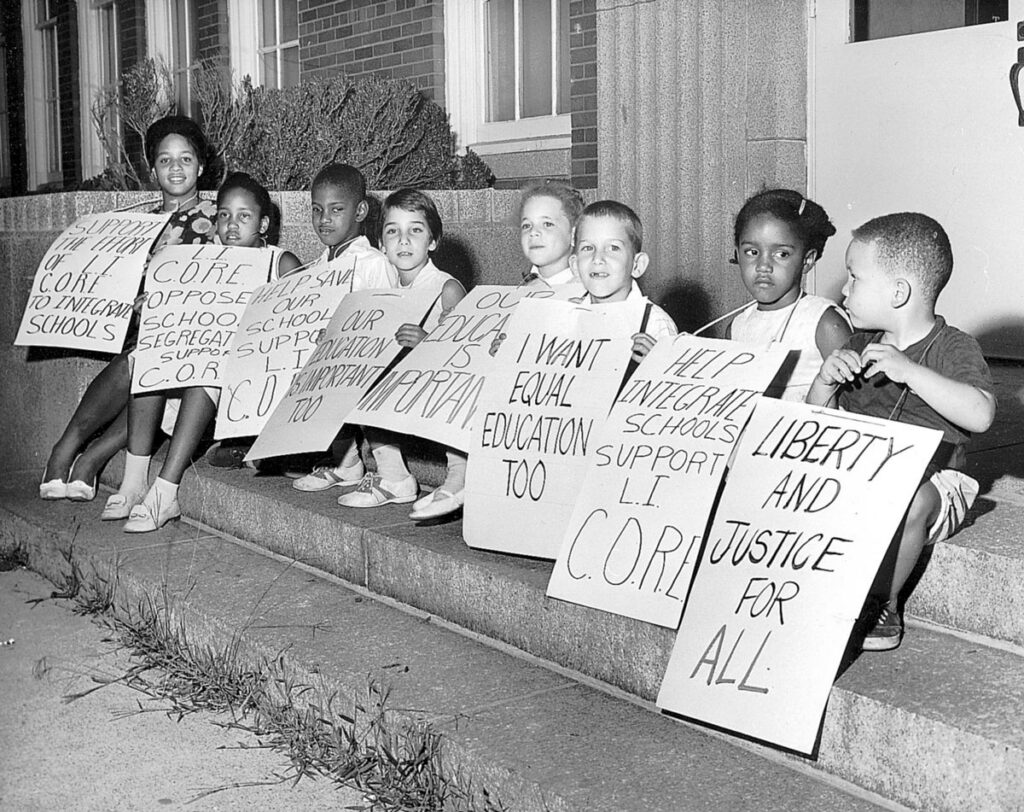
Also, in the wake of the Brown decision, Prince Edward County, Virginia, became a national symbol of defiance. Rather than integrate, county officials chose to shut down the entire public school system from 1959 to 1964. White students were quickly absorbed into newly created private academies — funded indirectly by public resources — while Black students were left without formal education for years. Black parents organized alternative private options for their children, including sending them away to live with relatives and hosting educational programs in homes. Churches also opened makeshift schools, and lawsuits were filed, but the damage was profound and lasting.
Segregationists claimed that integrating schools would indoctrinate the white students. Anyone who supported integration was said to be preaching communism, including Jewish people, the NAACP, and the U.S. Supreme Court that decided Brown. The rhetoric used to justify the closure of schools mirrored much of what is said today about DEI programs. White officials claimed they were protecting children from social disruption. They invoked the rights of parents, the need for local control, and the supposed dangers of federal overreach. They argued that forced integration harmed educational quality and moral values. In other words, the backlash to Brown was not merely a regional resistance — it was a carefully framed ideological stance, crafted to appear principled while preserving racial inequity.
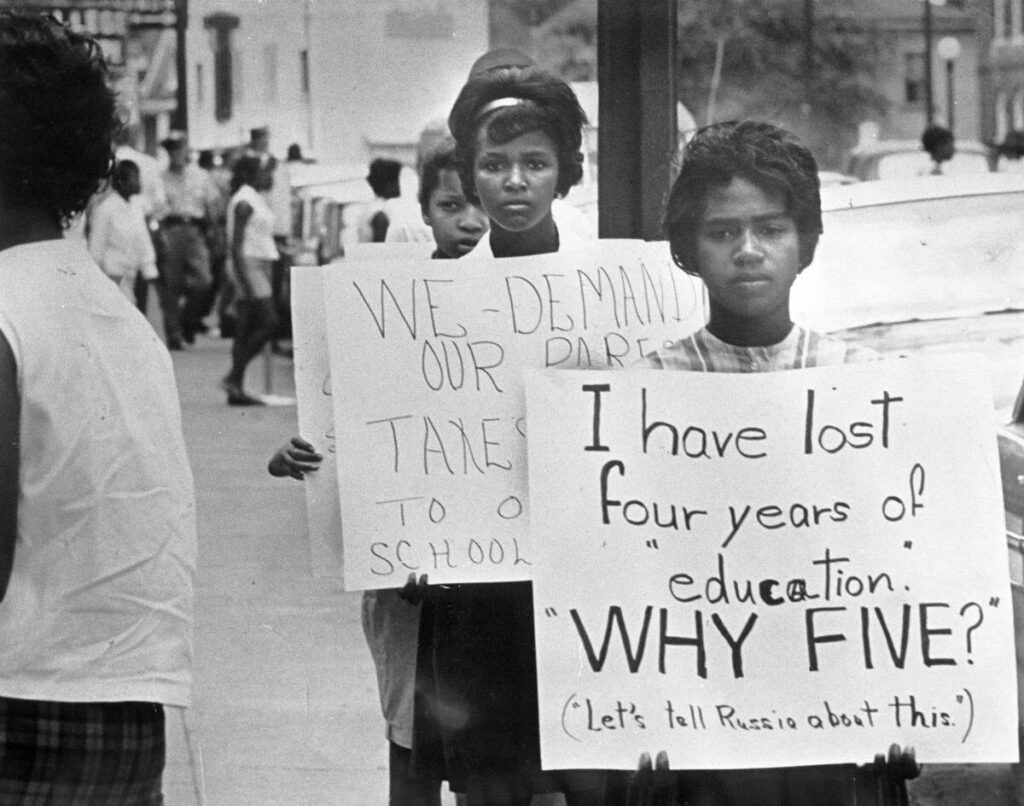
The legacy of this period offers sobering insights into today’s anti-DEI movement. Just as opponents of desegregation positioned themselves as defenders of children and education, today’s critics of DEI claim to protect students from discomfort, division or indoctrination. Modern efforts like Florida’s Stop W.O.K.E. Act echo past strategies by using the language of protection and neutrality to justify exclusion. But the outcome is the same: Marginalized communities are told to wait, to be quiet, or to disappear altogether.
Florence Sillers Ogden, a Mississippi socialite and outspoken segregationist, criticized the Supreme Court’s 1954 decision in Brown, calling it “the most outrageous seizure of power in all the history of our country, worthy of Stalin and Russia.” Her statement reflects Cold War-style fearmongering, framing forced desegregation not as justice, but as authoritarian overreach. In reference to Florida’s Stop W.O.K.E. Act, then-Lt. Gov. Jeanette Nuñez echoed the 1950s framing of integration as Marxist indoctrination threatening American culture, saying, “As the daughter of Cuban exiles who fled from Marxist ideology, I am proud to stand alongside Governor DeSantis and support this proposed legislation that will put an end to wokeness that is permeating our schools and workforce.”
Opposition to social progress has also often relied on the fear of loss — loss of status, privilege or cultural dominance. In the post-civil rights era, this fear has been repackaged in narratives about “reverse racism,” “identity politics” and “preferential treatment.” These phrases obscure the enduring structural inequities that DEI seeks to address. Like the white parents who claimed integration was unfair to their children, today’s opponents of affirmative action or inclusive curricula assert that equity efforts are unjust intrusions on merit or neutrality. These arguments have power precisely because they tap into a long lineage of defensiveness masquerading as fairness.

The strategies may evolve, but the resistance to DEI is familiar: Deny the problem, delegitimize the remedy, and rally opposition under the guise of protecting liberty. Being overtly racist has lost much of its credibility in mainstream society. Instead, anti-student inclusion groups are using the banner of parents’ rights and protecting children as a veil to maintain the legacy of exclusion and oppression. These groups currently preserve a legacy of exclusionary principles, perpetuate censorship, and promote conspiracy propaganda in efforts to maintain a way of life that makes them comfortable while disregarding the rights and existence of millions.
Today’s anti-student inclusion groups have moved from blatant racism to justify segregation to blatant discrimination to justify exclusion and oppression. Like their predecessors, they seek to exploit parental fears and weaponize a false narrative of protecting innocent children to advance a campaign rooted in exclusion, censorship, conspiracy-driven propaganda, and targeted attacks.
The same narrative exists and is deployed to argue against anything that anti-student inclusion groups do not agree with, including diversity, equity and inclusion programs; inclusive curriculum; diverse books; and social emotional learning. The rhetoric and activity of today’s anti-student inclusion groups closely mirror language of Massive Resistance in attempts to continue excluding students of color and now LGBTQ+ students.
Deciphering Attacks on DEI
The efforts to promote DEI have, in recent years, increasingly come under sustained and strategic attack. What began as isolated critiques has escalated into a coordinated political and cultural campaign designed to undermine and dismantle DEI initiatives across institutions. This section explores how opponents of DEI have refined their tactics — from subtle messaging to explicit legislative action — employing rhetorical strategies, coded language and institutional support to reshape public opinion and policy. Tracing these evolving methods is necessary to better understand the deliberate and multifaceted nature of the backlash against efforts to address systemic inequality and foster inclusion.
From Dog Whistles to Bullhorns: How Attacks Have Escalated
The anti-DEI campaign that intensified in the 2020s illustrates how isolated grievances can morph into formal policy through deliberate and well-funded strategies. What once amounted to isolated complaints on blogs and conservative talk radio has evolved into coordinated legislative efforts, major funding initiatives and cultural messaging campaigns that aim to delegitimize and dismantle DEI at every level of public and private life.
Central to this escalation is a calculated use of rhetorical reframing. One tactic is moral inversion — the argument that programs meant to combat systemic discrimination are themselves discriminatory. DEI initiatives are attacked as vehicles of “reverse racism” or “preferential treatment,” especially toward Black, Brown and LGBTQ+ people. Opponents present these efforts as violations of a supposedly neutral, merit-based standard, flipping the script so that historically advantaged groups can claim victimhood in an era of social reckoning.
Next comes ideological inflation. Critics label DEI initiatives as “Marxist,” “radical” or part of a “woke takeover,” casting routine diversity training or inclusive curricula as existential threats to American society. A high school mention of, say, redlining becomes “critical race indoctrination”; a corporate unconscious bias training becomes “modern Maoism.” These exaggerations generate fear and political urgency.
Institutional echo chambers reinforce and spread these narratives. Conservative and far-right think tanks produce reports — such as the Heritage Foundation’s Mandate for Leadership and the Manhattan Institute’s publication on “woke schooling” — that are cloaked in academic legitimacy but rooted in selective anecdotes and misleading data. These white papers feed cable news segments, social media talking points, and model legislation at the state level. Political actors amplify the message by citing grassroots concerns manufactured by the very institutions that seeded it.
From Policy Paper to Campus Policy — The Case of Texas Senate Bill 17
In spring 2023, Texas lawmakers passed Senate Bill 17, a sweeping law that prohibited public colleges and universities from maintaining DEI, using DEI statements in hiring, or requiring DEI training. The bill’s sponsors argued that DEI practices imposed political ideology and violated principles of merit-based governance.
The framing and justification for SB 17 closely mirrored talking points promoted by national right-wing think tanks such as the Heritage Foundation and the Manhattan Institute, both of which had issued policy papers calling for the elimination of DEI programs in higher education. These groups provided model language and ideological rationale, arguing that DEI promoted “race essentialism” rather than inclusion.
Gov. Greg Abbott’s administration amplified these messages through coordinated communications with the University of Texas system and the Texas A&M system, both of which began preemptively restructuring their DEI infrastructure in anticipation of the law’s passage. University administrators and students expressed concern over the chilling effect of the legislation, noting that even neutral offices that supported first-generation or underrepresented students were being dismantled out of fear of violating the new restrictions.
The implementation was swift. At the University of Houston, the Center for Diversity and Inclusion was closed. At Texas A&M, the university’s Office for Diversity was shuttered in late 2023, and responsibilities previously handled by trained DEI staff were reassigned. Faculty reported confusion, delays and growing uncertainty about what could legally be taught or discussed in classrooms.
In a matter of months, decades of institutional knowledge and programming had been erased — not because of community demand or demonstrated harm, but through the translation of ideological opposition into enforceable law. The story of SB 17 is a case study in how policy blueprints from national think tanks move from white papers into lawbooks, bypassing scholarly consensus, community input and student well-being.
Silencing Belonging: Institutional Fallout
Though the language of neutrality and fairness is often used to justify such moves, the effects of DEI opponents disproportionately harm historically marginalized groups and degrade institutional capacity to address bias, harassment and structural inequities. Below, we examine two key domains of fallout: internal institutional disruption and worsening educational disparities.
When DEI offices are dismantled, both the invisible and visible labor they performed is scattered, often without sufficient preparation or replacement. For example, in response to Texas Senate Bill 17, Texas A&M University announced that it would close its Office for Diversity and reassign its responsibilities across various departments.
The Chronicle of Higher Education and The Texas Tribune reported that institutions across Texas began dismantling or consolidating DEI infrastructure before January 2024 due to the statewide DEI ban, raising concerns about the capacity of generalist offices to manage complex equity challenges.
Tracing these evolving methods is necessary to better understand the deliberate and multifaceted nature of the backlash against efforts to address systemic inequality and foster inclusion.”
This structural gap is not unique to Texas. Across multiple states, including Alabama and Florida, some institutions facing DEI rollbacks have folded identity-based services into broader administrative units — often without hiring new personnel or providing training. The shift has left some students unsure of where to report concerns or seek culturally competent support. Nationally, equity advocates warn that such disruptions may increase student disengagement and attrition, particularly among historically underrepresented groups.
Finally, DEI offices function as custodians of institutional memory — preserving climate surveys, policy guides and outreach histories. When these offices are dissolved, critical data disappears under information technology offices’ retention limits, and incoming leaders are left to rebuild without a roadmap. This bureaucratic amnesia stalls progress not through resistance, but neglect.
Polite Racism: How Coded Language Masks Exclusion
The contemporary campaign against DEI does not rely on the blunt-force language of Jim Crow-era racism. Instead, it is driven by what many scholars and advocates now call “polite racism” — the strategic use of coded language that appears neutral or principled on the surface, but functions to maintain social hierarchies and suppress marginalized voices in practice. Just as the phrase “states’ rights” once shielded massive resistance to desegregation, today’s DEI backlash is cloaked in phrases like “colorblindness” and “parental rights.” As sociologist Eduardo Bonilla-Silva observes, contemporary racial inequality is often explained “as the outcome of nonracial dynamics,” a framework that helps illuminate how DEI opponents cloak opposition in ostensibly neutral terms like “meritocracy” or “individual freedom,” perpetuating existing hierarchies while avoiding overtly racist language.
But what is the bad of our indoctrination?”
— Dennis Prager, reframing right-wing ideological control as moral education
Modern anti-DEI statutes do not always mention race, gender or LGBTQ+ identities directly. Instead, they prohibit the teaching of so-called “divisive concepts” or lessons that might cause “psychological distress.” These intentionally vague terms lead to widespread censorship, the whitewashing of history, and bans on any discussion of race — past or present — as well as gender and LGBTQ+ identities. The emotional comfort of dominant groups — particularly white, cisgender, heterosexual individuals — is elevated above the historical and lived experiences of those marginalized by systemic discrimination.
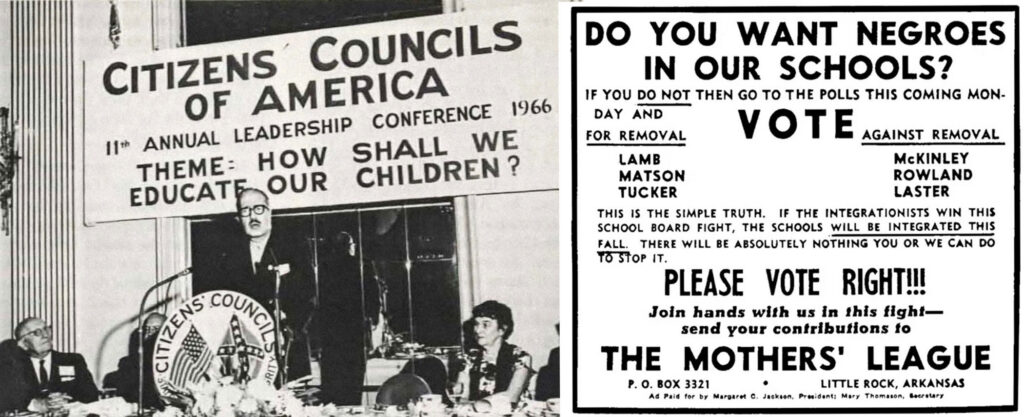
This rhetorical strategy has historical roots. During the post-Brown v. Board of Education era, segregationist groups like the women’s leagues and White Citizens’ Councils demanded parental control over curriculum and opposed “outside” influence in schools — language that masked their deeper intent to resist integration and maintain white supremacy. Today, organizations like Moms for Liberty have resurrected these talking points, now wielded against inclusive curriculum, LGBTQ+ representation and racial equity efforts.
For example, in 2021, the Williamson County, Tennessee, chapter of Moms for Liberty filed a complaint with the state Department of Education over The Story of Ruby Bridges and Ruby Bridges Goes to School: My True Story written by Bridges herself. Other titles listed in the complaint included Separate Is Never Equal: Sylvia Mendez & Her Family’s Fight for Desegregation by Duncan Tonatiuh and Frances E. Ruffin’s Martin Luther King Jr. and the March on Washington. The group argued that these titles violated state laws banning discriminatory content and claimed they were “anti-white” and “un-American.”
These efforts are not confined to race. In Florida, voucher-funded private schools are permitted to deny enrollment to LGBTQ+ students, or those with LGBTQ+ parents, under religious exemptions. Advocates of these policies frame them as protecting “family values” and “religious liberty,” even as they functionally re-create segregation along lines of identity and belief.
Moms for Liberty, for instance, presents itself as a defender of parental rights and faith‑based values, mobilizing chapters to back voucher expansions, campaign for school board allies, and press for removal of LGBTQ+‑inclusive books or curricula. Its rhetoric emphasizes protecting children from “inappropriate” content, yet its tactics contribute to creating separate spheres of schooling where marginalized identities are systematically excluded. In tandem with voucher programs, such efforts shift public funding into institutions that are not required to uphold nondiscrimination protections — and that sometimes openly refuse LGBTQ+ students or children of LGBTQ+ parents. For example, in Florida, more than 80 private schools receiving state vouchers were found to maintain policies allowing denial of admission to LGBTQ+ students.
A similarly coded exclusion is evident in the push to “save women’s sports,” a slogan deployed to justify banning transgender girls from participating in school athletics. Just as midcentury segregationists argued that integrating public recreation would threaten safety and standards, today’s anti-trans rhetoric echoes the same structure: concern-trolling over fairness while enforcing exclusion.

Moms for America was just one anti-student inclusion group that vehemently opposed former President Joe Biden’s changes to Title IX, which expanded protections for LGBTQ+ students, posting on Facebook: “The executive order is an attempt by the federal government to stop the movement to save women’s sports, push parents out of their child’s classroom, and promote [gender] ‘transitions’ on children under the guise of ‘healthcare.’”
The language of polite racism is also reinforced through curriculum changes. The Florida Department of Education’s 2023 African American history standards, for example, required teachers to inform students that enslaved people “developed skills which, in some instances, could be applied for their personal benefit.” Supporters of the standards, like Civics Alliance, argue that these standards “sought to disprove the older contention that black slaves had no skills and no individual successes.” DeSantis likewise defended the standards, claiming that they were “rooted in whatever is factual,” but also sought to distance himself from them, declaring, “I didn’t do it. I wasn’t involved.” But critics, including historians and civil rights organizations, condemned the requirements as historical revisionism aimed at minimizing the horrors of slavery while legitimizing a pro-status quo worldview.
This same impulse underpins the adoption of curriculum from PragerU Kids, a program approved in Florida and other states that downplays slavery, promotes American exceptionalism, and according to co-founder Dennis Prager, “brings doctrines to children,” which he openly admitted during a Moms for Liberty conference. “But what is the bad of our indoctrination?” he asked, reframing right-wing ideological control as moral education.
These policies are not isolated. They form a pattern: Books featuring LGBTQ+ characters are disproportionately banned; ethnic studies programs are targeted for elimination; and inclusive classroom discussions are reframed as indoctrination. According to PEN America, there were over 10,000 recorded instances of book banning during the 2023-24 school year, with more than 25% involving LGBTQ+ themes and another 36% featuring characters of color.
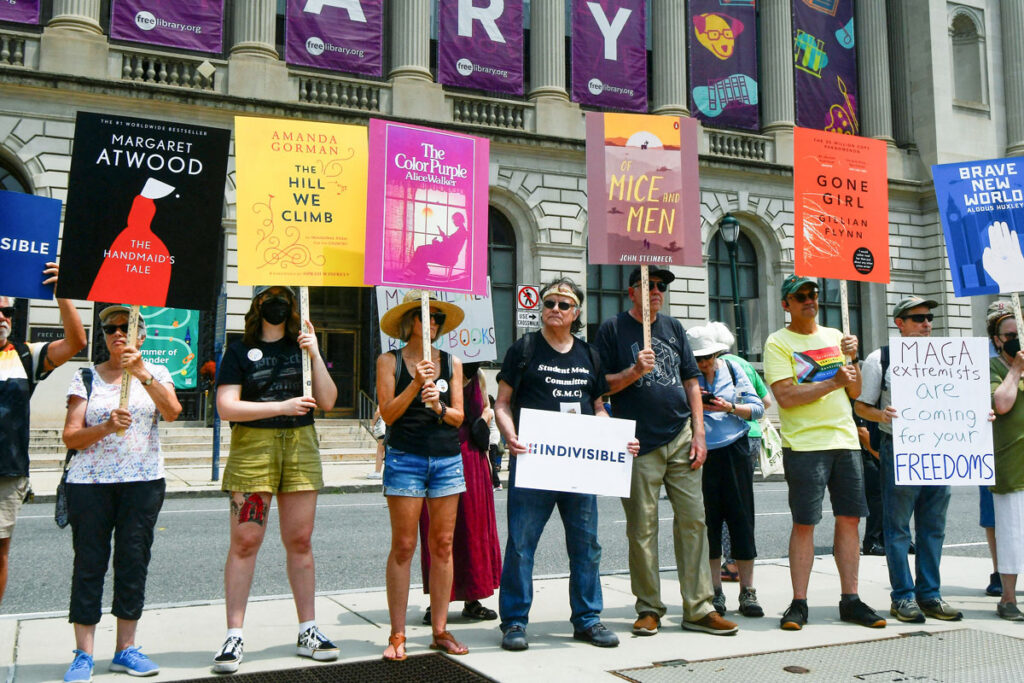
The result is a chilling effect in classrooms. Teachers, unsure of what language may trigger complaints, preemptively self-censor. Students, especially those from marginalized communities, internalize the message that their stories are unwelcome. As occurred with the Ruby Bridges books, the simple recounting of a Black child’s courage is treated as politically subversive. History becomes dangerous when it centers those previously erased.
This is the true power — and danger — of polite racism. By deploying the language of fairness, neutrality and rights, it disguises exclusion as moderation. It allows discriminatory policies to flourish under the pretense of protecting children or promoting unity. But what it truly protects is a selective version of America — one that centers dominant comfort over pluralistic truth.
As history has shown, the tools of censorship, exclusion and distortion don’t vanish; they evolve. Today’s anti-DEI campaigns, like those of the past, are not responding to excess. They are trying to roll back justice, one polite phrase at a time.
A Classroom in Crisis — Teachers Gagged by the Stop WOKE Act
In 2023, middle school civics teacher Vivian Taylor in Miami faced a new kind of classroom challenge — not from unruly students, but from state law. Tasked with teaching about Emmett Till, Medgar Evers and the Selma marches, she found herself under pressure as Florida’s Stop W.O.K.E. Act (HB 7) prohibited instruction that could cause “guilt” or “psychological distress” based on race or gender.
Taylor recalls being told by school leaders that certain topics — like the brutality of lynching or the racially motivated bombings in Birmingham — might “upset” students. As she told The Guardian, “You’re told you’re not supposed to teach certain things because it might make students feel bad. … It treats them like they’re snowflakes.”
Her story echoes across Florida, where teachers have expressed fear of accidentally violating the law. The uncertainty stems from the act’s vague language: What exactly qualifies as “indoctrination” or “psychological distress” — and whose judgment decides that? Educators reported struggling with lessons about Jesse Owens as they tried to avoid crossing invisible lines.
The pressure goes beyond self-censorship. Many teachers fear professional consequences. A law expert told the BBC that if she were in a Florida teacher’s shoes, “I don’t know what I could or couldn’t teach in the classroom.” LaVon Bracy, who was the first Black student to graduate from Gainesville High School, and is now a senator and speaker, shared how she reined in her storytelling, choosing not to share personal experiences of racial intimidation like past death threats or cross burnings for fear of breaching the law.
Erasing Equity From the Executive Branch: The Federal Crusade
On May 26, 2020, the world witnessed the murder of George Floyd in one of the most horrifying videos some had ever witnessed. Not long after, the Black Lives Matter movement quickly swept the globe, once again calling for the just and equal treatment of Black people. It was not long until this evolved into a focus on justice, diversity, equity and inclusion, or the lack thereof in many American structures, including educational institutions. Just as in decades past, some immediately equated the fair and just treatment of Black Americans with the snatching away of rights and marginalization of white people.
In September 2020, filmmaker Chris Rufo appeared on Fox News’ Tucker Carlson Tonight to explain his interpretations of equity programs. On this particular night, Rufo discussed the dangers of so-called critical race theory (CRT), a framework that many cannot efficiently identify or explain, including some of its most vehement critics. His tirade included claims that CRT “has pervaded every aspect of the federal government.”
Since then, some of the most active critics have admitted that “wokeness” is misused. Florida Gov. Ron DeSantis, who has fashioned himself as one of the frontline warriors to root it out, said that “a lot of people who rail against ‘wokeness’ can’t even define it.”
But the die had already been cast. The next morning, following his Tucker Carlson appearance, Rufo was invited to assist in drafting an executive order addressing how race is discussed in federal programs. Rufo has gone on to become one of the most prominent figures in the right-wing culture war and anti-student inclusion movement.
These developments set the stage for the Trump administration and the Department of Education’s current actions to dismantle equity initiatives across federal agencies and schools. Building on the groundwork laid by Rufo’s influence and the first Trump administration’s executive order restricting federal trainings on race and bias, the administration has moved aggressively to redefine what previous administrations called “equity” as “discrimination” recast diversity and inclusion programs as unlawful, and pressure states and districts to abandon practices aimed at closing racial and gender gaps. The administration’s campaign reflects a coordinated effort to institutionalize this backlash at the federal level — transforming a manufactured panic over CRT and “wokeness” into policy that erases equity from the nation’s education system and legitimizes a broader rollback of civil rights protections.
Executive Orders and the Anti-DEI Precedent
The rollback of DEI initiatives at the federal level has been neither symbolic nor incidental. Since the first Trump administration, the executive branch has served as a key architect of systemic efforts to dismantle diversity, equity and inclusion frameworks throughout the public sector.
The federal anti-DEI campaign began in earnest with Executive Order 13950 in 2020. The order banned federal agencies and contractors from providing training that described concepts like white privilege, labeling them as “divisive.” Although it was blocked by the courts and later rescinded by the Biden administration,EO 13950 introduced a chilling precedent: The federal government could attempt to define — and suppress — the language of equity under the guise of alleged neutrality and patriotism.
This rhetorical framing continued in 2025, under a renewed effort to dismantle DEI infrastructure by redefining such work as “nonessential” and “ideologically biased.” On the first days of his second term, President Trump signed two sweeping executive orders — “Ending Radical and Wasteful Government DEI Programs” and “Ending Illegal Discrimination and Restoring Merit-Based Opportunity” — aimed at dismantling diversity, equity and inclusion efforts across the federal government and beyond. Together, they directed agencies to eliminate “to the maximum extent allowed by law” all DEI programs, positions and offices; prohibited discrimination in government and federal contractor employment; and required contractors and grantees to certify they do not operate DEI programs, with government funding tied to that pledge.
In early 2025, two memos released by the Office of Personnel Management (OPM) instructed heads of federal agencies to terminate all “DEIA offices, programs, and initiatives,” and to submit detailed termination or reduction plans, including lists of affected positions and contracts. One of the memos ordered agencies to close or reassign staff in DEIA offices and submit reports on their implementation, demonstrating the “non-mission essential” framework.
Building on this effort, the Department of Education issued guidance on Feb. 14, 2025, threatening both K–12 schools and universities with the loss of federal funding unless they certified that all DEI-related programs had been eliminated. Although a federal court struck down the guidance, the guidance underscored that the campaign against DEI was not limited to dismantling federal infrastructure — it was also intended to coerce schools and institutions nationwide into abandoning equity initiatives under the threat of financial penalty.
Anti-student inclusion group Moms for Liberty quickly embraced the Department of Education’s “End DEI” portal and related executive actions. The group urged parents to “share the receipts of the betrayal” in schools and praised the dissolution of the federal DEI Council and reallocation of training funds, framing these steps as victories for parental control over education. By celebrating federal rollbacks as proof that its activism with ally antigovernment group Parents Defending Education translates into national policy, Moms for Liberty points out how it potentially shaped and then helped amplify the administration’s anti-DEI agenda.
Regulatory Rollbacks in Civil Rights Enforcement
Beyond staffing and funding cuts, the federal rollback of DEI initiatives has begun to undermine regulatory enforcement authority — most notably through the revocation of Executive Order 11246. Originally signed by President Lyndon B. Johnson in 1965, EO 11246 prohibited federal contractors from discriminating on the basis of race, color, religion, sex, sexual orientation, gender identity or national origin. It also required them to take affirmative action to ensure equal employment opportunity in hiring, promotion and training practices.
The Office of Federal Contract Compliance Programs (OFCCP), housed within the Department of Labor, had long served as the enforcement mechanism behind EO 11246, using audits and proactive compliance reviews to uncover discriminatory patterns and mandate corrective action. However, the signing of Executive Order 14173, titled “Ending Illegal Discrimination and Restoring Merit-Based Opportunity,” rescinded the long-standing EO 11246, stripping OFCCP of its authority to require affirmative action plans and reducing it to passive data collection. This change eliminated one of the few remaining federal levers for enforcing workplace equity. Civil rights advocates warn this move has the potential to dismantle decades of progress, normalize inaction, and weaken accountability for millions of workers employed by federal contractors.
Many of the rollback decisions reflect not just the executive branch’s priorities, but the influence of movement-aligned actors now in or advising the administration. For example, Chris Rufo has publicly celebrated Executive Order 14151 as a necessary step to “restore merit and equal treatment,” framing it as a correction that signified “the forces of left-wing racialism are on the defensive, and the forces of colorblind equality are on the move.” Additionally, Rufo has called for the Department of Justice to scrutinize the practices of federal contractors, like Lockheed Martin, under these new executive orders on race. These actions demonstrate how movement figures are leveraging executive authority to reshape civil rights enforcement in line with their ideological agenda.
Disbanding DEI in the Military — A Policy Shift With Global Ripples
In early 2025, the Department of Defense (DoD) completed a sweeping overhaul of its DEI structure in compliance with federal mandates and executive directives. A Government Accountability Office (GAO) report confirms that following the fiscal year 2024 National Defense Authorization Act and subsequent executive orders, when Trump took office, 41 civilian or military DEI positions remained (32 civilian jobs were eliminated entirely and 115 were restructured in the first half of 2024 as a consequence of the FY 2024 National Defense Authorization Act). After the executive orders, all 41 positions were restructured or eliminated, with all committee operations paused, and all members purged.
The Air Force was among the branches most visibly affected. Under policy guidance from Defense Secretary Pete Hegseth, the Air Force dispatched compliance teams to nine bases to ensure the removal of “divisive concepts” and DEI personnel. In practice, this directive led to the scrubbing of training and educational materials that had been designed to promote inclusion and awareness of bias. Compliance teams ordered the removal of a basic training course that included equity or integration videos featuring the Tuskegee Airmen and Women Airforce Service Pilots — historic units once celebrated as symbols of integration, equity and perseverance against discrimination. The Air Force also revised its core handbook, deleting a section on cognitive bias and removing mentions of diversity, as well as a quote from General Charles “CQ” Brown, the first Black service chief, underscoring the depth of the rollback.

Content purges also extended to military digital platforms. In February 2025, DoD directed a “digital content refresh” requiring the removal of all publicly accessible “DEI-related” materials — including news, photos, video and references related to critical race theory, gender ideology and identity-based programs — across defense websites and social media channels. The Pentagon also ordered reviews of library materials at military schools to remove titles dealing with diversity, anti-racism or gender to comply with the new stance against DEI initiatives.
These reforms are more than symbolic. They purge DEI infrastructure critical to force readiness — like Barrier Analysis teams — and weaken recruitment and retention strategies tailored to diverse communities. The rollback has also damaged the United States’ standing within NATO. According to news sources, multiple NATO staffers are actively softening language around gender, diversity and climate in alliance communiqués and legislation drafts to avoid retaliation by the Trump administration.
Statements from NATO insiders to Politico acknowledge that phrases referencing “gender,” “women, peace and security,” or even “diversity” are being intentionally downplayed or replaced to ensure U.S. approval. This shift underscores broader concerns among European allies that the U.S. retreat from inclusive policies undermines its credibility on shared development initiatives shared development initiatives like gender-based violence prevention and human rights cooperation.
In this new chapter of administrative governance, executive action has become the primary weapon for dismantling decades of equity infrastructure. What began as an ideological project has matured into an administrative doctrine: erase the data, reassign the staff, neutralize the language, and allow fear and uncertainty to complete the work of dismantling inclusion.
Shuttering the Air Force Barrier Analysis Working Groups
In January 2025, the Air Force quietly disbanded its long-standing Barrier Analysis Working Groups — teams dedicated to identifying and dismantling policy barriers that impacted service members who are women, people of color, LGBTQ+ or have disabilities. Their work has led to inclusive policy changes such as allowing Native personnel to follow female grooming standards for longer hair, updating uniform regulations to accommodate pregnant women with commercial cold-weather gear, and permitting women to wear slacks instead of skirts with the formal “mess dress” uniform. They also implemented practical quality-of-life improvements, like designating on-base childcare centers as “no hat” and “no salute” zones — making daily routines easier for caregivers, especially mothers juggling their military careers with raising young children.
Acting Secretary Gary Ashworth ordered their immediate disestablishment, removing “outward-facing media” and directing that any materials be stripped of official endorsement. Within days, official webpages, social media pages and internal communications referencing these groups — bringing an abrupt halt to programs that centered service members’ well-being.
On bases across the country, airmen reported that volunteer-led initiatives adhering to the core values of trust and inclusion were canceled without explanation. It was reported that a volunteer group whose annual family readiness summit led to base exchanges stocking/selling Narcan — a critical medication to counter an opioid overdose — was disbanded under the pretext of compliance with a DEI crackdown. “None of that is DEI. That’s family readiness,” an officer told Task & Purpose, an online military news and culture publication.
This purge did more than erase resources — it seeded uncertainty. Officers expressed concern that the dissolution of DEI structures undermined both unit cohesion and broader force-readiness efforts. One active-duty officer commented that these changes are detrimental to unit cohesion, telling Task & Purpose, “Our motto is ‘People first, mission always’ — what a load of crap. None of the actions that are happening right now are in line with anything and definitely not for Air Force core values.”
Ultimately, the abrupt removal of DEI personnel and the scrubbing of their work sends a stark message: Equity initiatives are now viewed as detrimental — not integral to the mission. The long-term effects on recruiting, morale and the institutional memory of inclusion remain to be seen.
Moms, Morality and Manufactured Outrage: The Grassroots Engine
The rapid dismantling of DEI policies across the United States has not been driven by legislation and executive orders alone. A powerful network — made up of ideologically aligned groups, media influencers and legal organizations — has become the social engine fueling the anti-DEI movement. These groups turn isolated grievances into viral outrage, flood local school board meetings with coordinated scripts, and lobby lawmakers to codify their demands into law.
Anti-student inclusion groups such as Defending Education (formerly Parents Defending Education) and Moms for Liberty have played especially pivotal roles. While they portray themselves as concerned parents safeguarding children’s innocence, these organizations strategically exploit public anxieties to roll back and dismantle inclusive-education and equity initiatives. Their efforts are not only reactionary but deeply organized — backed by savvy legal and communication playbooks.

Weaponizing Parental Outrage
Anti-student inclusion groups have been known to deploy a three-pronged strategy: crowdsourced surveillance, narrative synchronization and legal intimidation.
Defending Education operates a website that invites parents to report “something that seems wrong,” encouraging them to take screenshots of emails, homework assignments and class handouts. The organization also produces a map titled “IndoctriNation Map,” creating an impression of a pervasive threat to children. The platform flags phrases like “sex and gender,” “ethnic studies” or “critical race theory & equity,” often without regard to academic context, classroom conversation or the complete curriculum the students received.
Finally, the groups use complaints and lawsuits to intimidate districts. Defending Education has filed multiple Title VI complaints with the Department of Education alleging that DEI-related student affinity groups or teacher training materials discriminate against white students. Regardless of outcome, these complaints generate negative press coverage, causing administrators to retreat from equity initiatives out of fear.
At the heart of this strategy is a rhetorical inversion: DEI efforts intended to protect and support marginalized students are recast as discriminatory, “woke” or even dangerous. Elicia Brand of Army of Parents argues that discussing race or racism even within a specific historical context indoctrinates children and makes them feel ashamed, saying:
“Yes, Black people were sold to white slavers, but they were also sold by Black slavers to white slavers from Africa. So, by the same thought we’d say, well, do Black children need to carry guilt? No, they don’t. That’s ridiculous. Never.”
Anti-student inclusion groups have been known to deploy a three-pronged strategy: crowdsourced surveillance, narrative synchronization and legal intimidation.”
In 2025, Moms for Liberty lauded the launch of the U.S. Department of Education’s End DEI portal, the creation of which the organization contributed. The portal accepts so-called evidence and complaints of race- and sex-based discrimination in public schools that could be used to launch investigations. In a statement, Moms for Liberty co-founder Tiffany Justice encouraged parents to “share the receipts of the betrayal that has happened in our public schools.”
Taken together, these tactics reveal a sophisticated and well-resourced effort to dismantle inclusion. What may appear as isolated parental concerns are, in fact, part of a nationally coordinated strategy to stigmatize equity work, silence honest conversations about race and identity, and redefine the terms of public education. By mobilizing fear, flooding public forums with synchronized messaging, and weaponizing the legal system, these groups have created a climate in which school leaders are less focused on supporting diverse student populations and more concerned with avoiding controversy. This also echoes past resistance to desegregation, when integration opponents claimed their white children were being psychologically harmed. The result is a chilling effect that reaches far beyond any single classroom — one that threatens to reverse decades of progress toward creating more equitable and inclusive learning environments.
Ruby Bridges v. Moms: A Battle 60 Years in the Making
Following Brown v. Board of Education, the U.S. Supreme Court’s unanimous 1954 decision outlawing segregation in public schools, a rallying cry for “parental rights” ascended. It arose in the form of Massive Resistance, a politician-established strategy to block integration, and a reactionary countermovement that birthed such groups as the White Citizens’ Councils and Mothers’ Leagues that sought to preserve their segregationist way of life.
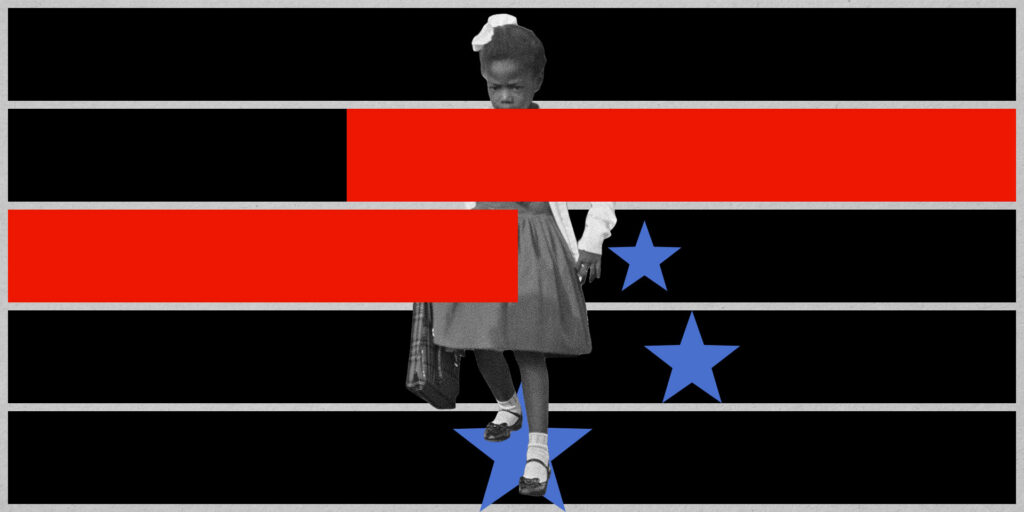
In 1960, 6-year-old Ruby Bridges was one of four six Black children to integrate William Frantz Elementary School in New Orleans. Opposition from the community, including a women’s group which would become known as the Cheerleaders of New Orleans, became so dangerous that Ruby and her mother had to be escorted to school by federal marshals.
In the half-century since the Brown v. Board of Education ruling, anti-student inclusion groups like Moms for Liberty are working from a decades-old playbook, as they work to uplift the interests of a small section of parents and students, while excluding the history and existence of large swaths — Black, Brown and LGBTQ+ students. These groups call up a period in our history marred by racism, violence and exclusion.
In late 2021, the school board of Tennessee’s Williamson County, outside Nashville, found itself embroiled in a controversy over a second-grade curriculum choice. The curriculum included Ruby Bridges Goes to School: My True Story, written by the civil rights icon herself. A local Moms for Liberty chapter, riding a wave of national mistrust toward DEI efforts, formally objected. It argued that the book — depicting Bridges’ experience integrating public schools — was “anti-American” and violated a Tennessee law, which prohibits material that would cause a student to feel discomfort, guilt or other forms of “psychological distress solely because of the individual’s race or sex.”
The group submitted a complaint to the Tennessee Department of Education, cultivating fear that the district was promoting a divisive narrative.
Although the Tennessee Department of Education dismissed the complaint on procedural grounds because the curriculum predated the law’s effective date,the campaign was portrayed in local conservative media as a coup for “parental rights.” The following winter, the ripple effect expanded when state lawmakers introduced a resolution requiring school libraries statewide to post book inventories for “age-inappropriate books.” Similar complaints soon followed in neighboring counties, citing the Williamson case as precedent.
This incident encapsulates the mechanics of the “manufactured outrage” engine: viral complaints, local activism aligned with national messaging, school board influence, and eventual policy changes. It demonstrates how grassroots groups — notably Moms for Liberty and other anti-student inclusion entities — can turn targeted educational content into legal and legislative shifts that reshape school environments far beyond the initial spark.
Resisting the Resistance
By reframing DEI as divisive, opponents have not only undermined specific policies but reshaped public perception of justice itself. Yet history reminds us that such distortions, though powerful, are not permanent. If “woke” has been rebranded to silence, it can also be reclaimed to awaken: as a reminder that vigilance in the face of injustice is not a flaw in democracy, but its foundation.
Throughout American history, every stride toward racial justice has been met by an equal and opposite force. The present backlash against DEI is not unprecedented — it mirrors past waves of resistance that followed Reconstruction, the Civil Rights Movement and affirmative action reforms. Then, as now, demands for justice were met with legal obstruction, rhetorical inversion and cultural retrenchment. Today’s anti-DEI crusade follows this familiar pattern: portraying equity work as ideological extremism, framing inclusion as discrimination, and invoking neutrality to mask exclusion.
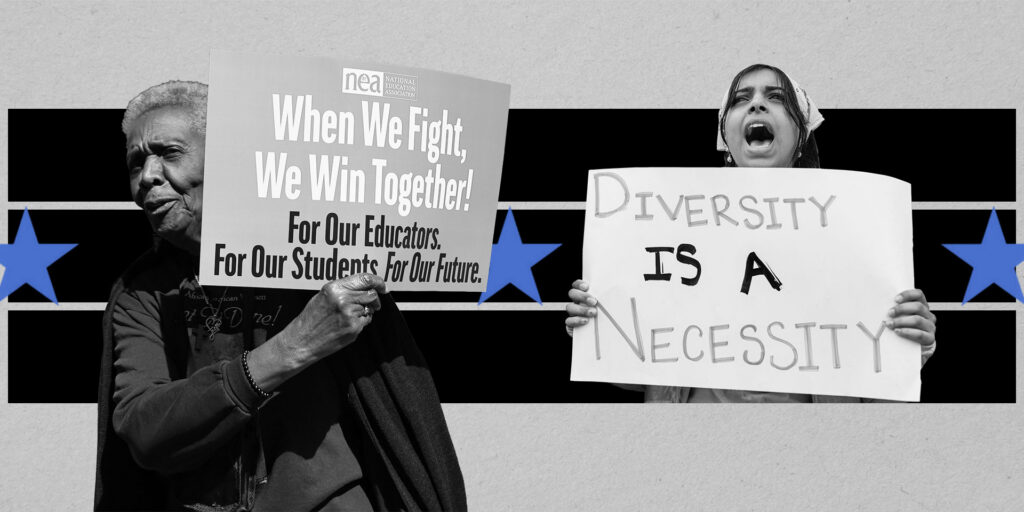
Yet if history offers a warning, it also offers a roadmap. While segregationists in the 1950s and 1960s wielded school closures, voucher programs and coded language to defy Brown v. Board of Education, their resistance ultimately failed to prevent the gradual integration of public institutions. The Massive Resistance of the South delayed progress but could not erase it. Federal enforcement, legal advocacy and grassroots organizing ultimately chipped away at entrenched systems of exclusion — not without cost, but with lasting impact.
The same may be true today. While the dismantling of DEI infrastructure — especially at the state and federal level — has had immediate and chilling consequences, but there has also been resistance to the rollbacks. While some companies, like Target, rolled back DEI measures and received significant pushback from those supporting diversity and equity, others, like Costco, held to the decade-long argument that it was fiduciarily responsible and maintained the initiative amid raising stock prices. One study found that approximately 98% of shareholders voted to maintain current corporate diversity, equity and inclusion programs when faced with anti-DEI resolutions- 32 companies saw near-unanimous votes.
At the grassroots level, educators, students and community groups have turned to informal networks — encrypted group chats, pop-up learning spaces and crowdfunding — to continue equity work outside formal structures. These decentralized acts of resistance recall the schools that Black families and allies built in Prince Edward County when officials shut down public schools to resist integration in 1959.
This resilience is not just a moral imperative — it is a democratic one. The push to erase DEI is not just about budget lines or hiring rubrics — it is a contest over national identity. The United States could continue to evolve as a multiracial democracy committed to equity and inclusion, but if anti-DEI activists and powerbrokers have their way, the country will retreat into a narrower vision of national identity — one that masks exclusion behind the rhetoric of neutrality.
Today’s surge of anti-DEI policies — echoing backlash patterns from the 1950s and 1960s — signals not failure, but a confrontation with progress that has already taken root. Just as federal action, public advocacy, and moral clarity eventually overcame massive resistance to school desegregation, today’s resistance may be a sign of shift: Inclusion has gained enough ground to provoke a reaction.