
E.J. was diagnosed with dyslexia while she was in the first grade. She repeated the academic year, but without ever receiving specific dyslexia reading help, the sixth grader now reads at a second-grade level.
B.W., an 11th grader, was diagnosed with attention-deficit/hyperactivity disorder (ADHD) in the second grade. His marks began nosediving two years ago as teachers constantly suspended him, citing behavioral infractions.
J.W., a 10th grader, performs at a third-grade level. Her ADHD was diagnosed when she was 4 years old. She has pediatric bipolar disorder and oppositional defiant disorder.
N.M. is developmentally delayed with language and visual impairments. The 12-year-old fell behind in schoolwork and developed behavioral problems in school. Placed in a separate room known as a “self-contained classroom,” he sustained bruises numerous times from being restrained.
All are children of color who live in Mississippi. All share an urgent need for special education (SPED) services, yet their school districts have denied those services for years in defiance of federal laws that were designed to protect people with disabilities. (The students’ names have been abbreviated in this story to protect the identities of minors.)
E.J. and her mother are plaintiffs in a 2024 Southern Poverty Law Center lawsuit, Jamison et al. v. Greenville Public School District, and the other children are at the center of an ongoing SPLC investigation into the state’s longstanding practice of denying students with disabilities — disproportionately children of color — of a free and appropriate public education (FAPE), which is mandated under the federal Individuals with Disabilities Education Act (IDEA).
“While school systems in other states are fraught with the same inadequate screenings and evaluations and provision of services that begin for children as toddlers, Mississippi is unique in that it has the least resources for children with special needs, blatantly discriminates against them, and outright refuses to comply with federal special education mandates,” said Julian Miller, senior supervising attorney for the SPLC’s Democracy: Education and Youth litigation team. Miller is also the lead counsel for the lawsuit.
In Mississippi, some 70,000 children have been evaluated and determined to have a disability under the IDEA, according to a 2024 SPLC report, In Plain Sight: Special Education Outcomes and Challenges in Mississippi, which Miller co-authored. They should be getting help.
But many more have yet to be evaluated. Nationwide, 8 million school-age children have disabilities that should be addressed under federal law, according to the In Plain Sight report.
SPLC lawsuit and investigation
The lawsuit was filed in U.S. District Court in the Northern District of Mississippi, Greenville Division, against the Greenville Public School District in October 2024 and is pending. It alleges that the district wrongfully denied SPED services to E.J. for dyslexia, the nation’s most common learning disability.
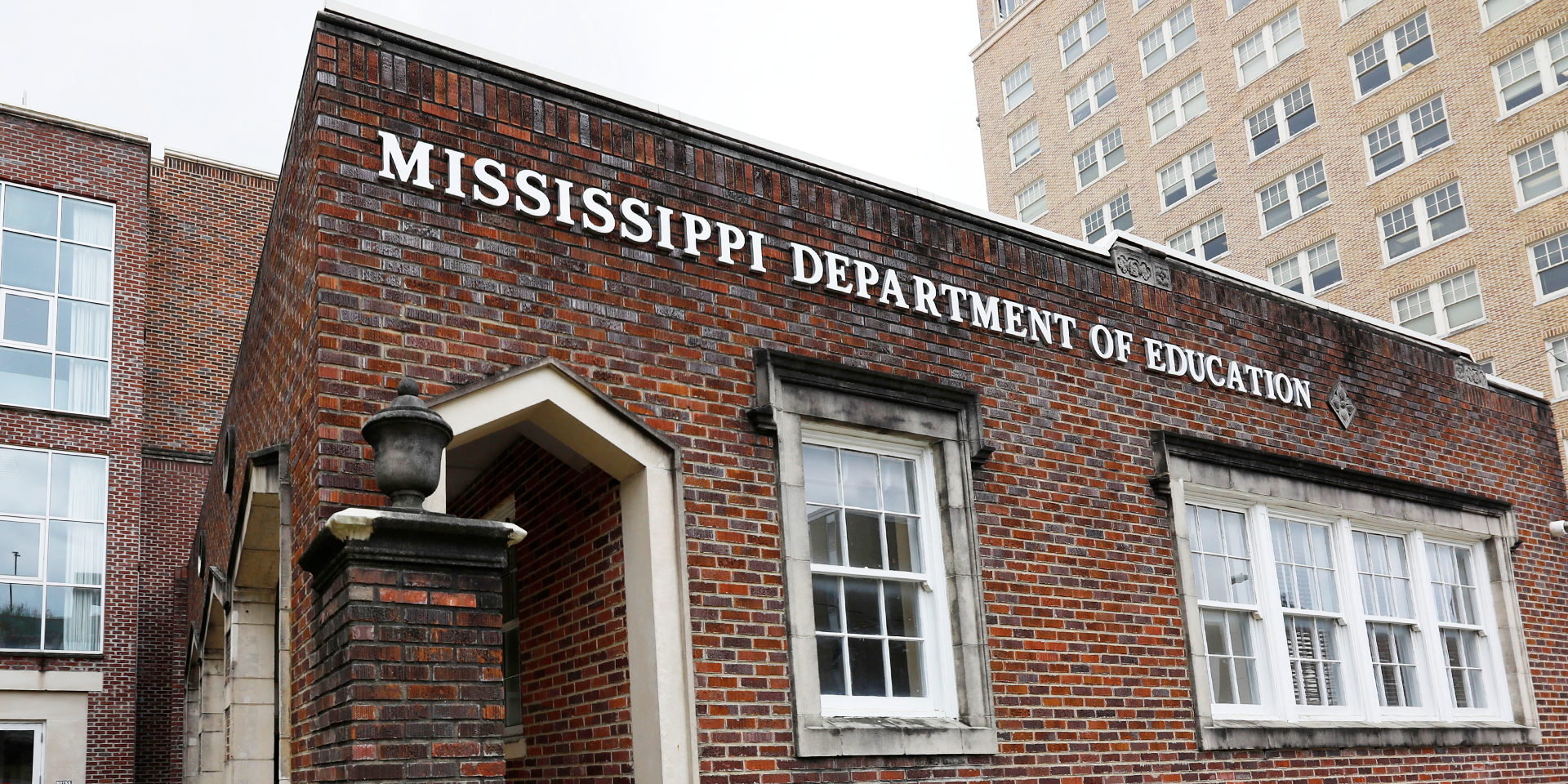
In what may become a related lawsuit, the SPLC is investigating the Mississippi Department of Education (MDE) Office of Special Education for failing to investigate and resolve state complaints alleging violations of the IDEA.
Specifically, the SPLC is looking into the MDE’s failure to develop or implement policies, practices and procedures required under the IDEA when it comes to dispute resolution processes, including due process hearings. Those procedural requirements allow parents to hold a school district accountable for violating their child’s legal rights.
According to the investigation report, the MDE’s own data shows that between 2022 and 2024, more than half of all state complaints were not resolved within the federally mandated 60-day period.
Miller said the Trump administration’s March 2025 closure of the U.S. Department of Education’s Office for Civil Rights and the proposed transfer of the regulation of special education under the IDEA to the U.S. Department of Health and Human Services (HHS) — in violation of the IDEA — make state and school district compliance more difficult to enforce, even though dispute resolution between parents and districts remains available. The Department of Education has asked hundreds of workers it fired just months ago to temporarily return to work because of a backlog of civil rights cases.
“Because of the uncertainty of SPED compliance, enforcement through litigation at the federal level is necessary,” Miller said. “In the wake of the gutting of the U.S. Department of Education, this is still the best mechanism we have for any kind of compliance at the state and district level.”
Heavy toll on children and parents
The parents of children involved in the investigation of the MDE’s administrative practices sought SPLC help only after fighting their school districts unsuccessfully for years to obtain the services their children need. All of them filed state complaints between 2023 and 2024 that brought no corrective action.
Three of the students perform significantly below grade level. All have developed depression, low self-esteem, anxiety and frustration.
Two student plaintiffs struggle with academic and behavioral challenges compounded by the fact that one does not speak English. The other has limited English language proficiency. Yet both were denied translation and special education services. The parents of two of the children moved them to private schools before sending them back to public school. In one student’s case, his mother homeschooled him for the past year and a half and will continue to do so until the district complies with the law.
“The school system has made our life miserable. It’s been hell for years. I’m homeschooling him and we are trying to pick up the pieces to get our life back,” said the student’s mother.
Breaking the school-to-prison pipeline
In 2021, the student’s mother sold her house in one district and moved her son to a school that had a reputation for being better at educating students with disabilities. However, once he was there, N.M. was placed in a self-contained classroom against two physicians’ recommendations, separated from general education peers and often sent home as punishment, his mother said. Several times, he came home with bruises after being restrained by school staff, who denied anything happened, according to his mother. His mother said N.M. would tell her, “The big man hurt me. The big man came in the class when the kids are bad. The big man pulled my friends out from under the desk.”
J.W. has repeatedly been suspended from school. Her disabilities cause her to misread social cues, respond inappropriately to others and act less mature than her age. In the sixth grade, other children beat her up at least six times. She once sustained a concussion after a male athlete pummeled her in class, then repeatedly beat her in the head in the hallway after the teacher sent both students to the office. She was suspended at home for five days after the incident.
B.W.’s mother said that when he was in the ninth grade, her son spent more time at home after suspensions than in class.
Now 17 years old, he is 6 feet, 3 inches tall and weighs 250 pounds. Teachers have called him “fatty” and “SpongeBob body” in class. One teacher accused him of physically attacking her in the hallway, but the school did not produce any video to support her allegation.
“They don’t want me in school and will suspend me the same day I go back to school from a previous suspension,” B.W. told the SPLC.
Frequent suspensions, expulsions, poor grades and harrowing school experiences can eventually lead to high dropout rates and incarceration, a path known as the school-to-prison pipeline.
Black youth are almost four times as likely as white children to be incarcerated, and the parents interviewed for this story acknowledge that retaining SPED services for their children is imperative to reduce or eliminate the behavior problems that result in significant — and disproportionate — school discipline.
According to In Plain Sight, the most recent data from academic year 2017-2018 shows that Black students received out-of-school suspensions at twice the rate of white students. Students with disabilities received more out-of-school suspensions than students without disabilities.
The report cites a study showing that Black students with disabilities lost more than 113 days of instruction per student enrolled, compared with 44 days for their white peers.
“The whole school-to-prison pipeline is where my son was headed, and I was not going to let that happen,” his mother said.
School district retaliates
Throughout Mississippi, stories of denied SPED services to children of color are widespread, but the Greenville Public School District’s retaliatory actions against the man who is in a romantic relationship with E.J.’s mother is exceptional, according to Lily Moens. Moens previously served as an education staff attorney with the Mississippi Center for Justice and as co-counsel on the SPLC’s lawsuit against the Greenville Public School District.
While the SPLC pursues its IDEA lawsuit against the school district on the child’s behalf, the district has tried since the fall of 2023 to prevent the man from representing the child in SPED services discussions and administrative hearings with the school. This came after the couple filed a due process complaint against the district in 2023 for failing to provide E.J., the sixth grader diagnosed with dyslexia, with SPED services.
The couple and E.J. have lived together since 2020, and the man acts as E.J.’s father under the common legal doctrine of in loco parentis, or “in place of the parent.” He is also considered the parent under IDEA.
After a state hearing officer in their case refused the district’s repeated requests to remove the man as E.J.’s representative, the district charged him with lacking valid power of attorney to act on the mother’s and E.J.’s behalf. In so doing, it refused to acknowledge the man’s parental role. Worse, the district further accused the man of practicing law without a license.
In August 2024, the hearing officer dismissed the couple’s complaint against the district due in part to the pending dispute over the man’s designation as a parent. The SPLC took their case and filed an appeal of the dismissal in federal court in late October. In the meantime, the judge in the district’s case revoked the couple’s legal parental rights to make decisions for E.J. and appointed a guardian ad litem. The man then moved the case to federal court, where the judge dismissed the case due to procedural issues.
Moens said she had never before seen a case where the school district tried to have an authorized party in the role of parent removed from discussion over the child’s education.
However, Moens said that the lengths to which a school district will go to avoid providing SPED services are well known.
“I see it a lot in school districts especially in the [Mississippi] Delta,” Moens said. “It’s often driven by the cost to secure a certified dyslexia teacher. I hear often from school districts, ‘We don’t have to provide the Cadillac of services,’ so they provide none. And under the IDEA, they are not legally allowed to deny services. They have to come up with a response.”
Image at top: The Mississippi Department of Education (MDE) offices in Jackson are seen in a photo from 2020. The Southern Poverty Law Center is investigating the MDE’s Office of Special Education for failing to investigate and resolve state complaints alleging violations of the federal Individuals with Disabilities Education Act. (Credit: AP Photo/Rogelio V. Solis)