

In Eatonville, Florida, residents take their civic motto to heart. Founded in 1887, “the town that freedom built” encompasses about a square mile of central Florida lushness, billing itself as the oldest incorporated African American municipality in the U.S. Its most famous resident, the late author and anthropologist Zora Neale Hurston, described it as a utopia where every authority was held in Black hands.
Straddling the town’s main boulevard, adorned with its markers from civic organizations and plaques extolling the achievements of its past residents, sits the site of the Robert Hungerford Normal and Industrial School.
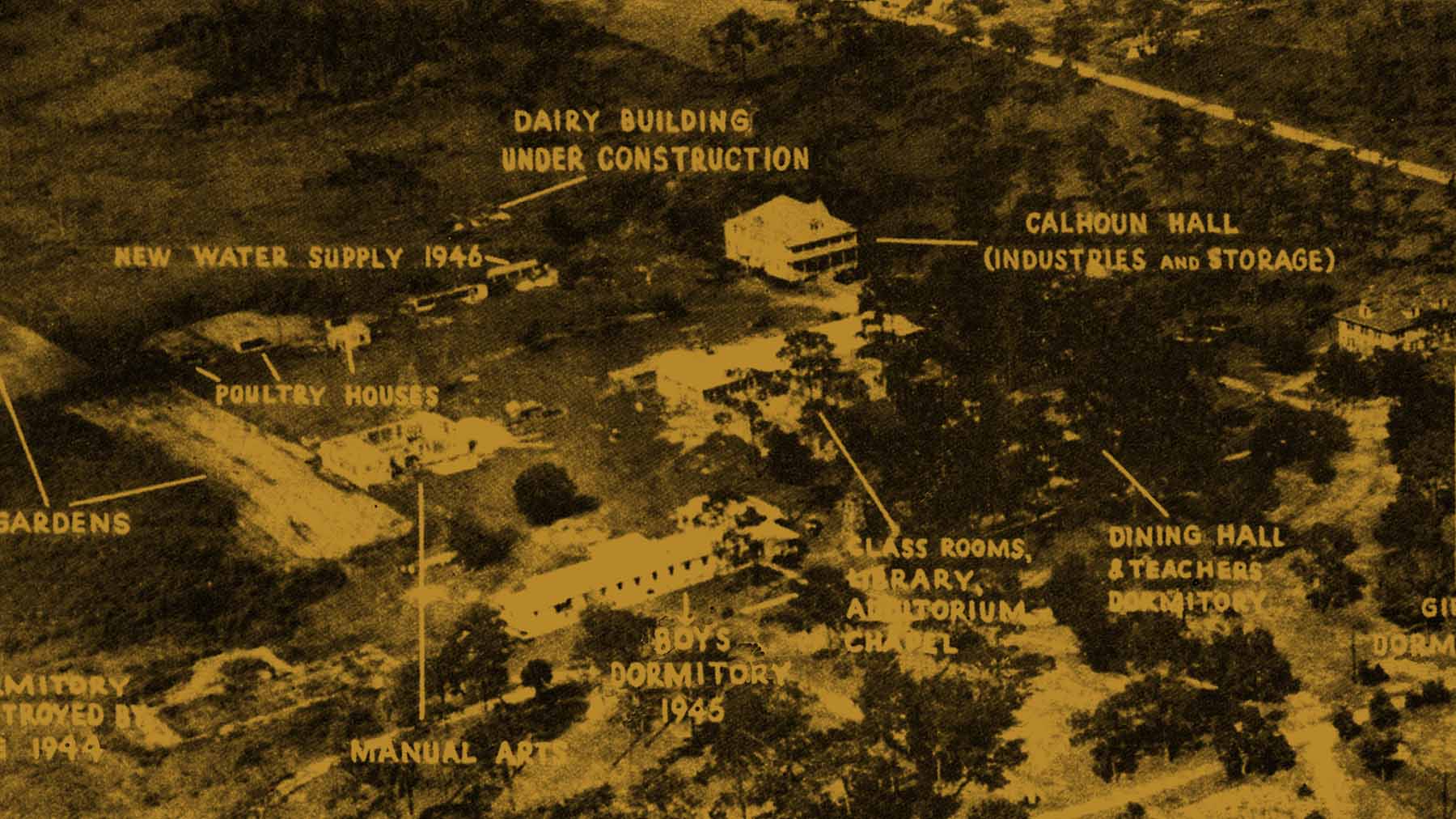
Modeled after what is now Booker T. Washington’s Tuskegee University in Alabama, the school was established in 1897 on land donated explicitly for the education of “Negro” children. At its height, the campus occupied about 300 acres that housed a library, dormitories, a sawmill and a farm.
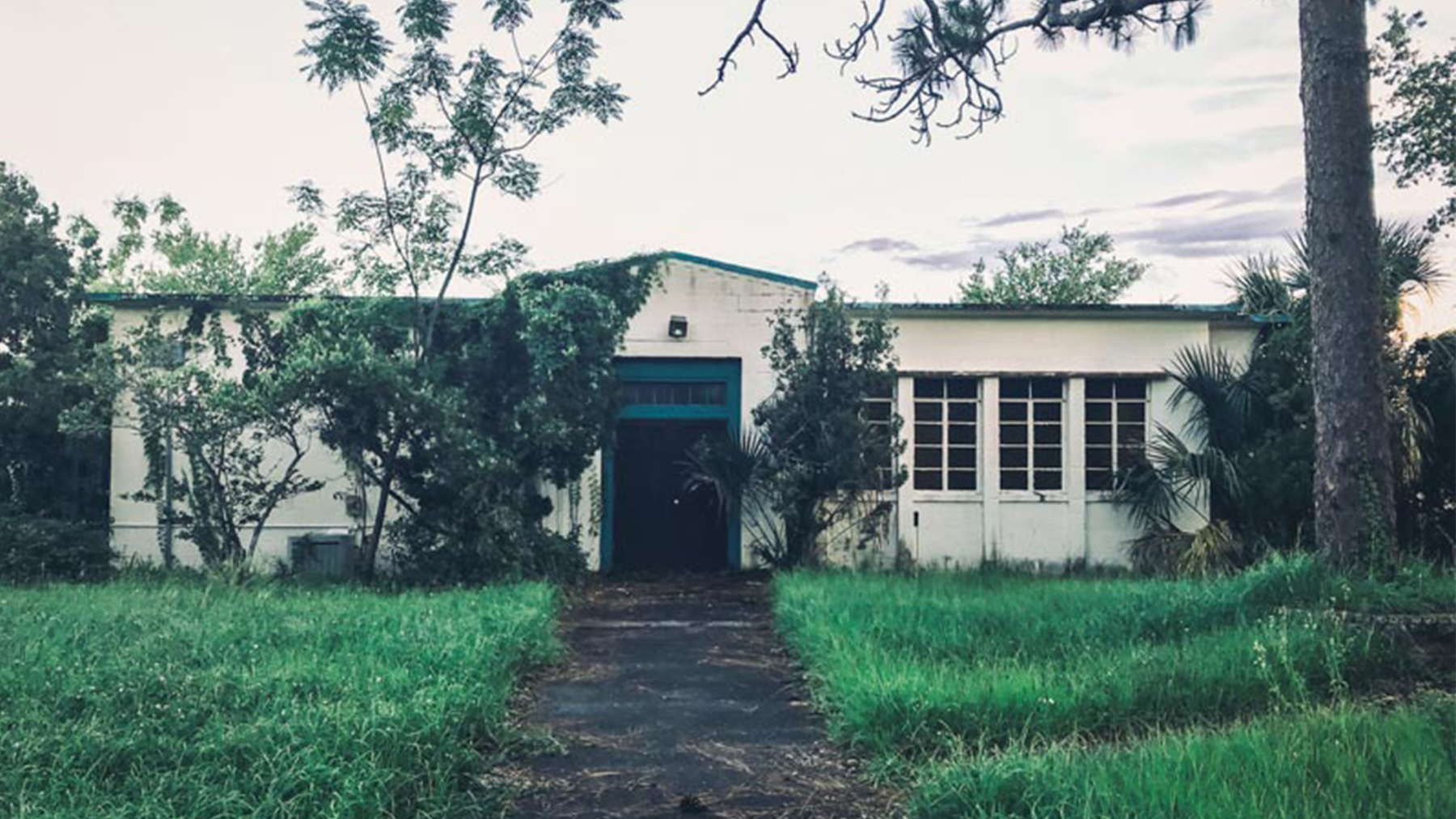
The last students to attend high school on the Hungerford property graduated in 2009. It was torn down in 2020, although children still attend a smaller elementary school on the site.
And now, the town’s roughly 2,500 mostly African American residents fear that their legacy is uncertain as they are once again locked in a battle to preserve what many of them see as the heart of their community.
A new development proposal for the Hungerford property that residents say was conceived behind closed doors has renewed concerns from community members about their ability to preserve Eatonville’s historic nature. The Southern Poverty Law Center is working with members of the community to protect the property from being developed into something that the community does not want.
“The Hungerford property could be developed in a way that’s going to protect Eatonville’s history, safeguard its future and support its ability to continue to be an international destination for cultural heritage tourism,” said Kirsten Anderson, deputy legal director for the Economic Justice litigation team at the SPLC. “Or it could be developed in a way that gentrifies and displaces the community that’s been there for generations.”
Pushing back against unwanted development
Julian Johnson, 33, is an entrepreneur who remembers working youth basketball games in the former high school’s gym, when he was a summer camp counselor for the Town of Eatonville’s recreation department.
“The school honestly meant a lot to the community,” Johnson said. “Once it was empty, that was like our community center. When Orange County Public Schools tore it down during COVID, it was at a time when nobody was paying attention. When that happened, a lot of people lost hope.”
In 2022, Johnson founded the organization 1887 First to support Eatonville’s preservation and push back against what he described as predatory development.
Established a decade after Eatonville’s incorporation, the former campus now looks like a gaping hole; all matter extracted save a few stands of faded bleachers, unkempt brush and old trees still stubbornly clinging to the land by their roots, encircled by miles of fencing warning trespassers to “KEEP OUT.”
The Hungerford property represents about 14% of the land in Eatonville. For decades, its ownership and use have been at the center of a contentious battle between Orange County Public Schools (OCPS) and Eatonville residents, rooted from the start in the principles of Black autonomy and self-rule. OCPS obtained the school and its land from a trust, with the caveat that it be used strictly for the purpose of educating Black children, after a contested court proceeding that went all the way up to the Florida Supreme Court.
“As goes that land, so goes the community,” said N.Y. Nathiri, executive director of the nonprofit Association to Preserve the Eatonville Community (P.E.C.), which was founded in 1987.

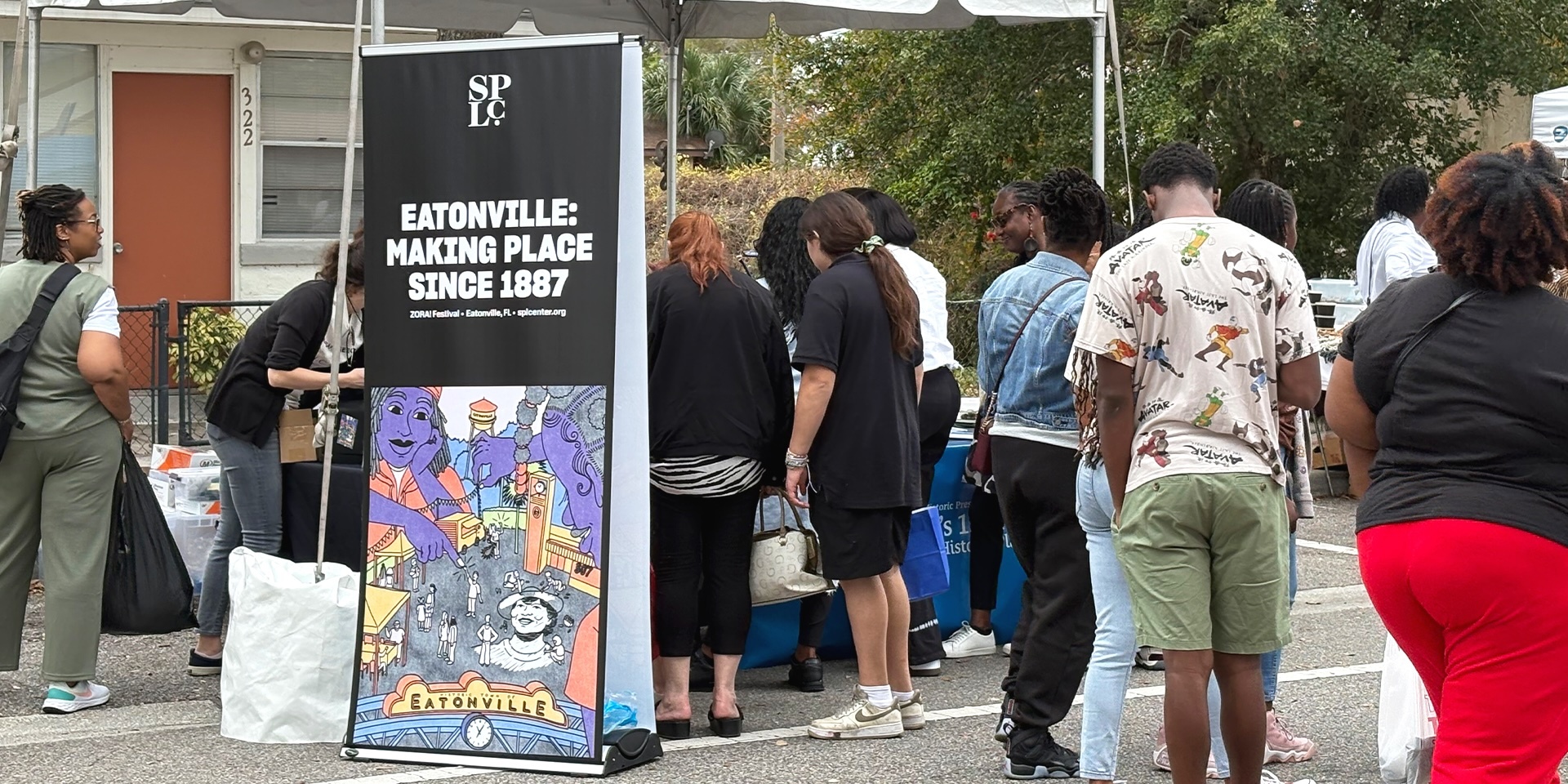
This year, for the first time since the COVID-19 pandemic, the Hungerford property served as the site for Zora! Festival. On the last weekend of January, throngsof people ambled along Kennedy Boulevard and through the rows of tents set on the property’s ample fields, sampling local food, art, crafts and more as live music rang through the air.
As Nathiri surveyed the scene, it reinforced once again the vision she has long seen as a path forward for her community.
“It’s mind-boggling that the whole business of cultural heritage tourism has not been discussed in terms of Eatonville,” she said. “How is it that we, living in Orange County, Florida — one of the top tourist destinations in the world — having all of the assets that meet the profile of the cultural heritage tourism market, which is a multibillion-dollar industry globally, how is it that there’s no discussion about that opportunity for this community?”
‘Not being included or compensated’
Much has changed since central Florida expanded beyond the abundant orange groves that were once the lifeblood of its economy. Today, Eatonville lies not on agricultural property, but prime bedroom community real estate. Although it is located mere minutes from downtown Orlando, Eatonville’s languid, palm-lined streets provide a stark contrast to its larger neighbor’s buildings, businesses and Mickey Mouse-eared tourists.
Over the decades, OCPS sold off parcels of the Hungerford property. After the construction of Interstate 4 bisected the property, OCPS won permission from the court to sell off the section on one side of the highway. When OCPS closed the high school in 2009, it engaged in a series of attempts to sell the remaining land.
In 2022, OCPS entered into an agreement with a private developer for the sale of the Hungerford property. That developer sought to transform the historic property into a site for mixed-use, commercial, residential and retail development.
In 2023, the proposed development hit a roadblock. The Eatonville Town Council voted 4-1 against a rezoning plan after listening to the community’s opposition to the project. The SPLC subsequently filed a lawsuit on behalf of P.E.C., arguing that OCPS’ efforts to seek private profits violated state law and the restriction that the land’s sole purpose be the education of Black children.
A week later, the developer terminated the sales contract for the property. Opponents of the deal pointed out that the way the Hungerford property is developed could completely alter not only the landscape but the culture of the community.
After fending off the proposed development in 2023, Eatonville residents say they were blindsided to learn in September that OCPS had reached an agreement to sell the property to the Orlando-based nonprofit Dr. Phillips Charities.
“We’re concerned that this latest initiative by OCPS has been done under cover and that just flies in the face of transparency,” Nathiri said. “We are just trying to get information that helps us to understand why OCPS has decided that it wants to go down this path.”
The OCPS board’s announcement came after the Eatonville Town Council made clear that it wanted to purchase the land from OCPS. That deal fell through for reasons that remain unclear.
“This is the last 117 acres in the town,” said Johnson, the entrepreneur who runs a local night market in Eatonville on the first Saturday of each month. “The descendants of Eatonville are not being included, or compensated, and that takes away from what Eatonville was truly founded on.”
A deal done in darkness
In September 2025, Eatonville Mayor Angie Gardner — who Johnson is quick to note is also an OCPS employee — announced her public support for the proposed sale to Dr. Phillips, saying the deal would help “protect the property from outside development and bring to life a community master plan shaped by Eatonville residents.”
Following Gardner’s announcement, OCPS released a memorandum of understanding (MOU) between the school board, Gardner and Dr. Phillips Foundation that offers a vague outline of the organization’s plan for development.
The MOU was approved by OCPS on Sept. 30. A proposed contract with some additional details, including the sales price, followed.
Residents were shocked to learn that the multimillion-dollar foundation would pay only $1 million to OCPS upfront, with the potential to have a total of $13 million of the total sales price forgiven with the completion of certain predetermined milestones within two to 10 years.
According to the proposed contract, those milestones include developing a green space with a pavilion, creating an early learning center, establishing a community hub/health care facility and setting aside a few acres for the construction of a town center and history museum.
If Dr. Phillips Charities fails to demonstrate a “good faith” effort to complete all the agreed upon milestones within 10 years, it would be liable to pay the remaining $13 million to OCPS.
But residents question why they and the Town Council were seemingly kept in the dark. Despite community opposition, OCPS voted unanimously to approve the sale to Dr. Phillips Charities on Jan. 13.
“People were upset,” said Johnson. “They were taken by surprise. The last thing we heard after the [2023] sale fell through is that the town would be able to buy the land. It’s a slap in the face.”
Other details of the recently minted deal remain scant.
“What is most significant about the agreement is how much is left to the imagination,” the SPLC’s Anderson said. “There is no restriction on the bulk of the remaining land that Dr. Phillips will be free to develop as it wishes as private owners of the property. There is nothing preventing them from dividing up the land and reselling it. But what is unfortunately very clear is that Dr. Phillips, not the community, will now control Eatonville’s future.”
At a work session of the OCPS board on Jan. 6, OCPS attorney John Palmerini said that the board had not even had the land appraised prior to its negotiations with Dr. Phillips Charities. Wanda Randolph, a Town Council member, suggested the board conduct a survey to determine its value.
“One hundred and seventeen acres of property, even for $14 million, is highway robbery,” said Randolph. “I know the property has to be worth more than $50 million.”
Several other town representatives pleaded with board members to consider extending the impending vote on the proposed contract for 90 days so that the town could provide its own input on the plan or propose a counteroffer. In response, some members expressed concern that an extension would only further delay what they saw as a beneficial opportunity for Eatonville and leave the land vulnerable to private interests.
“My heart has been with Eatonville long before I even thought about running for office,” OCPS board chair Teresa Jacobs said. “I care dearly and deeply about the history, I care about the future — and if I believed for a moment that postponing this for 90 days was going to get us to a better place, I’d be all in. But I am petrified that 90 days just gets us into a worse situation and just allows for an opportunity, over this next legislative session, to take away any ability to enter into this contract and any ability to move this forward.”
Cultural preservation
In 2024, the National Trust for Historic Preservation named Eatonville as one of 11 of the country’s most endangered historic sites in need of protection. Nathiri said P.E.C. has long seen that writing on the wall.
For almost 40 years, the nonprofit has worked to enrich the town of Eatonville and its reputation through historic preservation, cultural arts and community revitalization efforts. Nathiri, its executive director, oversees the Zora Neale Hurston National Museum of Fine Arts, located in Eatonville, as well as the annual Zora Neale Hurston Festival of the Arts and Humanities Season, now in its 37th year, which extends from January through mid-October. The festival commemorates the author who became widely known for her works written during the Harlem Renaissance and the historic significance of her hometown, Eatonville.
Residents remain uncertain of what the future holds for Eatonville. The SPLC is continuing to work with the town’s residents to seek a path forward and defend the community’s right to self-determination.
For now, residents are left only with questions. The most pressing, perhaps, is whether the loss of the Hungerford land would mean the loss of the historic community they know and love.
Nathiri said that is her greatest fear: That one day, all that may remain of Eatonville is a historic marker erected in honor of its former existence.
Image at top: N.Y. Nathiri, executive director of the Association to Preserve the Eatonville Community, is pictured at the 2024 Zora! Festival in Eatonville, Florida. The annual celebration is named in honor of Harlem Renaissance writer Zora Neale Hurston, who grew up in Eatonville. (Credit: Saul Martinez)
More on Eatonville
-

Preserving Black Heritage: Florida activists fight to save historic site and their culture
-
A timeline of events in Eatonville, Florida
-

‘Willing to Fight’: Residents rise up against development that could erase historic Florida town’s rich Black heritage
-
‘Sacred Ground’: Effort to preserve historic Black Florida community wins key victory
-

Association to Preserve the Eatonville Community Inc. v. School Board of Orange County, Fla.
-

SPLC represents group suing to preserve Florida community’s Black heritage
-
Historic Action: Developer of Black heritage site in Florida backs out of sales contract
-

After beating development plan, residents work to save Florida town’s legacy
-

Descendant of land donor joins effort to preserve historic Florida community
-

National Trust for Historic Preservation names Eatonville an endangered site
-
Zora! Festival celebrates culture, preservation wins for historic Black community