
On the Monday following Thanksgiving, University of Alabama (UA) graduate student Gabrielle Gunter opened a text message from the Office of Student Media (OSM). It was the first week of December, a time college students refer to as dead week, when they begin a staggered shuffle back to the graveyard of emptied buildings and dormitories they had deserted over the holiday to begrudgingly resume preparing for final exams.
The week, Gunter soon learned, would be livelier than she expected.
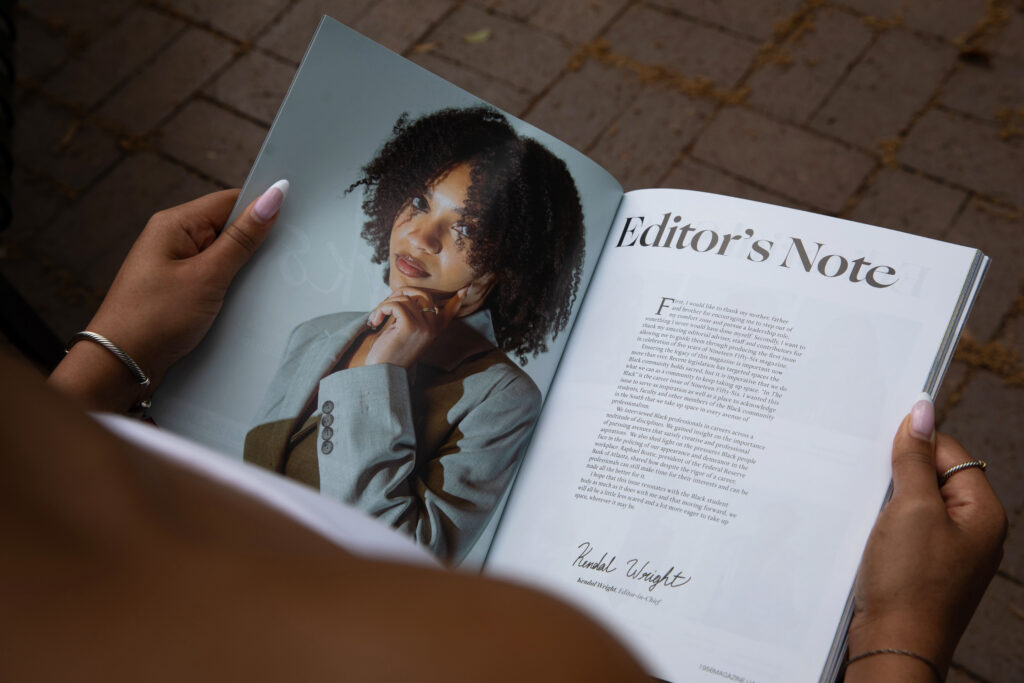
Administrators had requested that she come to the office to speak about a matter of urgent importance. As the editor-in-chief of Alice, a women’s lifestyle magazine published by UA student journalists, Gunter often worked with OSM administrators. The publication had an office on the building’s first floor that it shared with Nineteen Fifty-Six, another student-led magazine named for the year Autherine Lucy became the first Black student to enroll at UA.
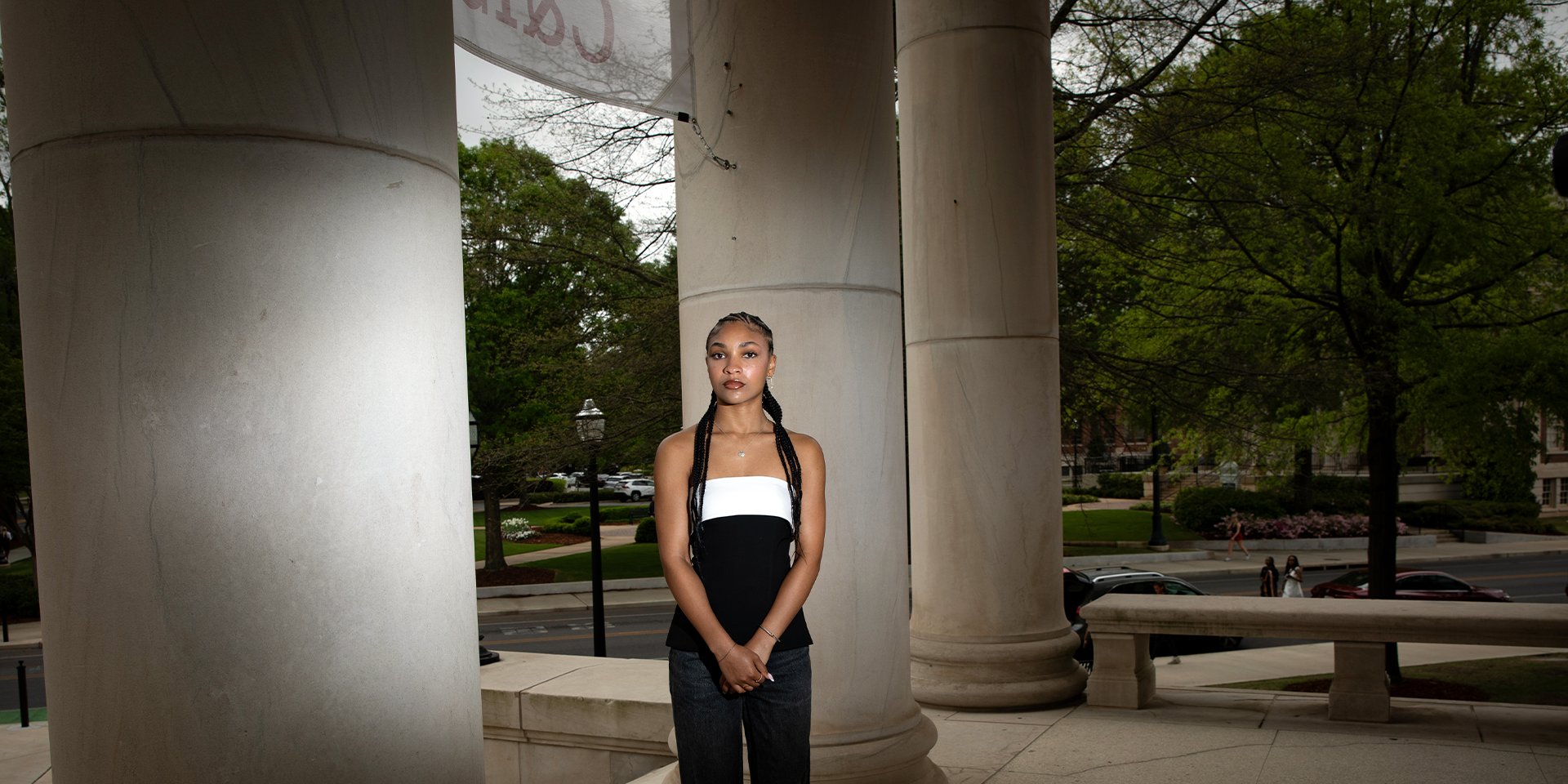
That magazine’s editor, Kendal Wright, had received the same text message.
What they learned from UA administrators that day is now the subject of a federal lawsuit the Southern Poverty Law Center, the NAACP Legal Defense Fund and the ACLU of Alabama filed last week.
UA officials told students the magazines were “unlawful proxies” for discrimination on the basis of race or gender. In doing so, university officials said to the students, they were discriminating against groups that did not belong to those categories — in essence, anyone who did not identify as Black with respect to Nineteen Fifty-Six or as a woman with respect to Alice.
“They’re framing the existence of groups that have Black or female members and audiences, like these magazines, as discrimination,” said Sam Boyd, a senior supervising attorney for the SPLC’s Democracy: Education and Youth litigation team. “What they’re actually doing is closing these magazines because they disfavor their viewpoints.”
The suit alleges that the university violated students’ First Amendment rights to protected speech under the U.S. Constitution. The university’s decision exemplifies the ongoing fallout of the Trump administration’s attack on so-called diversity, equity and inclusion (DEI) at institutions of higher learning that rely on access to crucial federal funding.
When Gunter and Wright met separately with OSM administrators on Dec. 1, the students said they were told that Alice and Nineteen Fifty-Six were suspended indefinitely.
“Effective immediately,” Wright said.
The editors pressed for answers, but to no avail.
OSM administrators told students they would organize a meeting that evening with Steven Hood, the university’s vice president of student life, to offer an explanation. The magazines had a combined staff of about 80 journalists, but many of them had not yet returned to campus.
Hood told a handful of the student journalists at the impromptu meeting that, due to a memo that former U.S. Attorney General Pam Bondi released in July titled “Guidance for recipients of federal funding regarding unlawful discrimination,” the publications could no longer operate.
The non-binding memo outlines what it claims are best practices that institutions receiving federal funding should undertake to avoid the “significant legal risks” of engaging in programs or initiatives that “may involve discriminatory practices, including those labeled as Diversity, Equity, and Inclusion (‘DEI’).” The memorandum does not address student publications or require the closure of groups merely because they may appeal to members of a particular group.
Hood also informed the students gathered at the meeting that UA owned the trademarks for both magazines, cutting off their ability to publish them independently under their current monikers. The university, he said, would create a new magazine that would be for all students.
“Every single magazine has a target audience,” said Gunter. “The problem with Nineteen Fifty-Six and Alice is that our target audiences are groups this presidential administration doesn’t like.”
The DEI backlash in academia
Incidents like those at UA have become increasingly commonplace. In little over a year since President Trump returned to office, the administration has taken a hardline stance against programs, initiatives and organizations that seek to encourage greater diversity and inclusion of protected groups like Black people and women who remain underrepresented in a wide swath of professional careers, organizations and academic programs across the country.
Everything from library books to staff and faculty hiring practices and school curricula has been swept up in the backlash against DEI. The administration has been particularly aggressive in its threats to slash federal funding to public school districts and higher learning institutions that engage in what it calls “illegal DEI.”
Most funding for K-12 education is raised through state and local taxes, but colleges and universities rely on the federal government for a significant share of funding, particularly through research and grants. At more than 400 campuses across the U.S., programs and centers that promote DEI have been eliminated or reshaped, Public Broadcasting Service reported in September.
Several states have passed laws that ban or restrict agencies and higher learning institutions from engaging in DEI practices. In Alabama, SB 129 prevents public universities and local boards of education from funding or supporting DEI programs. In Florida, SB 266 bans public colleges from spending state and federal funds on DEI initiatives.
“This incident in Alabama is just one example of a broader trend we’re seeing across the country that the SPLC feels is crucial to stand against,” said Boyd. “It’s an example of how the Trump administration’s actions have caused a chilling effect, encouraging organizations to really silence any speech that’s in favor of social justice, equity or positive social change.”
The SPLC lawsuit centers on the claim that UA violated students’ First Amendment rights in suspending the magazines because of their editorial viewpoints. Boyd said the Supreme Court has established that student publications and student groups are entitled to protection under the First Amendment and that public universities cannot withhold funding based on such viewpoints.
An article in The Crimson White, UA’s official student newspaper, quoted a university spokesperson as saying the magazine suspensions were necessary to “ensure all members of our community feel welcome to participate in programs that receive University funding from the Office of Student Media.” The spokesperson also said the university hoped to work with students to develop a new publication that “features a variety of voices and perspectives to debut in the next academic year.”
“The university has made pretty clear that they’re closing these magazines because of their viewpoint, because of the content and specifically the view that they promote,” said Boyd.
Neither publication limits participation to writers or magazine staff based on protected characteristics, and both included editors and contributors who are not women and who are not Black.
‘They don’t want us to be the loudest voices’
Students founded both Alice and Nineteen Fifty–Six with the collaboration of UA faculty and staff.
Alice launched in 2015. Its name was a play on the school’s mascot, “Big Al,” with a desire to ensure that student life at the university stretched beyond his purview. Five years later, UA student Tionna Tate founded Nineteen Fifty–Six with a focus on “Black culture, Black excellence and Black student experiences at The University of Alabama.”
The magazines featured student journalism, photography and design. Stories ranged from covering art and Southern culture to tips on fashion and how to avoid burnout.
That same year, Victor Luckerson and several UA media alumni joined up to create the nonprofit Masthead with the aim to increase and support sustained diversity in student journalism. Since then, the group has been working with students at Nineteen Fifty–Six and The Crimson White, providing mentorship, training and opportunities to attend workshops while supporting student-led initiatives.
When the closures were announced in December, Masthead sprang into action alerting a network of UA alumni, career journalists and volunteers across the country. The students published a new issue of the now-shuttered magazines each semester and had been in the process of distributing hundreds of issues that are now collecting dust.
In December, the nonprofit announced that it had raised $28,000 to help students publish new magazines that will be released sometime this month. The money will cover printing, distribution and promotion of one issue for each magazine in addition to other related operating costs. It is also fundraising an additional $60,000 to print two issues of the magazines during the 2026-2027 school year, as the staffers pursue justice in the courts.
The magazine formerly known as Alice is now Selene, named for the Greek mythological personification of the moon. What was once Nineteen Fifty-Six will become Sixty-Three, in honor of Vivian Malone Jones and James Hood, two Black students who successfully enrolled at UA in 1963 after a white mob had violently forced Lucy, the university’s first Black student, off campus seven years earlier.
Before Luckerson graduated from UA in 2012, he served as the The Crimson White’s second Black editor. The student newspaper was founded in 1894. Part of the reason Luckerson and other media alumni initiated Masthead was to create a pipeline for student journalists who often lacked institutional support. And the university seemed to be onboard.
The OSM had previously worked with Masthead to mail issues of Nineteen Fifty-Six to prospective students. University professors had even agreed to give students extra credit for attending on-campus events the group sponsored during the fall semester.
Luckerson was disheartened by UA’s new stance, which he described as an extreme response to Bondi’s memo.
“I think there was a sense that UA was making progress on a lot of its tough racial issues,” Luckerson said.
There was progress, albeit at a halting pace. In 2010, Luckerson’s sophomore year, Kappa Alpha fraternity ended its annual “Old South” Confederate parade. In 2013, a year after he graduated, the university desegregated its white sorority system.
“Now the sense is that they’re taking a big step backwards, which is really disappointing and likely scary for a lot of students,” Luckerson said.
The federal lawsuit and preliminary injunction the SPLC and co-counsel filed seeks to compel UA to reinstate the two college magazines. The former staff at both publications have experienced a myriad of feelings, from shock to frustration, anger and hope.
The magazines offered much more than a way to build their resumes. They represented an outlet to hone their craft, to connect with the wider student body and to build friendships grounded in shared experiences and collaboration.
It gave them a platform and a sense of community.
“In a way they’re telling women and Black students that they don’t want us here,” said Gunter, the former editor-in-chief of Alice. “Or, that we can be here, but they don’t want us to be the loudest voices. They want a specific type of student to represent the university, and it’s not us.”
Image at top: University of Alabama student Kendal Wright served as editor of Nineteen Fifty-Six, a student-led magazine focusing on “Black culture, Black excellence and Black student experiences.” (Credit: Charity Rachelle)