
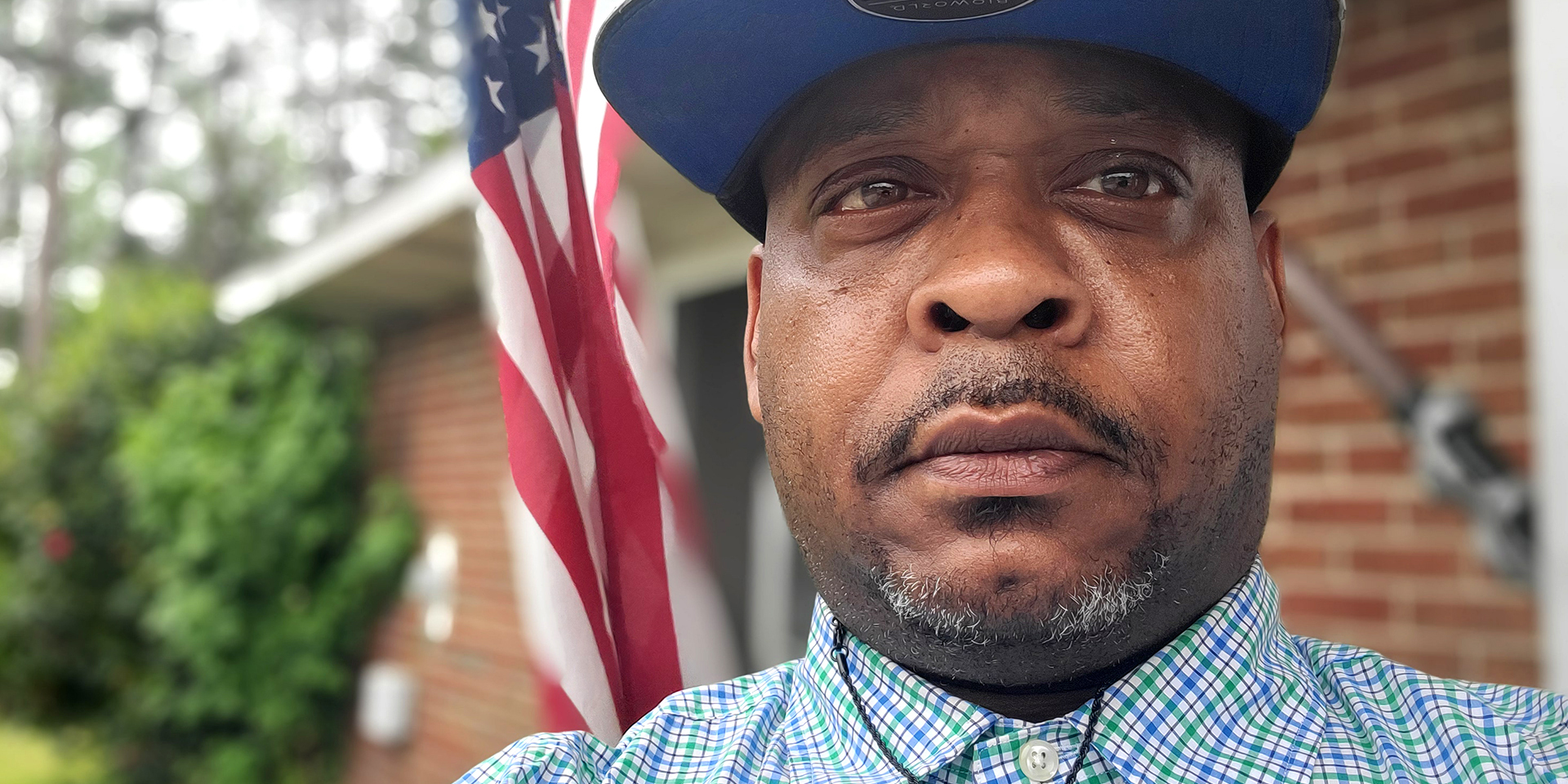
Craig Watkins wanted to vote in the 2024 election. But he had no identification.
A former aircraft mechanic, he was unable to work due to heart, spinal and other medical conditions that required numerous surgeries. He lived on workplace disability for a few years, but that and his employer-provided health insurance ran out in 2023. Because he needed support, he moved from Florida to his sister’s home in the small, southeast Georgia town of Waycross.
He had his birth certificate and Social Security number. All he needed to vote was a government-issued ID with a photo. His Florida driver’s license had expired. But he didn’t have the $32 for a new one in Georgia.
“I have no money, no anything coming in,” said Watkins, 48. “My mother pays for my health insurance. I had always voted, but I was indigent and couldn’t do anything.”
A counselor in Georgia told him about something called an indigent ID, but he did not have the required REAL ID-compliant driver’s license or state-issued ID. Then someone recommended that he contact VoteRiders, a nationwide voter ID nonprofit that received a grant from the Southern Poverty Law Center’s Vote Your Voice initiative, in a partnership with the Tides Foundation. Vote Your Voice supports increased voter registration, participation and civic engagement among communities of color in the Deep South.
The SPLC has pledged resources through the initiative, which began in 2020 to support organizations that are involved in voter outreach and civic engagement in the SPLC’s Deep South focus states of Alabama, Florida, Georgia, Louisiana and Mississippi.
After so many dead ends, Watkins, who is Black, did not believe that VoteRiders could help him. To his surprise, a representative with the group called him early in the morning on Dec. 31, 2025.
“Can we do it today?” she asked Watkins. “The DDS [Department of Drivers Services] is open.”
His rep immediately sent the $32 ID fee to Watkins’ cash phone app and paid for the ride-sharing service that took him an hour later to the DDS and back home. He received his voter ID the same day.
“It was very Johnny-on-the-spot,” Watkins said. “That’s what’s so amazing about them. VoteRiders was quick. She didn’t say tomorrow. She said, ‘We can do it now.’”
Increasing attacks on elections
VoteRiders’ swift action to help potential voters obtain their qualifying documents directly aligns with Vote Your Voice’s 2026 strategy — in coordination with grantees — to respond to the “coordinated legislative, legal, financial and regulatory attacks on free and fair elections,” said Robin Brulé, the Vote Your Voice program director for the SPLC.
Vote Your Voice “is not just a grantmaking initiative,” she said. “It is infrastructure defense responding to post-Shelby County realities and Project 2025.”
She was referring to the 2013 Supreme Court ruling in Shelby County v. Holder, which determined that states with histories of racial discrimination were no longer required to preclear changes in voting rules with the federal government before those rules went into effect.
The Heritage Foundation created Project 2025, a conservative policy playbook for the second Trump administration that targets diversity, equity and inclusion (DEI) in federal agencies and large federal programs. The Trump administration has implemented many of Project 2025’s recommendations.
“Even if the SAVE Act does not pass, far too many eligible American citizens already cannot exercise their vote because of existing voter ID laws.”
— Lauren Kunis, VoteRiders executive director and CEO
Brulé said increased federal scrutiny of DEI programs has affected fundraising for philanthropic corporations and foundations, including those that provide voting assistance. In response, Vote Your Voice this year accelerated assistance to grantees due to these attacks.
“We have to be more flexible in responding to crises because some folks are fairly extreme and impacting communities, eroding people’s rights on a daily basis,” Brulé said.
‘VoteRiders has been a blessing’
VoteRiders is the nation’s foremost organization focused on voter IDs and education. In 2025, it reached 5 million people. It plans to reach 10 million by November. The organization has more than 2,400 partners and 14,000 volunteers around the country to help it attain its national goals.
Twenty-two states have enacted new or stricter voter ID laws since the 2020 election for a total of 38 states overall, according to VoteRiders Legal Director Ceridwen Cherry. Of the SPLC’s five focus states, Georgia and Mississippi have the strictest voter ID laws.
As of this writing, the proposed Safeguard American Voter Eligibility Act, known as the SAVE America Act, is under consideration in the Senate.
If enacted, the bill would effectively disenfranchise millions of eligible American voters by requiring citizens to show documents such as a passport or birth certificate to register. These are documents that tens of millions of Americans cannot readily access.
The law, which appears unlikely to advance in the Senate, would disproportionately impact people of color, elderly people and people with disabilities.
“Even if the SAVE Act does not pass, far too many eligible American citizens already cannot exercise their vote because of existing voter ID laws,” said Lauren Kunis, VoteRiders executive director and CEO.
Kunis stressed the importance of helping people to vote now before they miss the opportunity to vote in this year’s elections.
“The 2026 elections aren’t coming; they are here,” she said. “Primaries are happening now. The voter intimidation threat is very real, especially in Black communities in the South. People are saying this is Jim Crow 2.0.”
To reach its goals, VoteRiders meets potential voters around the country, just about anywhere a nonprofit program or provider serves people with limited financial resources. In many instances, people who experience poverty do not have sufficient identification to vote. The locations VoteRiders serves include shelters, health clinics, food banks, community centers and colleges and universities where out-of-state students may not know their in-state voting requirements. These requirements vary from state to state. VoteRiders informs every prospective voter of their state’s specific requirements, which can also be found on the VoteRiders website.
Because clients who want to vote need the same identification documents to enter a permanent housing program and secure a job, for instance, VoteRiders serves both ends at the same time: helping people gain stable housing and the ability to vote.
“VoteRiders has been a blessing,” said Darryl Pointer, coordinator at Valley Rescue Mission in Columbus, Georgia. “A lot of homeless people don’t have an ID. Maybe they had it at one time and lost it. Maybe it was stolen. If a homeless person wants a change in their status and life, once they get into our program and get an ID with VoteRiders’ assistance, it’s tremendously helpful.”
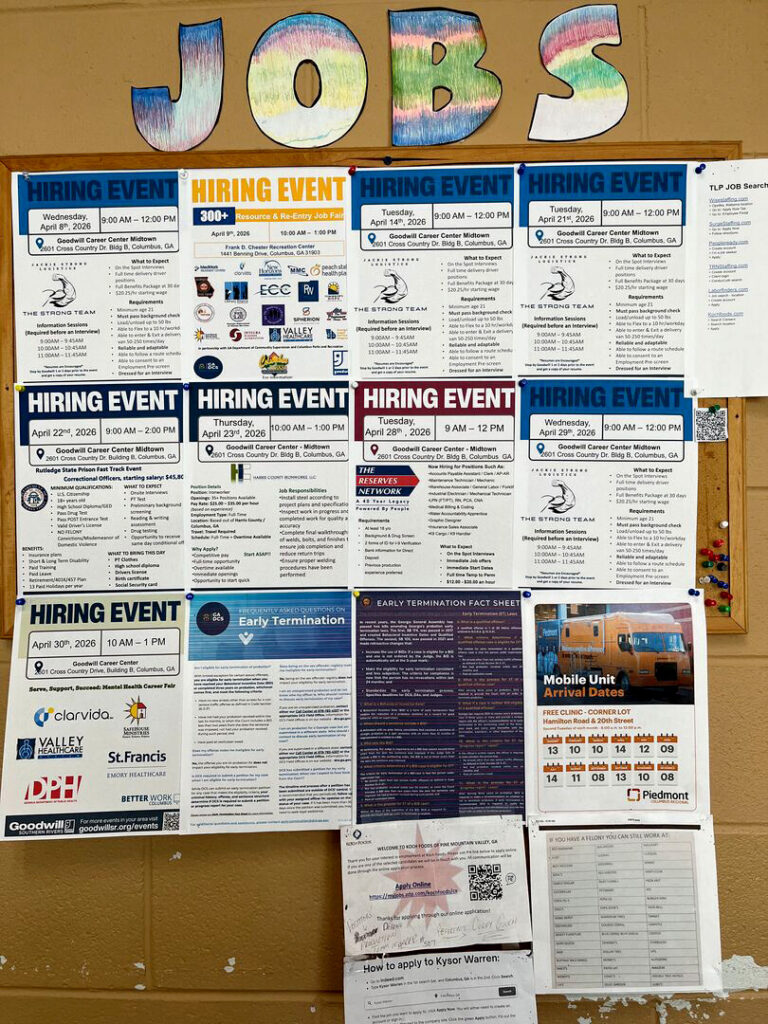
Valley Rescue has two gender-specific shelters. Pointer oversees the men’s shelter and helps clients qualify for permanent housing. On the men’s dormitory job board, he keeps two fact sheets on Early Termination of Probation, which offer information for shelter residents with felony convictions who have completed their sentences and three years of parole and probation. Once they pay all restitution, they automatically regain their right to vote. Four million U.S. citizens could not vote in the 2024 elections due to felony convictions. Since 2023, the collaboration has helped 125 men obtain a voter ID, and half of them ultimately voted.
“We help people get back on their feet,” Pointer said. “Part of that is helping them get their voter ID.”
To register to vote, Georgia residents need two pieces of mail to verify their address.
To vote in person, a resident can use an expired Georgia driver’s license with photo or a number of unexpired state or federal photo IDs. If they need to renew their driver’s license, a VoteRiders volunteer will meet them at the DDS on a Friday at 8 a.m.
“They pay the $32 fee, and we type out a letter of homelessness that takes care of the mail requirement,” Pointer said.
‘Providing essential tools’
Last year, A.L. fled from domestic abuse in her Atlanta home with nothing but her purse. When she arrived at the women’s shelter run by Partnership Against Domestic Violence (PADV), she had only one ID. America Falcon, a bilingual empowerment advocate for PADV, connected her with VoteRiders. (A.L. wished to remain anonymous.)
“Most of the women who come into our shelters are fleeing their home. They often leave with nothing because their IDs are not something they think about when they leave,” Falcon said. “It can be dangerous for them to go back into the house. Sometimes we need police escorts to accompany them into the house, so often it’s better for them to get new documents.”
PADV performs a written assessment of clients three days after they arrive at the shelter. If they lack identification documents, the organization tells them about VoteRiders, since they will require the same documents to apply for PADV’s rapid supportive housing program, Supplemental Nutrition Assistance Program (SNAP) and Temporary Assistance for Needy Families (TANF) benefits as well as employment. The form asks clients whether they are registered or eligible to vote and if they consent to be contacted by VoteRiders.
“A lot of clients say they aren’t interested, and we understand if voting isn’t their top priority in their situation,” Falcon said. “I introduce VoteRiders to them and explain that their identification documents are the most important factor to obtaining all the benefits they need to get back on their feet.”
In A.L.’s case, after VoteRiders assisted her in obtaining her voter ID, PADV’s team helped her apply for its rehousing program. Then they helped her attain a professional license. She recently moved out of PADV housing and is now safe in her new home.
“We have a domestic violence crisis in our country,” Falcon said. “We receive thousands of calls every week from all over the state because there is very little shelter capacity in Georgia. If survivors used their voting rights, they could better advocate for themselves. They are important voices to be heard.”
The SPLC’s Brulé sees VoteRiders’ work as essential for our nation as a whole.
“The lack of proper identification is one of the single greatest barriers to the ballot box in America today, and as laws tighten, that hurdle is only growing taller,” Brulé said. “This isn’t about a single election. It’s about creating infrastructure that stays in the community year-round. That means funding differently, collaborating more deeply, and addressing not only civic motivation, but the practical and structural barriers that keep people from participating in the first place. VoteRiders provides essential tools to ensure that no one is stripped of their voice simply because they lack a piece of plastic.”
Image at top: When former aircraft mechanic Craig Watkins, pictured earlier this month, was unable to afford a new driver’s license after he moved to Georgia in 2024, the nonprofit VoteRiders stepped in to pay for it. He plans to vote in November. (Credit: Craig Watkins)