
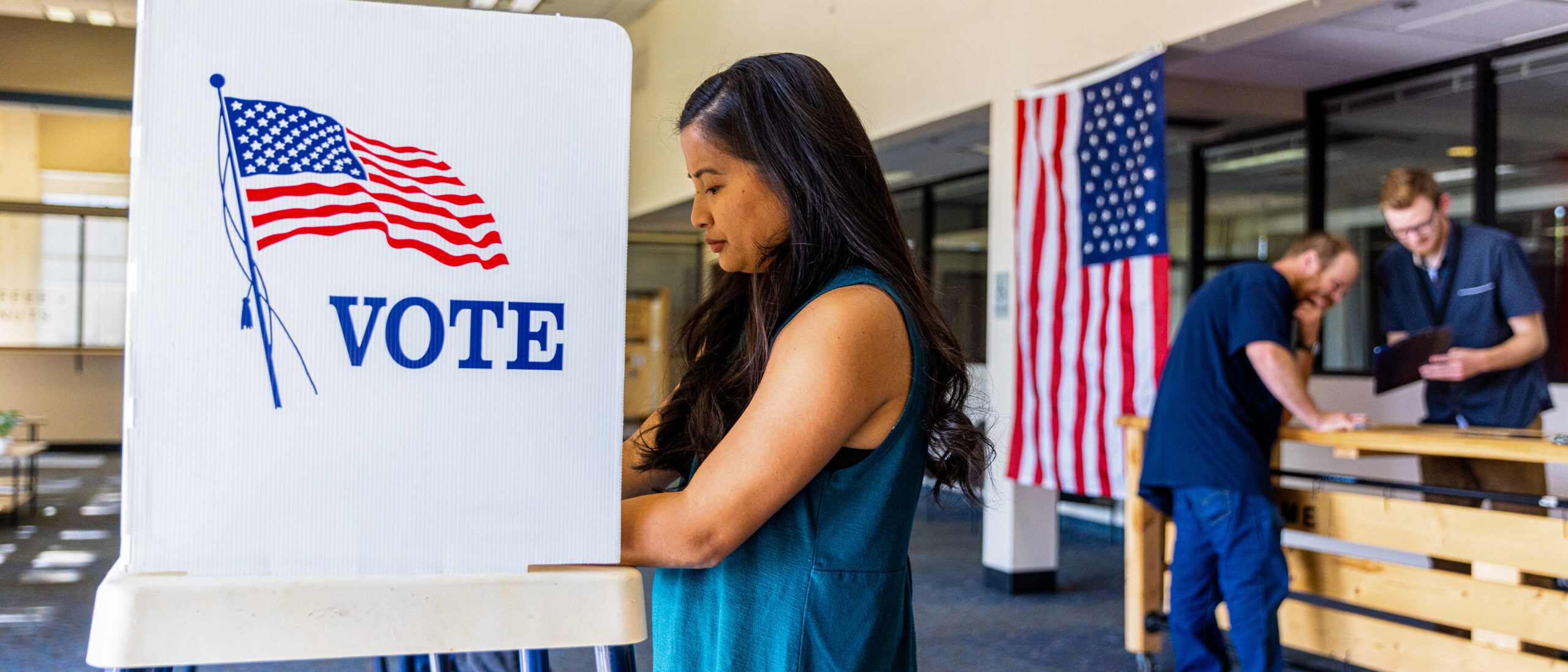
Are you nervous about the environment created by ICE, DHS or extremists this year? If you are an eligible voter, we want to help you vote free from fear. Check out the SPLC’s top tips to help you vote safely and successfully this election.
Remember: It is illegal for the federal government to deploy armed agents to polling places for the purpose of interfering with your right to vote. You have the right to vote without intimidation and interference. If you observe any concerning behavior during the voting process, your first call should be to the Election Protection Hotline: 866-OUR-VOTE (866-687-8683) in English, 888-VE-Y-VOTA (888-839-8682) in Spanish.
Voting is how we hold the people in power to account. This year, keep yourself safe, make your plan to vote, and let your voice be heard.
Make a Plan to Vote
DO: Vote by mail!
- If you live in a state that has vote by mail, this is a great option to use, even if you haven’t voted by mail before. Voting by mail lets you avoid any potential disturbances at polling places. This year, if your state allows it, request your ballot as early as possible and mail it back at least one week before Election Day.
DO: Vote early!
- If you live in a state with an early in-person voting process, use it! Voting early is a convenient, flexible and fast way to cast your ballot. Early voting is often offered on several days, including weekends. If something goes wrong at the polls, you still have time to vote another day.
As always, make sure to check your voter registration in the months before Election Day and update your registration if you have moved. Be sure you know whether your state requires an ID to vote; bring that driver’s license or other official ID with you to the polls, if required. It’s also always a good idea to remind yourself where your backup documents are, such as utility bills or birth certificates.
Follow Best Practices at Your Polling Place
DO: Bring friends and family members with you to vote!
- There is safety, joy and community in numbers. It’s a good idea to only bring other eligible citizen voters with you when you go to vote. Make sure everyone with you understands and follows the rules at the polling place.
DO: Identify the local election workers who run your polling place.
- These hardworking community members work for the local or county government — not the federal government. They are often the best people to ask if you have questions or concerns while voting.
DO: Keep the polling place a calm, stress-free environment.
- You should never confront or provoke anyone you see at the polls, even if they appear threatening. Never escalate tensions at a polling place. Instead, call the Election Protection Hotline (866-OUR-VOTE) and then try to speak with an official election worker on site.
DO NOT: Yell, film, provoke or engage in aggressive behavior at a polling place, especially if you are standing within several hundred feet of the polling place door.
- There are strict laws governing your behavior within what is called the “electioneering” perimeter. In some states, that can be anywhere within 600 feet from the door of the polling place. When you are that close to a polling place, it is especially important to remain calm, keep your distance from any conflict, and seek guidance from official election workers if you need help.
INSTEAD: If you suspect you are seeing a federal agent at your polling place:
- First: Call the Election Protection Hotline (866-OUR-VOTE). The hotline team is trained to respond to suspicious behavior of all kinds at polling places, and it has a volunteer network that can assess the situation and take appropriate actions.
- Second: If you feel safe doing so, tell an election worker what you have observed. In some cases, poll workers may have requested local law enforcement presence to support their election processes. What you are seeing may be entirely normal, and a poll worker can confirm if that is the case.
In the unlikely event that you are approached by a federal agent, stay calm. As a U.S. citizen, you have the right to be here. Voting alongside a friend or family member can ensure that someone is there to witness and document any interactions you might have.
Remember: Safety first. If you are feeling unsafe while voting, you can walk away. If you are using the early voting process, you can come back to vote another day.
Resist Misinformation
DO NOT: Shout “fire” in a crowded theater!
- Saying that you have seen ICE or other federal agents at a polling place when you do not know for sure can be extremely dangerous. Reports like these can spread misinformation like wildfire online, unnecessarily scaring people away from voting. It’s important to report any suspicions you have about illegal behavior at the polls to the Election Protection Hotline, so they can take the correct steps to verify.
DO NOT: Assume you can visually identify law enforcement or federal agents by appearance alone.
- You may not be able to visually identify an immigration enforcement officer. Uniforms, masks, badges, equipment or weapons may vary. If you are concerned about someone’s apparel or behavior, call the Election Protection Hotline, speak to a poll worker, and proceed with caution.
DO NOT: Post about suspicious behavior on social media.
- This will cause panic. If there are verified instances of federal activity at the polling places, voting rights advocates and other trusted messengers will share online in a safe way. By calling the Election Protection Hotline (866-OUR-VOTE), you can help fight the spread of misinformation.
Know Your Rights
No matter what, you retain the right to vote free from intimidation. You have the right to speak languages other than English at the polls. You have the right to be here.
This year, the voting rights movement will hold any and all bad actors accountable through every available legal means. You are not alone.
Disclaimer: This information constitutes recommendations, not legal advice.
Image at stop: (Credit: iStock)