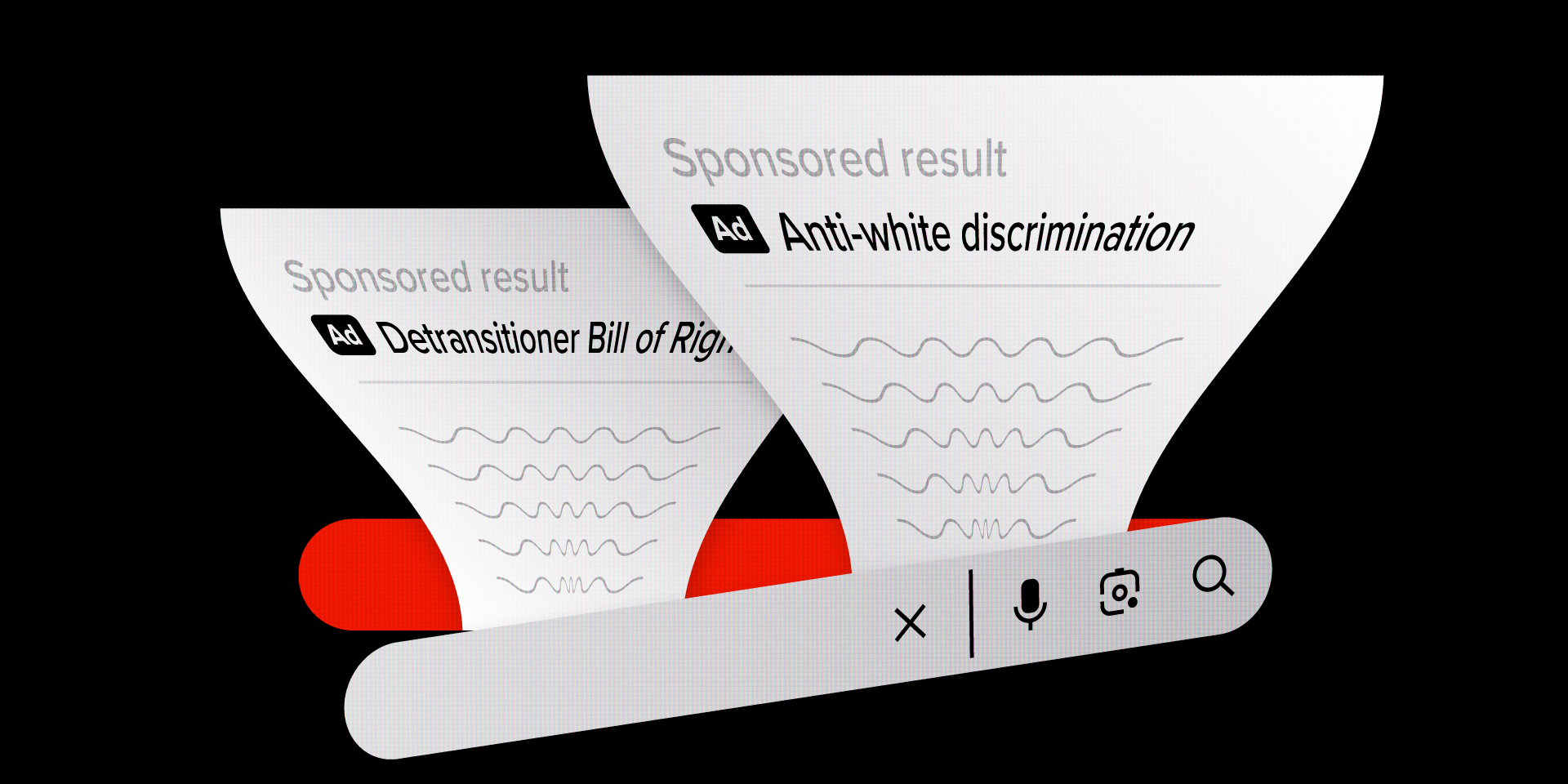
April marks when Allied forces liberated seven Nazi concentration camps 81 years ago. Six million Jewish people were murdered in the Holocaust because of Nazi racist ideology. Amid the increasingly authoritarian actions of the Trump presidency, and the politicized use of antisemitism by hate and antigovernment groups on the hard right, remembrance and historical documentation of the Holocaust must be paired with a strong and active ethical stance. More than eight decades later, that means not only recounting the atrocity but also acting and questioning how the moral weight of the Holocaust is being used, and misused, in politics today.
As we move farther from those days of liberation, fewer Holocaust survivors remain to remind communities to close the gap between mere recognition, adoption of a definition of antisemitism and meaningful efforts to prevent antisemitic incidents and rhetoric. The Southern Poverty Law Center’s Intelligence Project has found that gap is, at its core, a gap in responsibility. Antisemitism is a serious social problem, and the hard, unglamorous work of changing policies, curricula and school culture must be done so Jewish students and their neighbors are safer in their classrooms and communities.
Antisemitism becomes a moral charge in the classroom
The working definition of antisemitism by the International Holocaust Remembrance Alliance (IHRA) has become a widely promoted policy tool in the United States. Roughly 35 U.S. states have now formally adopted some version of the IHRA definition on antisemitism, and about 135 local governments — a mix of cities, counties and towns — have endorsed it as their standard for combating antisemitism, according to advocacy tallies and state-level reporting.1
As of January 2026, approximately 349 educational institutions have adopted the definition.2 The IHRA text offers a short description of antisemitism, followed by 11 “contemporary examples,” seven of which focus on the state of Israel and Zionism, including language that treats criticism of Israel as presumptively antisemitic. Because of this structure, IHRA blurs the line between hatred of Jewish people and political disagreement with a state, making it a poor foundation for law or college campus policy.
Legal expert Kenneth Stern, who helped draft the antisemitism definition, has warned for years that the IHRA framework was designed for data collection, not for legal or campus discipline, and that applying it as a campus speech code risks turning antisemitism into a weapon against academic freedom and, ultimately, against Jewish safety itself. In an NPR interview, Stern warned that the definition “puts pro-Israel Jewish students in a situation where they may be seen as trying to suppress speech rather than answer it.”
Stern described the Trump administration as “weaponizing antisemitism,” adding: “There have been horrible situations. But look at what they’re not doing and what they’re doing.” Stern said that “one of the things that’s important for our ability to combat antisemitism and other forms of hate is having strong democratic institutions.”3 There is an ongoing debate among experts about whether the definition should be authoritative in schools and policy, with many Jewish and civil rights groups warning that the examples in the definition chill legitimate criticism of state policy and can be used to brand advocacy for Palestinian rights as antisemitic. IHRA is not just imperfect, but fundamentally ill-suited as a binding standard, and building policy around a speech‑policing definition is itself part of the problem, not a solution.4
Even strong proponents of IHRA acknowledge that many institutions and government entities have done little beyond adopting the definition, failing to build serious, well‑resourced antisemitism prevention and education. In such states as Florida, Kansas, Oklahoma and Massachusetts, IHRA has been written into law and used to police protests, curricula and campus events far more vigorously than it has been supported with sustained funding for training, teaching or support services.5 Antisemitism policy is, in many instances, focused solely on expression rather than ferreting out hate and dismantling its root causes.
That dynamic is uncannily reminiscent of Holocaust‑education mandates: Many states proudly require Holocaust teaching, but implementation on the ground is a mixed bag, with underfunded, uneven, often symbolic efforts that do little to change how students actually understand antisemitism. Symbolic adoption of IHRA functions much the same way: It allows officials to posture as defenders of Jewish people while sidestepping the deeper work of dismantling white supremacy, Christian supremacy and other systems that fuel antisemitic violence.6
Trading on Jewish suffering: Christian supremacy’s school strategy
For decades, the Christian far right has pushed a narrow version of Christianity and treated education as one of the primary battlefields for reshaping American society. Recently, it has cynically pushed for antisemitism policies that appear designed to limit inclusive, historically accurate curricula.
Christian-right attacks on public schools have come in the form of the post‑Brown v. Board of Education private Christian schools and so-called segregation academies, which were, according to legal scholar Vania Blaiklock, “uniquely situated to preserve a subtler form of white supremacy without serious criticism.”7 Christian Reconstructionists have attacked government’s central role in public schooling as statist and called to seize control of education itself.8
R.J. Rushdoony, a father of Christian Reconstruction and modern-day Christian supremacy, wrote: “To control the future requires the control of education and of the child. Hence, for Christians to tolerate statist education, or to allow their children to be trained thereby, means to renounce power in society, to renounce their children, and to deny Christ’s lordship over all of life.” Bible‑in‑the‑classroom bills, school board takeovers, book bans and gag rules on teaching about race and LGBTQ+ lives, and Ten Commandments laws all act in service of the Christian Reconstructionist mission.9
The embrace of antisemitism definitions and pro‑Jewish language by Christian supremacist actors looks less like a sudden concern for Jewish safety and more like a new tool in a long‑running effort to capture schools and curricula. In the same way they have used Judeo‑Christian values and Ten Commandments mandates to justify inserting a narrow Christian project into public education, Christian nationalists now promote Israel‑centered antisemitism definitions that equate anti‑Zionism with antisemitism to police what teachers and students can say about Palestine, colonialism and U.S. foreign policy. By presenting themselves as defenders of Jewish people against antisemitism, they gain moral cover for campaigns to purge ethnic studies and social justice curricula, punish pro‑Palestine advocacy, and impose gag rules on critical discussions of race and empire in public schools and universities.
When ‘protecting Jews’ becomes anti‑Muslim policy
The Holocaust occupies a special place in public memory and acquired a powerful moral authority in the postwar United States. That authority has inspired essential work: serious Holocaust education, survivor testimony and hate crime laws. Concern for the safety of Jewish people and institutions is now inseparable from the lessons of the Holocaust and from the knowledge that latent antisemitism in a society can erupt into violence.
Holocaust remembrance has come with a powerful expectation that invoking the Shoah should help us condemn antisemitism and other forms of hate and atrocity wherever they appear. The moral authority drawn from Holocaust remembrance is increasingly being turned on its head and put to a new, cynical use — providing a ready‑made justification for campaigns against universities, student movements and public school curricula.10
This cynical use isn’t originating broadly from human rights groups and supporters, but from Christian supremacist leaders on the hard right. Christian supremacist leaders have long used pro‑Israel rhetoric to launder older antisemitic and anti‑Jewish theologies, presenting themselves as defenders of Jewish people and Israel even as their eschatology imagines most Jewish people as damned and their political programs deepen both antisemitism and anti‑Muslim bigotry.
Eschatology is a theology of the “last things” that focuses on destiny and God’s purpose. In some Christian supremacist eschatology, Jewish people are treated as props in a Christian salvation drama and as facilitators of the end times but are ultimately destined either for conversion to Christianity or destruction — which is why scholars identify these ideas as antisemitic. And the same narratives frame Muslims as enemies of God, turning Islam itself into a civilizational threat and casting Muslims as a dangerous, monolithic enemy — language that has fueled surveillance, travel bans and other policies that caused overpolicing and repression of Muslim communities at home and abroad.
When Holocaust‑grounded concern for Jewish safety is harnessed to that kind of fearmongering, it doesn’t honor the memory of those who suffered and died in concentration camps; it turns survivors’ suffering into a pretext for targeting another religious minority. In this case, language purporting to protect Jewish people and fight antisemitism is being used to sell a story in which Islam itself is a mortal threat to the United States. A clear example is the way accusations of antisemitism are being used to stoke hatred and fear of Muslims through a manufactured “Sharia takeover” conspiracy.11
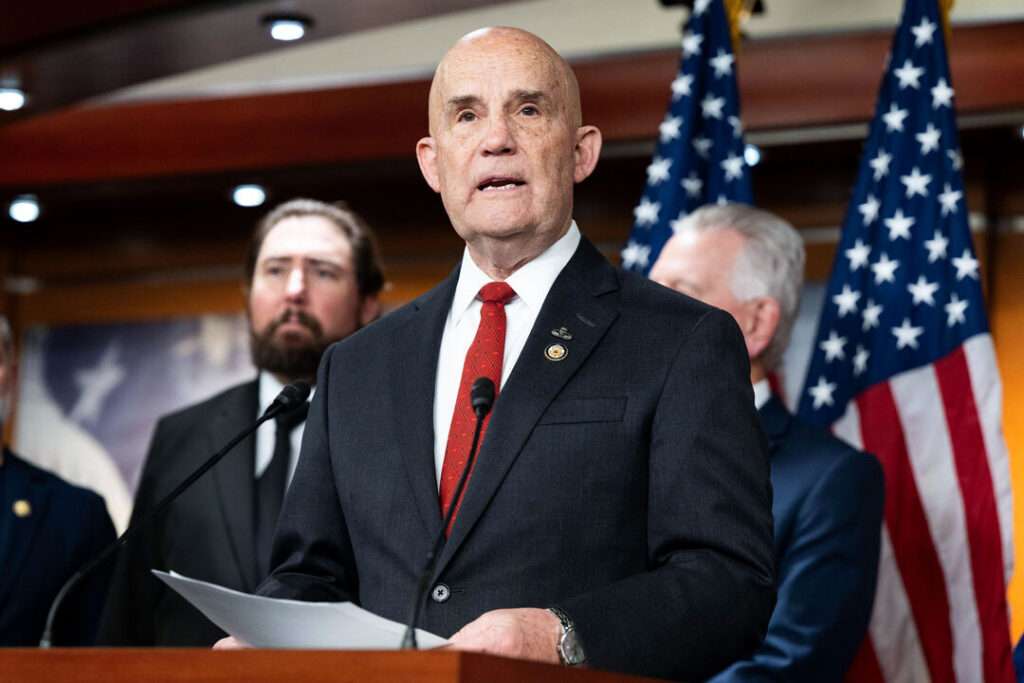
In Islamic tradition, Sharia (also spelled Shariah) refers broadly to a divinely guided “path,” a body of religious and ethical law that shapes how Muslims pray, form families and live their daily lives — not a single, fixed criminal code waiting to be imposed on non-Muslims.12 However, activists and politicians, including U.S. Rep. Keith Self of Texas — who has supported the Antisemitism Awareness Act that would write a broad, IHRA-style definition of antisemitism into Title VI enforcement — have cast Sharia as a barbaric legal system Muslims covertly hope to impose in the United States.13
In December 2025, Self helped launch the “Sharia Free America Caucus,” calling Sharia “a dominating force that is not compatible with the U.S. Constitution” and describing it as “a culture of violence and domination, totally anathema to the concept of individual freedoms,” and at odds with the U.S. Constitution.14 He and his allies present the caucus as a necessary defense of, in Self‘s words, “this noble cause to save Western Civilization and fight back against the threat of Sharia,” and in U.S. Rep. Chip Roy’s words, “a direct threat to our Constitution and Western values.”15
That is what they mean by a “Sharia takeover” — the baseless claim that Muslim communities are secretly plotting to replace American constitutional law with their own religious law, and that Muslims as such are incompatible with American society. The moral authority of Holocaust remembrance is being twisted into cover for explicitly anti-Muslim politics. The fear being peddled in such campaigns rests on gross ignorance of the institution of Sharia and uses another community’s suffering for political gain, cheapening that memory and turning it into a tool for targeting people based on their religion and ethnic background.
This recent effort is in line with the pattern that the SPLC has documented in Christian supremacist projects like The Heritage Foundation’s “Project Esther,” which claims to defend Jewish people while targeting Muslims, pro-Palestinian efforts and progressive movements, maligning them as a threat to Jewish people as part of an unspecified “Hamas Support Network.”
The report misrepresents legitimate advocacy as terrorism, suggests there is an “active cabal of Jew‑haters, Israel‑haters, and America‑haters” in Washington, and calls for deportations, defunding and campus crackdowns in the name of fighting antisemitism.16
Self’s leadership in the Sharia‑Free America Caucus and his speeches portraying Islam and Sharia as an “existential threat” to Western civilization similarly use the language of defending Jewish people and Israel to justify sweeping attacks on Muslim civic life and religious freedom.
Self, for example, consistently casts himself as a defender of Israel and Jewish safety while advancing rhetoric that stigmatizes Muslim communities.17 Self has made a variety of statements of support for Jewish people and Israel, and in remembrance of the Holocaust. On social media he marked Holocaust Remembrance Day, posting: “Never forget. Never again.” But he also, in a 2025 House hearing, quoted Nazi propagandist Joseph Goebbels to make a point about media and truth — “‘It is the absolute right of the state to supervise the formation of public opinion,’ and I think that may be what we’re discussing here” — and then defended using the quote when challenged by U.S. Rep. Julie Johnson.18
In his rhetoric, remembering the Shoah is less about heeding Jewish warnings against racism and authoritarianism than about casting Israel as a necessary fortress in a purported civilizational struggle against Islam. Taken together, the picture is of a politician who treats Holocaust memory and concern for Jewish people as part of a broader story about civilizational struggle against religious and racial enemies.
Remembering the Holocaust and the work of solidarity
Scholars of antisemitism and Islamophobia alike remind us that the same conspiratorial frameworks that demonize Jewish people also fuel racism, xenophobia and anti‑Muslim hate. When we see Holocaust memory and antisemitism deployed to undermine diversity, equity and inclusion, to push Muslim communities out of educational spaces or to justify anti‑trans laws and school policies rooted in Christian supremacist ideology, those campaigns are not defending Jewish people from danger; they are reproducing the sort of hierarchical, exclusionary politics that made the Shoah possible in the first place.19
Choosing solidarity here means a few things. It means insisting that efforts to address antisemitism in schools and in the broader United States move in tandem with efforts to address anti‑Black racism, anti-Muslim hate, anti‑LGBTQ+ hate and other forms of bigotry, rather than being set against them.
It means listening to Jewish students and educators who refuse to have their fear and grief weaponized, and who want policies that protect them to also protect their Muslim classmates, their Black peers, and their trans and LGBTQ+ friends. The Holocaust’s moral authority was never meant to be a narrow possession, reserved for one community or one set of political goals. It emerged from an encounter with the worst that humans can do and from the conviction that the kind of state‑driven, racist hatred that made the Holocaust possible must not be allowed to take root again in new forms or against new targets. That commitment is about protecting people from dehumanization and persecution, not about shielding any government from criticism.
If Holocaust memory and education are going to continue serving as a moral authority, the circle of those safeguarded from dehumanization and harm must be expanded, not constricted. Concern for Jewish safety should also deepen our national commitments to public education, to honest history and to the shared security of all.
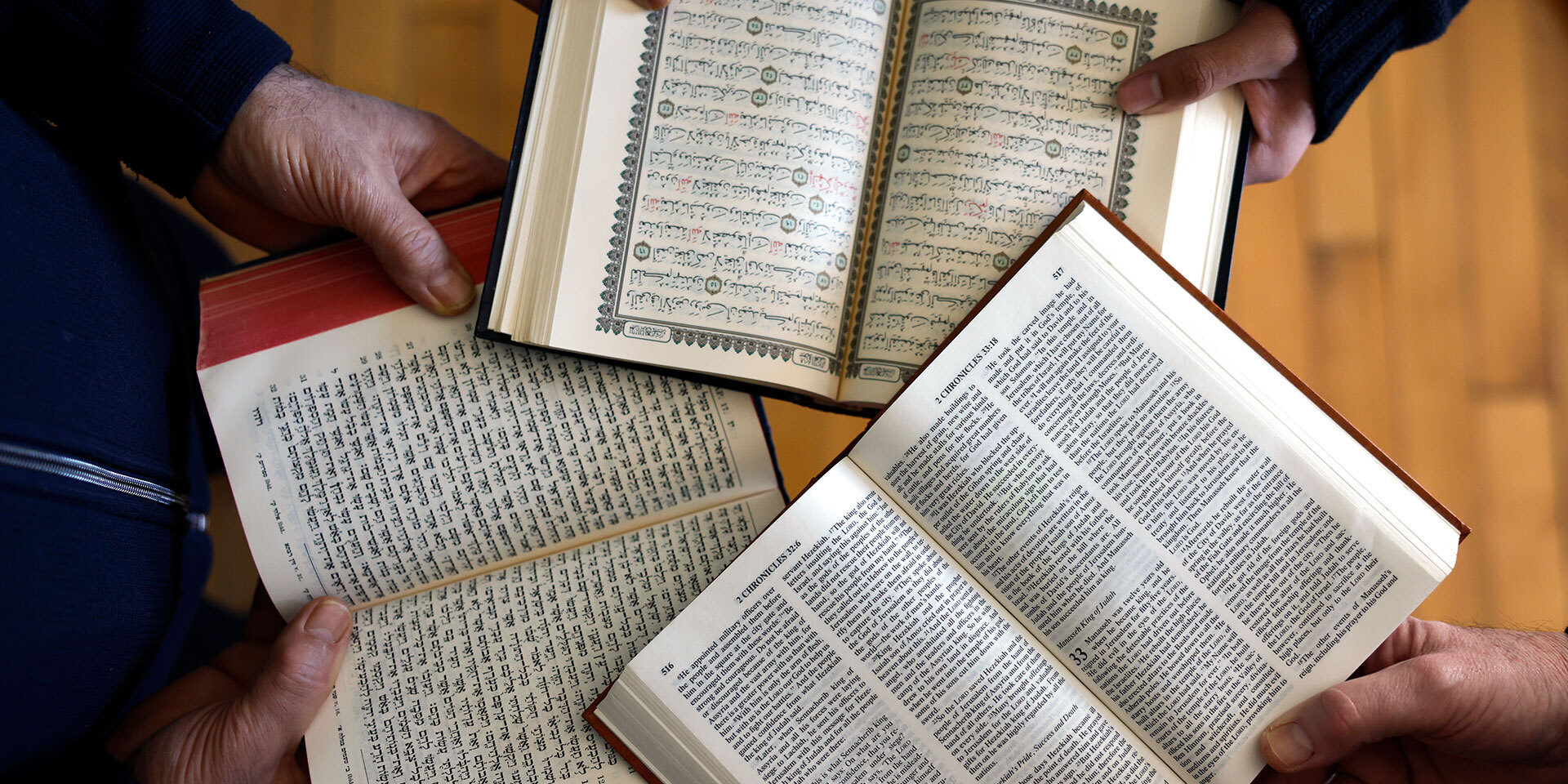
Image at top: The Bible, the Torah and the Quran. (Credit: Godong/Universal Images Group via Getty Images)
Citations
1 International Holocaust Remembrance Alliance, “Working Definition of Antisemitism,” 2025.
2 Combat Antisemitism Movement, “Adoptions and Endorsements of the IHRA Working Definition of Antisemitism.”
3 “Weaponizing Antisemitism Makes Students ‘Less Safe,’ Says Drafter of Definition,” NPR, March 20, 2025.
4 “Re: Reiterating call to reject IHRA and its underlying conflation of anti-Zionism and
antisemitism that is causing severe anti-Palestinian racism,” coalition letter to Hon. Catherine E. Lhamon, January 16, 2024; Human Rights Watch et al., “Human Rights and Other Civil Society Groups Urge United Nations to Respect Human Rights in the Fight Against Antisemitism,” April 20, 2023.
5 Hannah Feuer, “How a Controversial Definition of Antisemitism Is Making Its Way Into State Laws — From Banning Masks to Training Cops,” May 28, 2025.
6 Alon Milwicki et al., “Holocaust Education: A Mixed Bag in U.S. Schools,” Southern Poverty Law Center, May 3, 2024.
7 Vania Blaiklock, “The Unintended Consequences of the Court’s Religious Freedom Revolution: A History of White Supremacy and Private Christian Church Schools,” Northwestern University Law Review 117, no. 46 (2022): 46-73.
8 Bruce Gourley, “Legislating Inequality: The Christian Confederate Roots of Project 2025,” Americans United for Separation of Church and State, June 28, 2024.
9 Ibid.; “Attorney General Ken Paxton Instructs Texas Schools to Display the Ten Commandments in Accordance with Texas Law,” Press release, August 25, 2025.
10 Kenneth Stern, “A Bad Deal: By Adopting the IHRA Definition of Antisemitism, Universities Are Sacrificing Academic Freedom,” Knight First Amendment Institute at Columbia University, September 5, 2025.
11 Caleb Kieffer, “Anti-Muslim Bigotry and the International Day to Combat Islamophobia,” Southern Poverty Law Center, March 13, 2026.
12 Council on Foreign Relations, “Understanding Sharia: The Intersection of Islam and the Law,” December 17, 2021.
13 “Congressmen Keith Self and Chip Roy Launch Sharia Free America Caucus,” December 15, 2025; Roll Call 172, H.R. 6090, U.S. House of Representatives, May 1, 2024.
14 “Congressmen Keith Self and Chip Roy Launch Sharia Free America Caucus,” December 15, 2025; Rep. Keith Self, Facebook post, February 9, 2026.
15 “Congressman Self and Congressman Roy’s Sharia Free America Caucus Surges in Congress, Adding Twenty-Four Members in Under One Month,” January 15, 2026.
16 Alon Milwicki, “Jewish People Must Retain Agency Over Their Stories, Identity and Narratives,” The Southern Poverty Law Center, February 20, 2025.
17 “Congressman Keith Self’s Leads Letter Calling President Biden to Take All Available Measures to Defend Israel,” October 2, 2024.
18 Kenneal Patterson, “GOP Rep Quotes Infamous Nazi Joseph Goebbels During Censorship Hearing,” Yahoo! News, April 2, 2025; David Moye, “GOP Rep Somehow Thinks Quoting Infamous Nazi At Hearing Is a Good Idea,” Yahoo! News, April 2, 2025.
19 Shaban Mir and Loukia K. Sarroub, “Islamophobia in U.S. Education,” Faculty Publications: Department of Teaching, Learning and Teacher Education 313 (2019); Tasmiha Khan, “How Anti-Muslim Bias on Campus Harms Students’ Education” Interfaith America, January 8, 2023; Sarah Posner, “The Christian Nationalist Boot Camp Pushing Anti-Trans Laws Across America,” Type Investigations, September 20, 2022; Faiola Cineas, “How Republicans Are Weaponizing Antisemitism to Take Down DEI,” Vox, December 21, 2023.