
Investigative Update Summer 2025
A War of Ideas: The unrelenting propaganda of the Lost Cause mythology
GoyimTV relies on other mainstream and extremist sites for hateful content
Missouri Minutemen and white nationalist Active Club learning from each other
New York politics used to promote misinformation, hard-right war against Muslims
The United States has hundreds of thousands of people who identify as “sovereign citizens.” Sovereign citizens have renounced their citizenship to their country but continue to inhabit it. Despite maintaining residency in the country and using its infrastructure, they claim to be outside its jurisdiction and no longer required to follow its laws. Their willingness to retaliate against law enforcement and public servants whose job is to assist with, defend or interpret the law makes sovereign citizens dangerous.
Often, new “sovereign” adherents come to the ideology following bad interactions with government or financial institutions. These incidents can include property evictions, foreclosures, bankruptcies, unpaid taxes, child custody issues or imprisonment. Sovereign citizen activists find potential new recruits at events, via online courses, on social media or in jails and tell them that sovereign citizenship will fix their problems or shield them from accountability.
Other recruits come to the ideology after buying into baseless conspiracy theories about the federal government, leading them to sovereign citizenship as a tool to separate from the government. Sovereign conspiracy theories include the following false claims:
- The government became a corporation almost a century ago, making its citizens victims of government fraud. This corporation created secret bank accounts for each person that they can access using sovereign practices.
- A Moroccan-American Treaty of Friendship gives self-proclaimed Indigenous Americans the right to create their own sovereign territories in the U.S.
- Members of a secret government called the “Deep State” are controlling the country.
- The government is destroying bodily autonomy through vaccines and other health measures.
Adherents expect their transition into sovereign citizenship, and subsequent refusal to follow the law, will be met with acceptance. When it isn’t, they often seek retaliation against those they believe are obstructing their efforts.
The obstructionists, according to sovereigns, are county clerks who process their documents, public safety officers who enforce the laws, attorneys in court cases involving them, prosecutors seeking guilty verdicts against them, and court staff and judges who are part of the judicial system they claim has no authority over them. These perceived enemies have faced high levels of harassment or physical danger for doing their jobs.
The problem is so widespread that the National Association of Secretaries of State authored a 2023 report aimed at providing victims of bogus filings with expedited relief due to the “dramatic increase in the number of fraudulent uniform commercial code filings during the past several years.”
County clerks and ‘paper terrorism’
County clerks are often the first to encounter sovereign citizens, as they typically send notices declaring their newfound sovereignty to clerk and recorder offices, believing this makes their declared change of citizenship official. A study of Arizona’s Pima County Recorder’s Office found it received more than 1,400 sovereign filings in one year alone.
Clerks can also be at risk from sovereign citizens when they process financial lien forms. Sovereign citizens file fraudulent financial liens to retaliate against people they believe have wronged them. This is known as “paper terrorism.”
Sovereigns file fraudulent liens against law officers who cited or arrested them, prosecutors who worked to convict them and judges assigned to their cases. They also target court staff and county clerks for not supporting their efforts. A Utah man was sentenced in 2025 for stalking a county recorder and making death threats to a sheriff.
The “debt” from false liens can end up on the victim’s credit report and cause future financial problems. In 2021, Tennessee District Attorney General Dave Clark, who was victimized by a sovereign’s lien, noted that the filings can make it difficult for people purchasing new homes or other large items. “These kinds of liens can be very disruptive in their life,” Clark told a local television station. “It can delay their ability to move, make purchases that we would all hope to make as life progresses.”
It can be difficult to get a fraudulent lien removed. In 2024, Michigan Judge Ronald Lowe had a lien filed against his property by a defendant. According to a January 2025 letter Lowe wrote to various Michigan judges and administrators, he contacted a state agency once he became aware of the lien and was told “to make use of my local insurance policies and attorneys before the attorney general could get involved.”
Across the country, there are some state laws on the books to help curb paper terrorism, but not enough. This is especially true since the sovereign movement experienced a surge in recruits in the past few years and shows no sign of slowing down.
Interactions with cops can turn lethal
Members of law enforcement have faced threats, injuries and even death from sovereigns so frequently that a 2014 study named sovereigns as the greatest threat to law enforcement agencies. A decade later, 2024 was one of the worst years for sovereign violence against law enforcement officers.
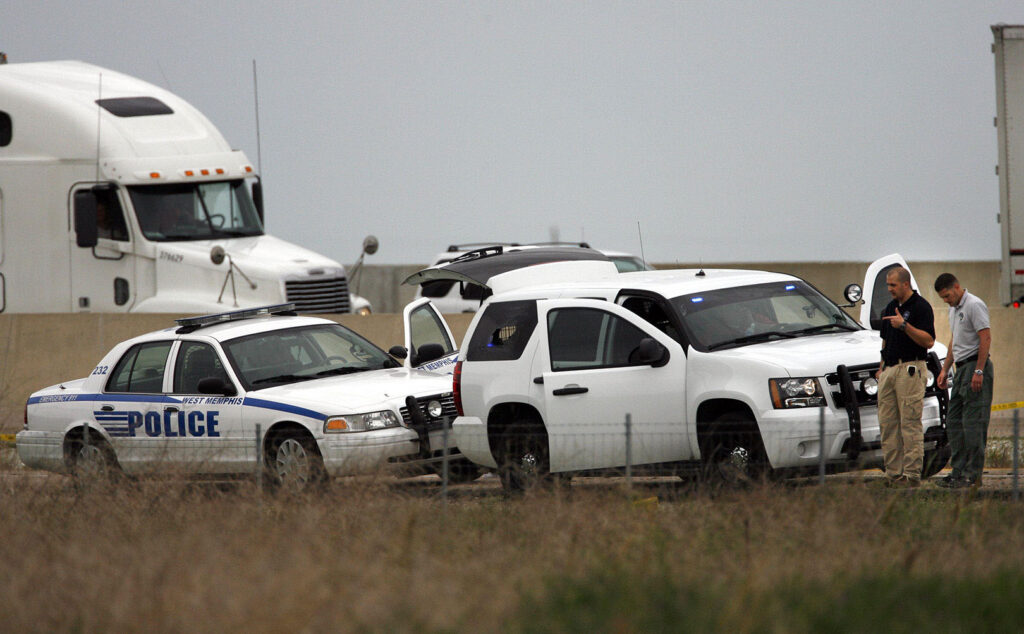
At traffic stops, sovereign citizens have become distressed, and even violent, believing they are immune from U.S. law. They are highly susceptible to tense traffic stops since most sovereigns refuse to obtain driver’s licenses, vehicle registration, car insurance or legitimate license plates. At some of these traffic stops, officers have been shot at or killed. In 2010, sovereign citizen father and son Jerry and Joe Kane killed two Arkansas police officers during a traffic stop. In 2024, Patrick Hurst attempted to shoot a Texas officer after being stopped for a broken taillight and expired tags. All three sovereign citizens were killed in showdowns with police.
Sovereign citizens have also been violent toward law officers carrying out evictions. There have been four separate sovereign eviction-related shootouts in the U.S. The most recent was in 2023, when William Hardison of Pittsburgh shot at officers before being killed in a shootout at his home. Thousands of shots were exchanged during the encounter, according to a local news report.
Sovereigns also target law enforcement officers with fraudulent liens. In 2017, sovereign Randall Townsend was convicted of impersonation of law enforcement and retaliation charges related to his attempt to file liens on two law officers’ homes.
Some sovereign groups attempt to create parallel governments with their own law enforcement arms, often called “marshals,” “sheriffs” or “peacekeepers.” Townsend was among four sovereign “marshals” who attempted to break an associate out of jail in Los Lunas, New Mexico, in 2017. They called the jail to announce their imminent arrival and showed up armed, wearing polo shirts with badges embroidered on them. After all were arrested, jail warden Joe Chavez told a local newspaper, “They fully feel their sovereignty gives them rightful authority and they are legitimate law enforcement.”
Clogging and targeting the judicial system
Sovereign citizens have clogged the courts with nonsense paperwork. They frequently interrupt court hearings by yelling and objecting to the proceedings, claiming the court has no jurisdiction over them. Sovereigns who attempt to retaliate against the court through paper terrorism are even more chilling for judges, prosecutors and court staff. Some high-profile examples reported by federal officials include:
- 2011: Cherron Marie Phillips filed liens totaling $100 billion against five federal agents, two federal prosecutors, a court clerk and four federal judges. Phillips, then 43, was convicted on charges stemming from these actions by a federal jury in her native Chicago.
- 2014: Donna Marie Kozak, a member of the antigovernment group Republic for the United States of America (RUSA), filed fraudulent liens in the millions against two U.S. district court judges, the U.S. attorney for the District of Nebraska, two assistant U.S. attorneys and a federal agent. Kozak was convicted on federal charges by an Omaha jury.
- 2019: Timothy Jermaine Pate was convicted and sentenced in a case out of Georgia for filing over $100 million in liens against a magistrate judge, the U.S. bankruptcy court clerk, a bankruptcy judge and various federal officials.
- 2024: Judy Grace Sellers was sentenced to five years in federal prison for charges including filing a false lien against a U.S. attorney in Florida.
“This is the basest form of harassment aimed at folks carrying out their sworn duties,” U.S. Attorney Stephen R. Wigginton said in a press release announcing Phillips’ conviction. “No one should have to contend with this type of attempted intimidation.”
Image at top: Illustration by Joan Wong