It is baffling that, in 2026, any Deep South state government — let alone a half-dozen of them — could commemorate Confederate Heritage Month. In the five states at the core of the Southern Poverty Law Center’s work — Alabama, Florida, Georgia, Louisiana and Mississippi — administrations pay tribute to a false, white supremacist version of the Civil War. Despite the Confederacy’s surrender in April 1865 (or because of it), Southern groups created the “Lost Cause” myth in the late 19th and early 20th centuries. That fallacy whitewashes slavery and oppression that sparked the war. It hawks the Confederacy as a gallant, righteous union the South formed to defend states’ rights against Northern domination.
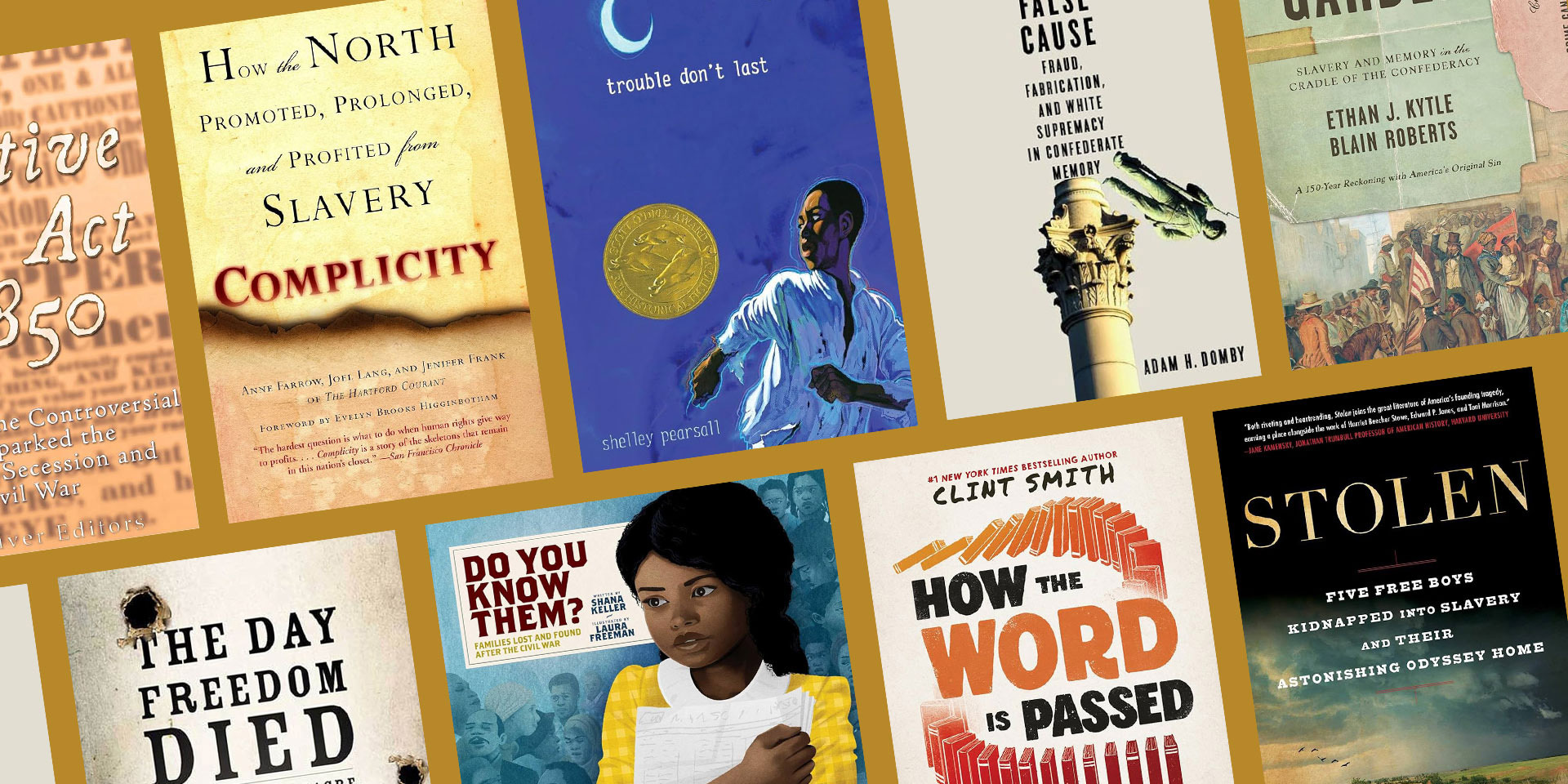
The SPLC recommends the following books for an accurate understanding of the period extending before, during and after the Civil War.
Denmark Vesey’s Garden: Slavery and Memory in the Cradle of the Confederacy
by Ethan J. Kytle and Blain Roberts
An examination of the role that divergent memories of enslavement have played in Charleston, South Carolina, from Reconstruction to today. The authors draw a straight line from the city’s denial of racist history to Dylann Roof’s murder of Black church congregants in 2015.
The False Cause: Fraud, Fabrication, and White Supremacy in Confederate Memory
A focus on North Carolina and the ways that the “Lost Cause” myth developed from white supremacist lies that persist today.
The Day Freedom Died: The Colfax Massacre, the Supreme Court, and the Betrayal of Reconstruction
After Confederate veterans in a Louisiana town massacred more than 100 Black people on April 13, 1873, three men convicted of depriving the victims of their constitutional rights appealed their case to the U.S. Supreme Court and won. A gripping story of gross injustice against Black Louisianans during Reconstruction.
Complicity: How the North Promoted, Prolonged, and Profited from Slavery
by Anne Farrow, Joel Lang and Jenifer Frank
An exposé of the hidden truth of the Northerners — including some abolitionists — who profited from enslavement and the molasses and rum trades.
Books for children and young readers
Do You Know Them? Families Lost and Found After the Civil War
by Shana Keller
Illustrated by Laura Freeman
ages 4-8
A unique story about a young girl at the end of the Civil War who searches for family members separated by enslavement, war and its aftermath. The book is based on authentic newspaper ads Black Americans placed to find lost relatives.
Trouble Don’t Last
by Shelley Pearsall
ages 8-12
This vivid, thoughtful portrait of enslavement describes the dangerous trials of runaways in search of freedom and family along the Underground Railroad from a Kentucky plantation north to Canada.
How the Word Is Passed (Adapted for Young Readers): Remembering Slavery and How It Shaped America
by Clint Smith
ages 10+
Adapted by Sonja Cherry-Paul from Smith’s best-selling, award-winning nonfiction book. Smith traveled the country visiting eight historic sites and monuments, discussing how memory shapes history and showing Black youth how they can grapple with the past of enslavement to shape their own future.
Stolen: Five Free Boys Kidnapped Into Slavery and Their Astonishing Odyssey Home
by Richard Bell
mature middle school readers to adult
Trigger warning: vivid descriptions of violence. The harrowing, true story of the kidnapping of five Black boys ages 8-14 by human traffickers who intended to sell them into enslavement through the Reverse Underground Railroad to the South, and their eventual rescue.
Illustration at top by the SPLC.