Far-right groups seek to exploit natural disasters to spread conspiracy theories, slow government response, and present benign public personas.”
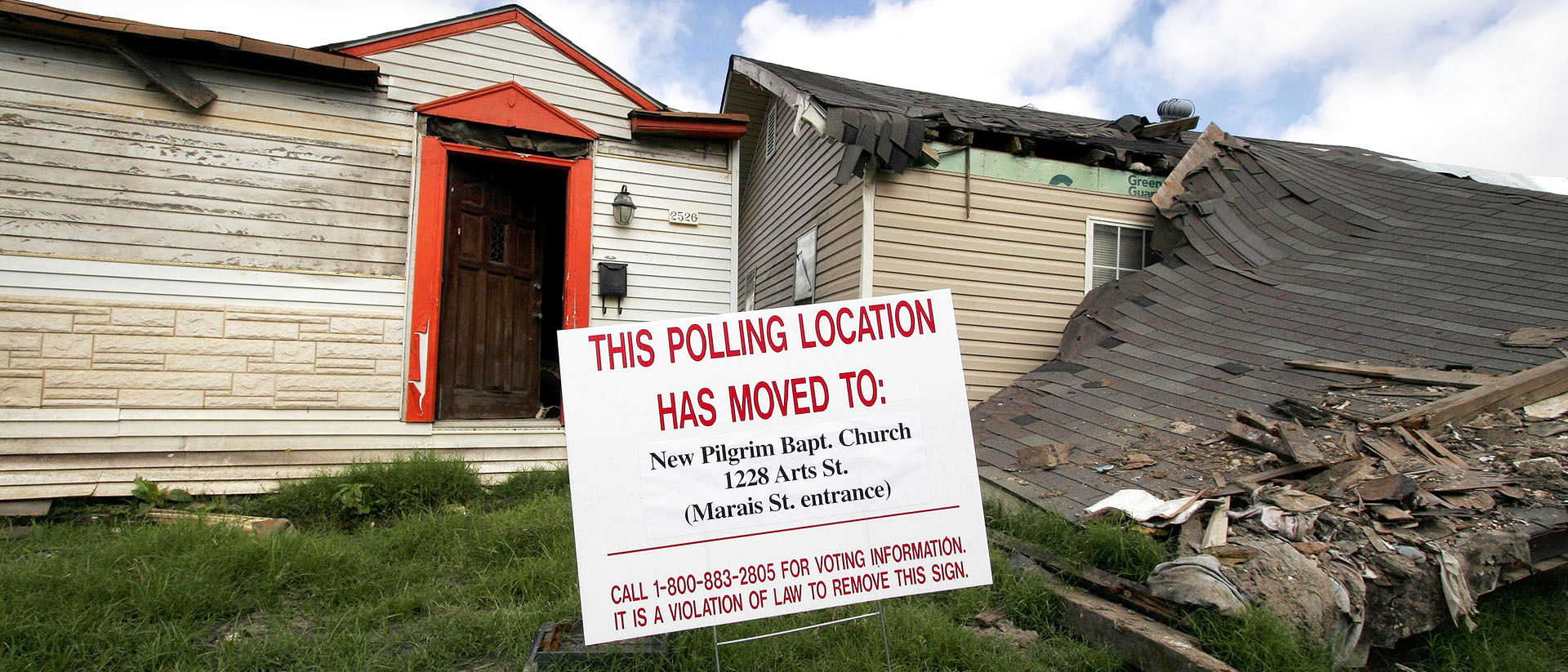
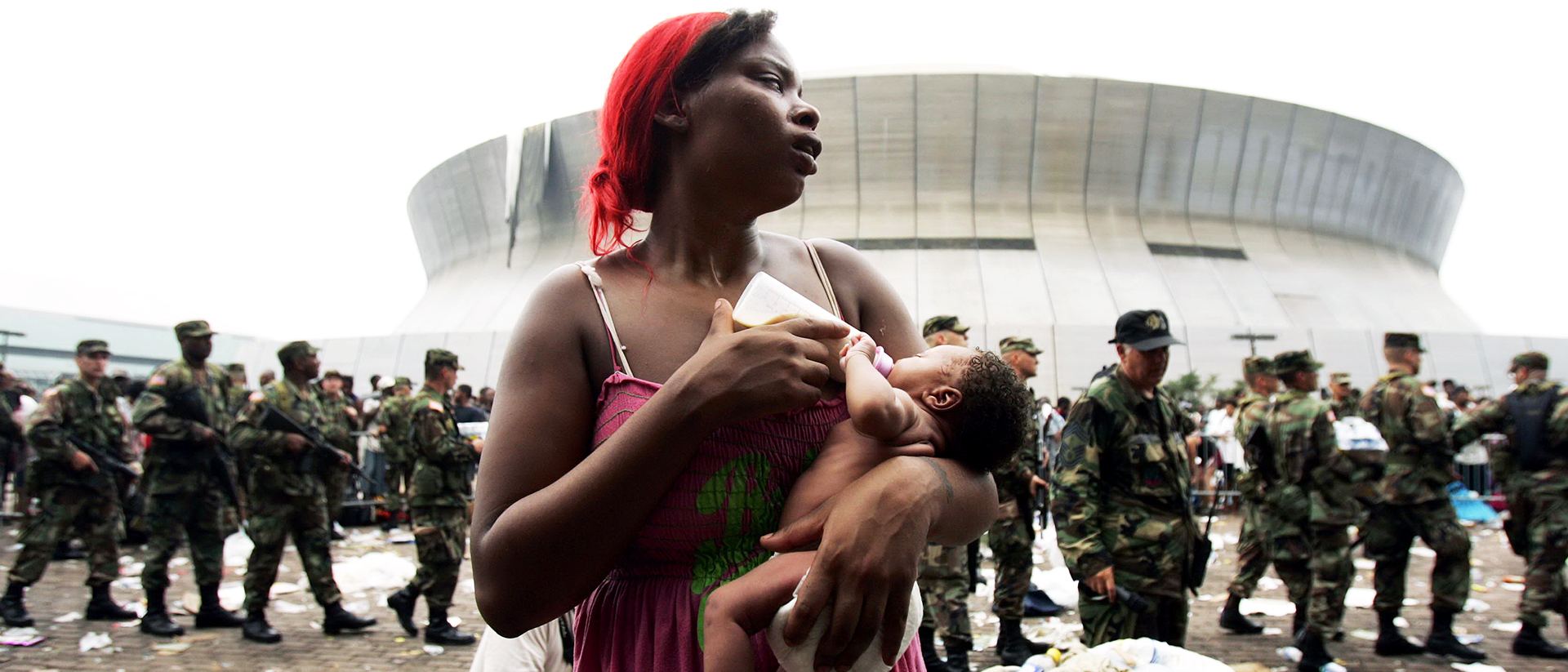
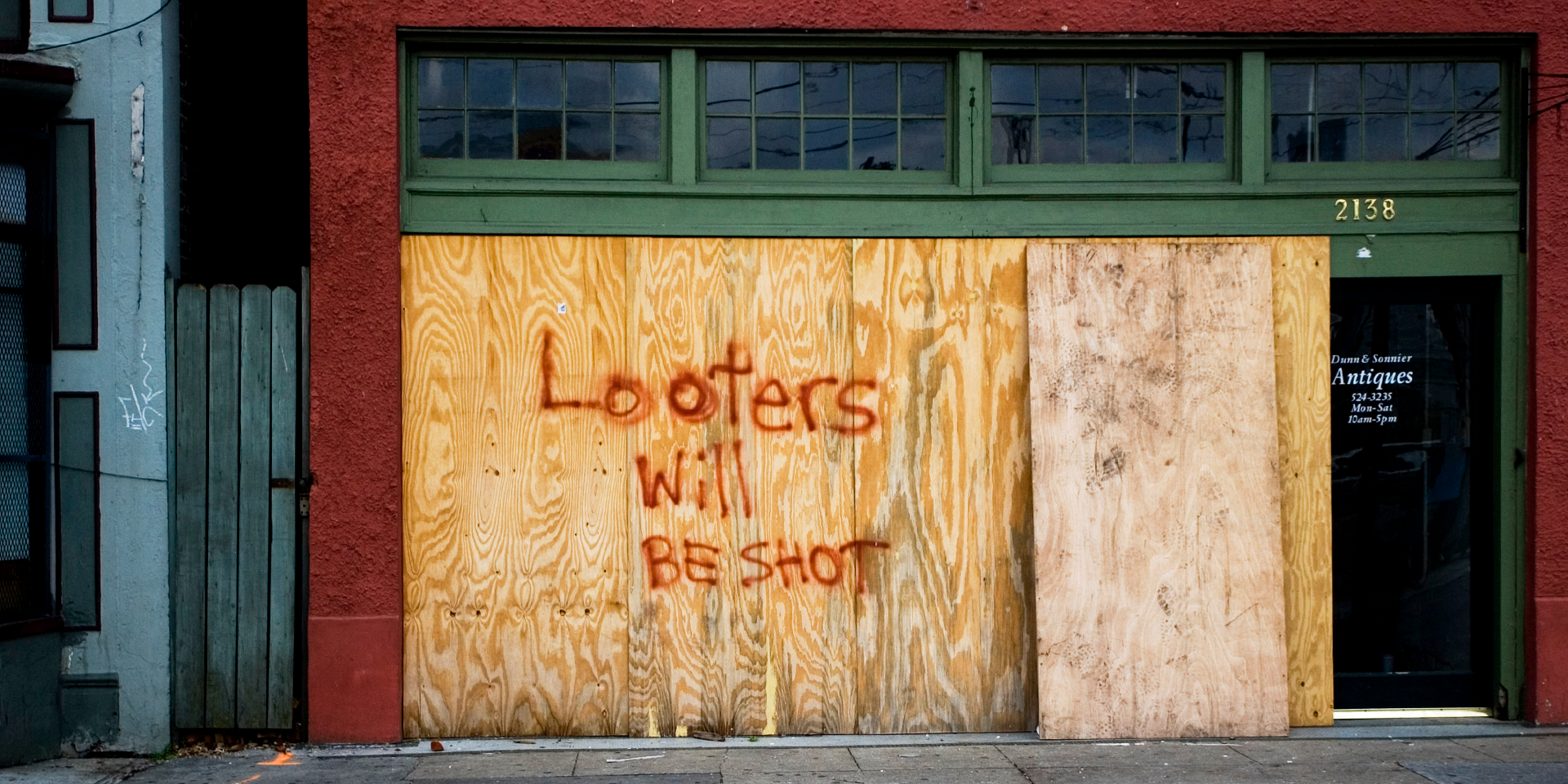
In 2005, when Hurricane Katrina hit the Lower Ninth Ward in New Orleans, it didn’t just cause horrific flooding. It laid bare the structural racism in this country, with media coverage providing one example. At the time, Salon noted media coverage labeled people of color searching for goods and services as “looters.” White people, on the other hand, were described in positive ways — they were “finding” needed goods. An academic paper later found a “disproportionate media tendency to associate Blacks with crime and violence” in Katrina’s aftermath. Given this, white nationalists seized the opportunity to promote their belief that people of color are an inferior, subhuman race.
Edgar Steele, an attorney who represented Aryan Nations, promoted eugenics-like arguments, stating the aftermath resulted in the “boundless display of black depravity,” because “Blacks simply are far more prone to lawlessness in general, and violence in particular, than are Whites. It is genetic and cultural, after all.” American Renaissance, a white nationalist hate group, claimed Black people used the “disaster [as] an excuse to loot, rob, rape and kill,” and, when Black people “are left entirely to their own devices, Western Civilization — any kind of civilization — disappears.” Another hate group, White Revolution, promoted a project called “Cartridges for Katrina,” which advocated for killing Black people and was described like this: “For every black looter you shoot, and provide proof of a clean kill, White Revolution will provide reimbursement of all expended ammunition, at no charge.”
The antigovernment militia activity following Katrina also often took on racist overtones. The Nation reported the all-white Algiers Point militia stockpiled weapons and began patrolling the area, which experienced an influx of Black people due to Katrina’s extreme flooding. The paramilitary force portrayed itself as defenders of property and opposing thieves. The armed group assumed law enforcement functions for themselves, detaining and questioning people. The Nation spoke to one person who said a family member was “excited” for the “opportunity to hunt black people.” The publication also reported that at least 11 people were shot in the area, with the targets being Black people and the shooters being white.
Far-right groups seek to exploit natural disasters to spread conspiracy theories, slow government response, and present benign public personas. It’s critical to understand how they operate in recovery zones as climate change increases the number and intensity of natural disasters.
Recovery Areas Become Public Relations Opportunities
The trends that happened following Hurricane Katrina have played out repeatedly during subsequent natural disasters. White nationalists and antigovernment operatives seek to exploit natural disasters for similar reasons. Both are always seeking opportunities to portray themselves in the best possible light to counter the negative baggage they’ve accumulated over time. Responding to natural disasters can translate into good public relations, which can open avenues for recruiting new members to their causes. Delivering supplies, clearing debris and patching roofs make for great propaganda that can be used long after the current crisis is over. However, even while engaging in relief efforts, both use the time to spread the conspiracy theories that are foundational to their larger movements. Militias, for example, are attracted to disaster response, because FEMA plays an integral role in their New World Order conspiracy theories.
Living in the Wake: The Enduring Legacy of Hurricane Katrina is a series of essays that examine what the failures of the past can teach leaders about creating the kinds of inclusive, forward-thinking policies New Orleans needs to transform communities that have endured decades of neglect. Read all the essays.
For the antigovernment movement, especially militias, disaster recovery and the ensuing chaos offer a chance to gain legitimacy by showing up in public places and assuming law enforcement-type functions for themselves. For the Algiers Point militia, The Nation reported that with a lack of law enforcement presence, “the militia’s unique brand of justice flourished.” Militias will often show up armed, patrol areas, and illegally detain people, while wearing tactical gear and outfits making them appear to be legitimate law officers or military personnel. Militias reference these types of activities to bolster claims of being legitimate protectors of their communities. Despite the long record of violent and destructive acts perpetrated by the militia movement, its followers have often tried to frame themselves as benign, community-focused entities. Following the Oklahoma City bombing carried out by a militia adherent, John Trochmann, an early leader of the movement in the 1990s, still attempted this public relations game, telling Congress militias were nothing but “a giant neighborhood watch.”
For white nationalists, responding to natural disasters really comes down to race. When hate groups and their followers respond, they only look to help white people. Depending on the region impacted, they may use it as an opportunity to encourage attacks on people of color, such as White Revolution’s “Cartridges for Katrina.” This type of overt targeting of Black people is more likely to be deployed when disaster areas have certain demographics, such as in New Orleans, which was 67% Black before Katrina. However, messaging that focused on helping white people was more prominent following 2024’s Hurricane Helene in North Carolina, where the population was almost 70% white.
Times of recovery also let white nationalists promote their antisemitic conspiracy theories regarding the federal government, which they believe is controlled by a shadowy cabal of Jewish people who want to wipe out the white race. Following natural disasters, it’s common to find white nationalists saying government won’t help white people. Since complaints about government often happen during recovery efforts, white nationalists try to position themselves as keepers of “special” knowledge about why the government isn’t helping. This “reasoning” could be seen following Hurricane Helene, where lies abounded that FEMA was spending money on immigrants instead of hurricane victims.
Especially in recent years, white nationalist groups have focused on using recovery efforts to produce high-quality propaganda videos for ongoing recruitment. Patriot Front documented members helping a Florida community after Hurricane Ian hit in 2022. Members were shown helping remove trees, putting tarps on roofs, and replacing siding on homes. The homeowners benefiting from the assistance, along with every community member shown in the video, were white. The video also showed the locals hosting Patriot Front members for lunch and praying with them at a community gathering. The video makes these hardcore white nationalists seem like civic-minded heroes rather than shock troops of the American hate movement.
It might seem unlikely that people accepting supplies and help from militias and white nationalists would buy into these ridiculous conspiracy theories and join these dangerous movements. However, it’s important to remember that survivors of natural disasters are encountering them at incredibly vulnerable times, often when community members are just starting to put the emotional and physical pieces of their lives back together.
Capitalizing on Gaps in Support
The Oath Keepers, an antigovernment militia that helped orchestrate the Jan. 6 insurrection, are a perfect example of how hard-right extremists seek to exploit gaps in natural disaster recovery for their own benefit. Before Jan. 6, Oath Keepers frequently showed up in recovery zones, sometimes before federal agencies, to build and sell their brand as “community preparedness teams.” Grist summarized the militia’s motivation accurately:
“Disasters provide the Oath Keepers with opportunities to fundraise and gain the trust of people who might not otherwise be sympathetic to their anti-government cause. By arriving to crisis zones before federal agencies do, the Oath Keepers take advantage of bureaucratic weaknesses, holding a hand out to people in desperate circumstances. This all serves to reinforce the militia members’ conviction that the government is fallible, negligent, and not to be trusted. And every time a new person sees the Oath Keepers as the helpers who respond when the government does not, it helps build the group’s fledgling brand.”
The founder of Oath Keepers, Stewart Rhodes, always understood the need to rebrand his militia as a way to create space between his group and the movement’s violent history. To that end, he started reframing Oath Keepers as community preparedness teams, leaning into portraying the militia as community supporters in times of need.
Natural disasters provide the opportunity for Oath Keepers, and other far-right groups, to offer a helping hand in desperate situations, while also spreading their message that the federal government can’t be trusted. Oath Keepers tried to position themselves as the entity that showed up when the government didn’t in critical times. As climate change increases the severity and frequency of natural disasters, FEMA’s continual budgetary and personnel challenges help create gaps for militias to exploit — including lack of law enforcement presence, the need for supplies, and bodies to help do the needed work.
The primary purpose of showing up in disaster recovery situations is the public posturing in which Oath Keepers engage. Former Oath Keeper Jason Van Tatenhove told the Southern Poverty Law Center that Rhodes’ legacy was creating a blueprint for others to follow when it came to creating militia groups and branding them as community preparedness entities. However, Tatenhove said this was done so Rhodes could “avoid the ‘M word’ or the militia, which [was] a forbidden word.” He said Rhodes was “very aware of optics” and messaging. Tatenhove said field trainings were packaged to supposedly be geared toward responding to natural disasters, but “99% of the actual training was small team tactics and things like hasty ambushes,” he said. “This was down-and-dirty warfighting taught by actual warfighters that had done it.” In other words, the militia’s involvement with the Jan. 6 insurrection was more representative of the militia’s core ideology than delivering water supplies and clearing brush after a hurricane.
Hurricane Helene: When the Hard Right Hinders Federal Response
When Hurricane Helene hit in 2024, it damaged multiple states, from the Southeast into southern Appalachia. Both militias and white nationalists mobilized during recovery and provided an example of how these far-right entities can negatively impact federal response efforts.
Militias like the River Valley Minutemen and the Nantahala Reconnaissance Group raised money, gathered supplies, and headed to impacted areas. The far-right Cape Fear Proud Boys claimed to be sending paramedics to the recovery zones. These efforts reiterated claims by far-right extremists of being community-focused and helped them try to gain traction with locals. At the same time, far-right groups and their members shared misinformation that heightened tensions in the areas they claimed to be helping. Various conspiracies about FEMA began circulating and, in some cases, threats were made against government employees.
Far-right extremists promoted racist and antisemitic conspiracies about the federal government in Helene’s aftermath. The Cape Fear Proud Boys posted on social media that there wasn’t an “effective FEMA response” and claimed, “Your government hates you more than you can possibly imagine.” The group claimed the Biden administration would be helping more if the area was “filled with Haitian migrants.” Patriot Front showed up in multiple states, filmed its work, and posted a propaganda video on its social media. A group member said it was important they helped community members in need since “the federal government is occupied ushering in foreigners.” This played into a common white nationalist-based conspiracy theory that FEMA was directing funds toward immigrants instead of disaster recovery.
Hardcore antisemitism was directed at FEMA, especially its former director of public affairs, Jaclyn Rothenberg. In social media posts, she was described as being among the “ZIONIST JEWS AT THE ROOT OF ALL EVIL” and a “traitor.” The Institute for Strategic Dialogue reported that social media posts questioning her loyalty based on her Jewish heritage attracted more than 4 million views in a 24-hour period. Attacks and criticisms of FEMA also came from militias. In an Instagram post targeting FEMA’s response, Clandestine Operations Group stated, “You are at war with your government, right now,” and it’s “a good time to load mags & build a f‑‑‑‑‑‑ guillotine.” In another post, the militia warned supporters to remember “evil has a solid historic record of taking advantage of times like this.”
A major agitator on the ground that negatively impacted federal aid was the militia Veterans on Patrol (VOP) and its leader, Michael “Lewis Arthur” Meyer. Meyer showed up in Rutherford County, North Carolina, and emphasized providing aid to victims. However, he and VOP really spent most of the time spreading conspiracy theories that helped create a hostile environment for federal agencies. On social media, VOP claimed that “Hurricane Helene was an act of war perpetuated by the United States Military” and was a “land grab” responsible for “murdering hundreds, if not thousands, of Americans.” The militia claimed it had come to replace FEMA. VOP stressed that the federal government had caused Helene using technology that could control the weather, and they declared that “we intend to destroy this equipment.”
The conspiracy theories and misinformation spewed by VOP, white nationalists and others contributed to aid work being stopped in certain areas for the safety of workers. At one point, VOP issued a call seeking supporters to “mobilize … and remove FEMA from North Carolina.” A man who attended a VOP prayer circle was arrested after talking about “hunting FEMA.” The American States Assembly, an antigovernment sovereign citizen group, issued a declaration claiming FEMA had been “obstructing local rescue efforts.” The group’s leader, who goes by Anna von Reitz, stated that if “the FEMA personnel offer any further obstruction,” workers could “be arrested or shot or hung on sight.” In another missive, Reitz told sheriffs that if they believed FEMA was misbehaving, “deadly force is authorized.”
The conspiracy theories and vitriol negatively impacted federal recovery efforts, with FEMA having to alter the way it worked due to the threats. At one point, for at least 48 hours, federal workers and contractors stopped doing many jobs. In other cases, threats resulted in workers being relocated due to safety concerns. FEMA adjusted its security protocols, which resulted in not going door to door in certain locations, and critical time and resources had to be diverted from recovery efforts to combating misinformation and conspiracy theories. FEMA even established a website to try to debunk the misinformation. Overall, officials discussed how the conspiracies and misinformation seemed to be discouraging impacted people from applying for assistance.
Lessons Going Forward
History demonstrates how far-right extremists seek to exploit recovery situations for their own gains. Not only do they seek new recruits, but they inhibit critical, legitimate recovery operations. We should assume far-right agitators will show up in the future and examine ways to minimize their impacts.
As natural disasters increase in number and intensity due to climate change, FEMA needs to be funded and staffed at levels to meet growing demands on its services in this new reality and also to prevent the gaps that far-right groups exploit. Part of disaster planning should be the assumption that conspiracy theories and other misinformation will be challenges to recovery work. Based on history, FEMA and other agencies should have materials ready to deploy right away, and add to them as needed, to debunk conspiracy theories and misinformation.
States and local communities need to realize that climate change is causing natural disasters in different areas of the country. For instance, there’s growing evidence that “Tornado Alley” is shifting to the Midwest and Southeast. As new regions scale up to deal with more consistent natural disasters, far-right extremists will seek to exploit any gaps, especially militias. Fallout from the Jan. 6 insurrection resulted in the militia movement returning to a more localized structure, with a heavy emphasis on positioning themselves as emergency preparedness entities.
To address militias and other hard-right extremists who show up and assume for themselves law-enforcement type functions during recoveries, states should use the anti-militia laws on their books. According to Georgetown Law’s Institute for Constitutional Advocacy and Protection, all 50 states have laws prohibiting private militias and paramilitary activity. In many cases, these laws could be used to hold militias and others accountable for actions taken in disaster response zones.
The far right looks to undermine democratic institutions and build power by dividing communities and creating fractures in the bonds that unite us. Disasters occur on a massive level. Impacted people are at their most vulnerable, and the chaos of the situation means there are inevitably gaps in services and complaints about how the government responds. We’ve seen how the far right pounces and exploits these situations. It’s now up to us to take the lessons learned and safeguard our communities the best we can going forward.
How to effect change?
- Center the experiences, leadership, needs, policy agenda, and collective voice of directly impacted individuals when developing administrative or legislative policies at the local, state and national level.
- Invest in community-based services to safeguard the dignity and human rights of vulnerable communities.
Travis McAdam is a research and analysis manager for the SPLC’s Intelligence Project.
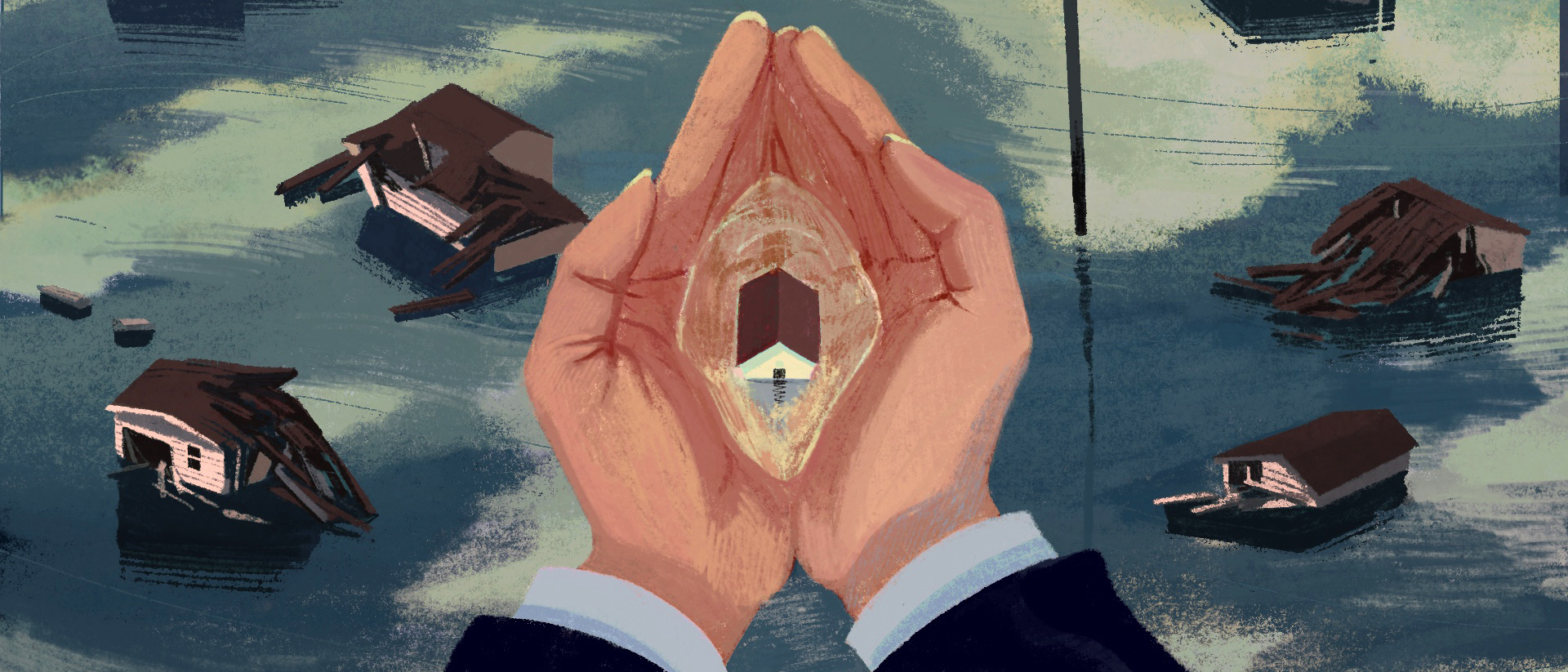
Illustration by Tara Anand.