Founded in 1887 during Reconstruction, Eatonville, Florida, was one of the first towns in the U.S. to be incorporated by people who were freed from slavery. The community near Orlando is one of fewer than 200 Black settlements that became all-Black incorporated communities with autonomous Black city governments. Today, “The Town That Freedom Built,” is one of the only such surviving communities.
Eatonville is established during Reconstruction by newly emancipated African Americans with the motto, “The Town That Freedom Built.”
The Robert Hungerford Normal and Industrial School is established on donated land after Black leaders of the town petition Booker T. Washington to assist them in starting a school. The school becomes a backbone of the community.
Their Eyes Were Watching God, a novel by Zora Neale Hurston, who grew up in Eatonville, is published.
State officials in Florida begin providing public education to Black children across the state.

The school district of Orange County, Florida, where Eatonville is located, buys the school property from the trust that owned it under the condition that the school would be used to educate Black children. The sale goes forward despite the objection of an heir of one of the original donors of the Hungerford property, who contests the sale all the way to the Florida Supreme Court as a violation of the original purpose of the trust. The school district later demolishes the historic buildings of the original school and builds a public school on the land.
After a new interstate highway bisects the Hungerford property, the school district opts to sell off the section on one side of the highway. To do so, the school district wins permission from the courts to dissolve the restriction on that section mandating the use of the property as a school for Black children. The remaining part of the property, where Hungerford High School continued to operate, retained the restriction.
Alice Walker, Pulitzer Prize-winning author of The Color Purple, pens an essay about her search for Zora Neale Hurston, whose stories had gone out of print following her death in 1960. Walker discovers Hurston’s unmarked grave in Fort Pierce, Florida, in 1973 and purchases a headstone inscribed with the words “A Genius of the South.”
The first Zora Neale Hurston Festival of the Arts and Humanities, also known as ZORA! Festival, is held in January to celebrate African American history and culture. The Zora Neale Hurston National Museum of Fine Arts is established by the Association to Preserve the Eatonville Community. The museum holds its first exhibit in July of this year.
The school district closes Hungerford High School (there is still a Hungerford Elementary School) and district officials begin eyeing the land for possible sale.
Eatonville sues the school district and successor trustees of the Hungerford trust to release the deed restriction.
In the complaint, Eatonville argues that the balance of the property is best suited for commercial development and that it is seeking to purchase the land from the school district for development. But according to the complaint, the deed restriction prohibits such a sale, and Eatonville needs the restriction released to increase its “ad valorem tax base and provide health and safety services to its citizens.”
The trustees, the Town of Eatonville and the Orange County Public Schools enter into a settlement agreement, amended in this year, in which the school district agrees to pay $1 million to the Robert Hungerford Chapel Trust for the release of the deed restriction, with payment required no later than Monday, Jan. 16, 2017.
The school district and Eatonville enter into various sales contracts, most recently from this year, in which the school district, upon selecting a developer, would sell the land to Eatonville in exchange for $10 million plus reimbursement of other costs. Notably, under the agreement, Eatonville would owe the school district the $1 million that the school district agreed to pay the Hungerford Chapel trustees in exchange for releasing the deed restriction.
The school district demolishes the high school with little notice to the community.
The Zora Neale Hurston National Museum of Fine Arts is awarded a $50,000 grant from the Southern Poverty Law Center.
June 8
The deed release is executed, removing the restriction from the Hungerford property that provided it was only to be used for the education of Black children. A purchase and sale agreement is in place, with a proposed sale on Oct. 26 to a group of developers. The school district votes to extend the closing date for an additional 90 days to allow time to secure required land use entitlements from the Town of Eatonville.
September
The town votes on zoning and comprehensive plan changes to facilitate the sale at a first hearing in this month. Two hearings are required under Florida law. The mayor of the town, along with the Association to Preserve the Eatonville Community, partner to host a series of community meetings about the proposed sale and development of the Hungerford property, including the requested zoning and comprehensive plan changes.
Nov. 29
The last community meeting on the project is held.
Feb. 7
The Town Council of Eatonville holds the second hearing on the zoning and comprehensive plan changes for the Hungerford property, with more than a dozen community members offering comments. Reversing course from its September vote, the council votes to reject the proposed zoning and comprehensive plan changes.
March 19
CBS Sunday Morning chronicles Eatonville’s storied past to its present-day challenges, including the community’s opposition to Orange County Public Schools’ sale of the Hungerford property to a private developer. CBS Sunday Morning updates the Eatonville story in April to report that the private developer has terminated the sales contract on the Hungerford property.
In the video: CBS Sunday Morning broadcasts a report on Eatonville, Florida.
March 24
The Association to Preserve the Eatonville Community Inc. sues the school board of Orange County Public Schools in Florida state court to ensure that the Hungerford property continues to be used for educational and related purposes that benefit the community. The Southern Poverty Law Center represents the association in its suit.
March 31
The private developer seeking to build on the historic Hungerford property elects to terminate the sales contract on the property. While the contract between Orange County Public Schools and the developer has been terminated, the school district still owns the land. The action by the Association to Preserve the Eatonville Community Inc. remains pending in court.
July 12
Hungerford descendant Bea Hatler joins lawsuit against school board of Orange County Public Schools.
Aug. 14
The school board of Orange County Public Schools files motion to dismiss lawsuit brought by the SPLC on behalf of the Association to Preserve the Eatonville Community Inc. and Hatler.
Sept. 21
Court holds hearing on school board’s motion to dismiss.
Nov. 3
SPLC defeats school board’s motion to dismiss. Court issues order denying the motion, allowing the lawsuit by the Association to Preserve the Eatonville Community Inc. and Hatler to continue.
Nov. 6
As part of its “Books That Shaped America” series, C-SPAN features Zora Neale Hurston’s seminal novel Their Eyes Were Watching God and showcases the Town of Eatonville as an essential influence on Hurston’s writing.
Dec. 21
The school board of Orange County Public Schools responds to plaintiffs’ lawsuit and offers defenses.
May 1
The National Trust for Historic Preservation included Eatonville, Florida, on its 2024 list of America’s 11 Most Endangered Historic Places.
July 29
The school board of Orange County Public Schools again seeks to have Plaintiffs’ lawsuit dismissed by filing judgment on the pleadings.
Oct. 4
Court holds hearing on school board’s judgment on the pleadings.
Dec. 31
Court orders dismissal of Plaintiffs’ case.
Sept. 23
Eatonville Mayor Angie Gardner announces her support for the Orange County Public Schools to sell the Hungerford property to Dr. Phillips Charities. Gardner issues a joint press release with the Orange County Public Schools announcing the purchase and sale of the Hungerford property.
Sept. 25
Eatonville Town Council holds a special meeting. After extensive public comment and debate, the Town Council votes 4-1 (with only the mayor dissenting) to adopt a resolution voicing its opposition to the school board’s intended sale of the Hungerford property to Dr. Phillips Charities.
Sept. 30
Orange County Public Schools formally approves a memorandum of understanding with Dr. Phillips Charities for the sale and redevelopment of the Hungerford property.
Jan. 13
Orange County Public Schools unanimously votes to enter into a contract to sell the Hungerford property to Dr. Phillips Charities.
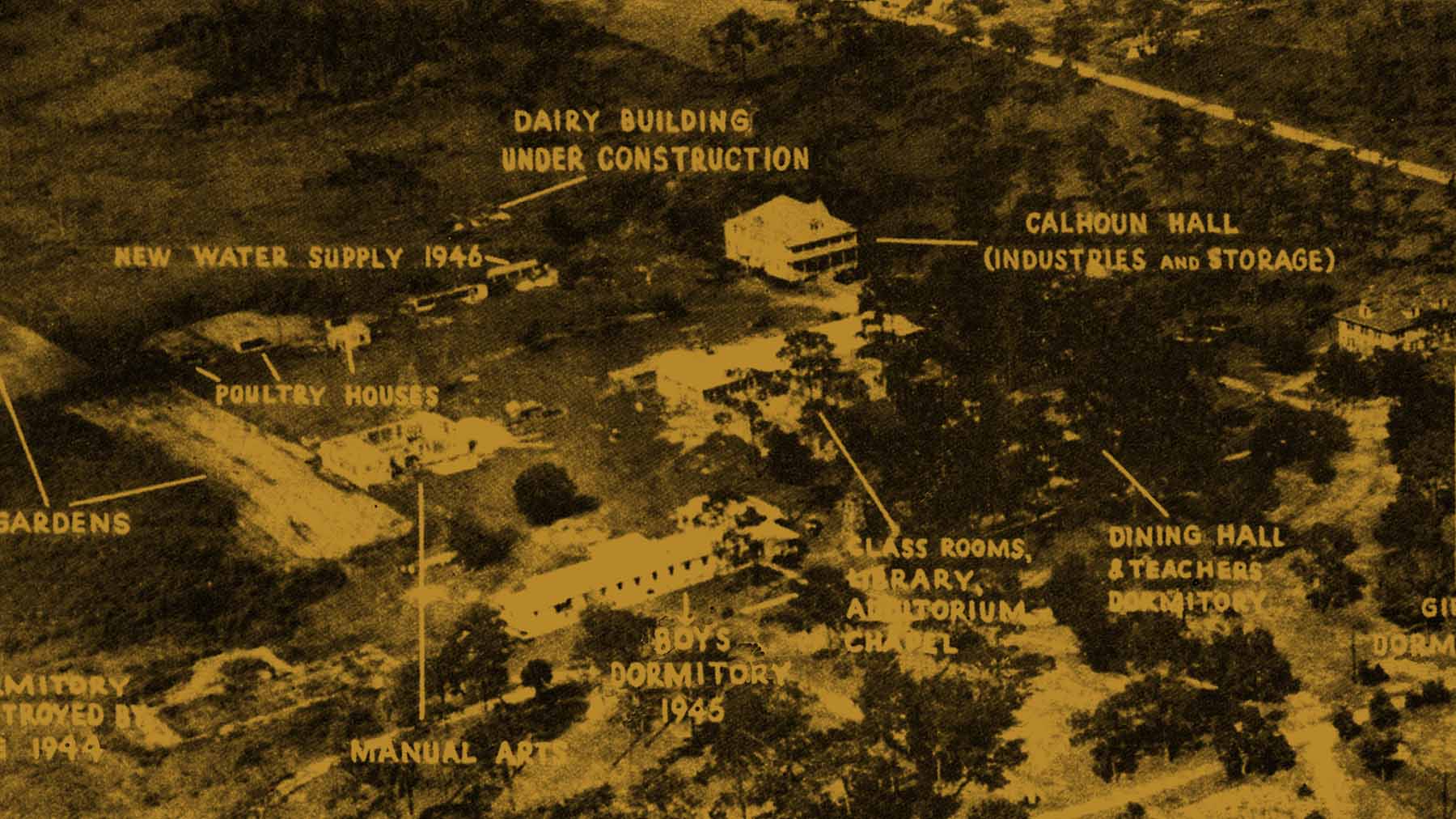
Picture at Top: The Hungerford property in Eatonville, Florida, in the 1940s. (Courtesy of the Association to Preserve the Eatonville Community)
More on Eatonville
-

Preserving Black Heritage: Florida activists fight to save historic site and their culture
-

‘Willing to Fight’: Residents rise up against development that could erase historic Florida town’s rich Black heritage
-
‘Sacred Ground’: Effort to preserve historic Black Florida community wins key victory
-

SPLC represents group suing to preserve Florida community’s Black heritage
-
Historic Action: Developer of Black heritage site in Florida backs out of sales contract
-

After beating development plan, residents work to save Florida town’s legacy
-

Descendant of land donor joins effort to preserve historic Florida community
-

National Trust for Historic Preservation names Eatonville an endangered site
-
Zora! Festival celebrates culture, preservation wins for historic Black community
-

Offer for historic property alarms Black residents of Eatonville, Florida

